
Companion Plants
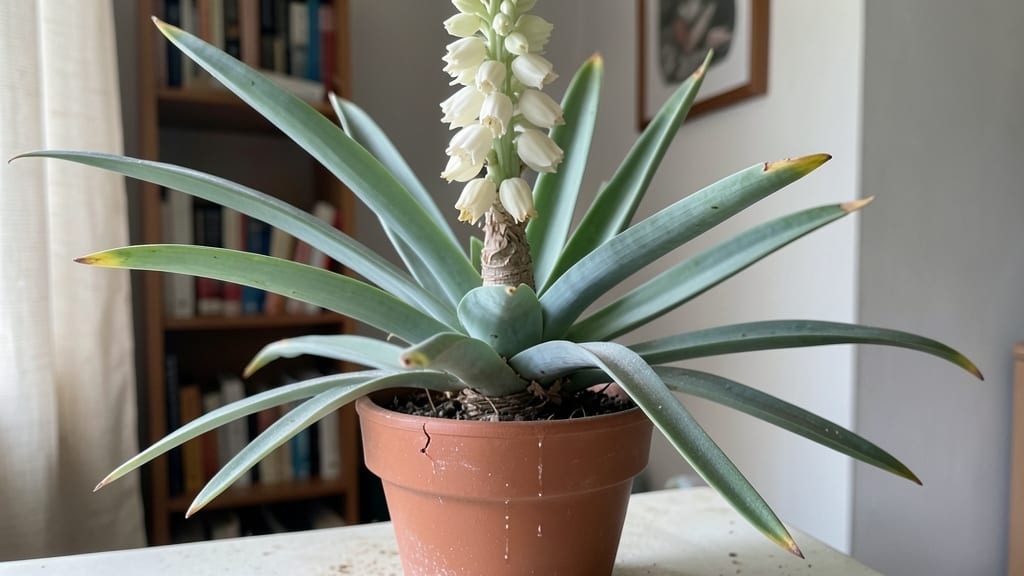
These pictures of flowering yucca plants will show you how their towering spikes of star-shaped blooms turn summer gardens into dramatic backdrops—imagine that vertical drama against a rustic stone wall or alongside a gravel path. 🌟 path.
The scent alone draws in pollinators by the dozens, making your garden feel alive in ways annuals never do.
These architectural plants thrive where others struggle, demanding little beyond full sun and well-draining soil. Pair them with lavender for a Mediterranean vibe or let them stand alone as a bold statement piece. Their sword-like foliage adds year-round structure, while the summer blooms create a show that lasts for weeks.
You’ll love how they anchor designs without competing for attention—think of them as nature’s vertical accent wall. The right placement turns a forgettable corner into a conversation starter, and the fragrance lingers long after the flowers fade. Perfect for modern, drought-tolerant, or low-maintenance gardens.
Whether you’re designing a desert-inspired landscape or just want a dramatic focal point, yucca delivers height, texture, and fragrance with minimal effort. Let’s explore how to make them the star of your outdoor space.
📚 In This Guide
- What you need
- Instructions
- Tips and common mistakes
- Wrapping up and next steps
What you need
- ● Yucca plant – A healthy, mature flowering specimen (preferably Yucca filamentosa or Yucca rostrata for striking blooms).
- ● Digital camera or smartphone – A DSLR with a macro lens (50mm or 100mm) for close-ups, or a modern smartphone with high-resolution capabilities (e.g., iPhone 13+ or Android with 48MP+).
- ● Tripod – A lightweight, adjustable tripod (e.g., Manfrotto Pixi or Joby GorillaPod) for steady shots.
- ○ External flash or ring light – Optional but helpful for low-light conditions (e.g., Neewer 660 LED or Godox TT350).
- ● Reflector (5-in-1) – To bounce light and enhance bloom details (e.g., Neewer 30-inch reflector).
- ● Polarizing filter – Reduces glare and deepens blue skies/green foliage (essential for outdoor shoots!).
- ● Pruning shears – For trimming spent blooms or shaping the plant post-shoot.
- ● Garden hose or spray bottle – To mist leaves and create a fresh, dewy look.
- ● Backdrop – A neutral fabric (e.g., gray or white muslin) or natural elements (e.g., wooden fence, boulders) for depth.
- ● Remote shutter release – Avoids camera shake for crisp shots (e.g., Bluetooth/Wi-Fi remote).
- ● Editing software – Lightroom, Photoshop, or free apps like Snapseed for post-processing.
How to capture stunning photos of flowering yucca plants
Yucca’s towering blooms and fragrant spikes create a photographer’s dream—here’s how to capture their grandeur.
📸 Step 1: Scout Locations for Maximum Impact
Yucca thrives in full sun, so photograph them between 10 AM and 2 PM when light is brightest. I look for plants with fully open blooms—the fragrant, bell-shaped flowers stand out most against their spiky foliage. Avoid overcast days; the dramatic contrast of sunlight on their architectural forms disappears in diffused light.
Position yourself slightly below the plant to emphasize its height. A low angle makes the flower spikes appear even more majestic, as if reaching toward the sky. If photographing multiple yuccas, include the surrounding landscape—dry, rocky terrain or desert scrub naturally complements their rugged beauty.
☀️ Step 2: Master Lighting for Dramatic Contrast
Yucca’s silver-blue foliage and white or cream-colored blooms need high-contrast lighting. Shoot during golden hour (just before sunset) for soft shadows, but midday sun creates the sharpest details on the waxy leaves. Use a polarizing filter to reduce glare on the leaves while keeping the blooms crisp.
If shadows are too harsh, place the yucca near a neutral backdrop like a stone wall or gravel path. Avoid bright green backgrounds—they’ll clash with the plant’s silvery tones. For close-ups, shoot on a partly cloudy day to diffuse light evenly across the flowers without losing texture.
✂️ Step 3: Focus on Textural Details and Composition
Yucca’s spiky leaves and towering flower stalks beg for macro and wide-angle shots. For dramatic height, use a telephoto lens (70-200mm) to compress the background and emphasize the vertical lines. For texture, get in close with a macro lens to capture the fibrous edges of the leaves or the velvety petals of individual blooms.
I like to frame shots with the plant’s natural architecture—position the camera so one or two long, curved leaves lead the eye toward the flower spike. Avoid centering the bloom; instead, use the rule of thirds to create tension. For series shots, include a wide-angle view of the entire plant to show its full 4-6 foot height.
🌿 Step 4: Highlight Fragrance and Seasonal Context
Yucca’s intense, sweet fragrance is a key selling point—capture it visually by including bees or butterflies visiting the flowers. I time my shoots for late spring to early summer, when blooms are freshest and pollinators are most active. A shallow depth of field (f/2.8 or lower) will blur the background and keep focus on the flowers and insects.
Add seasonal context by including other desert plants like agave or ocotillo in the frame. A slightly underexposed shot of the entire plant against a blue sky makes the white blooms pop dramatically. For editorial-style photos, include a hand or shadow to give scale—yucca’s imposing height is best appreciated when compared to human figures.
📱 Step 5: Edit for Yucca’s Natural Beauty
Yucca’s colors are naturally striking, but enhance contrast in post-processing to emphasize its silver-blue foliage and cream-white blooms. I use Lightroom presets with high clarity and low saturation—yucca’s tones are subtle, and over-saturation makes them look artificial. Boost shadows slightly to retain texture in the leaves while keeping highlights bright.
For black-and-white conversions, focus on the textural contrast between the smooth flower spikes and rough leaf edges. A selective color treatment—keeping the blooms in white and tinting the leaves a muted blue—can create a moody, artistic effect. Always keep edits subtle; yucca’s natural drama should remain the star.
Tips & tricks for perfect flowering yucca plant photography
Here's what nobody tells you about capturing yucca's dramatic beauty—these professional techniques will transform your shots from good to breathtaking.
Timing is Everything: The 10 AM to 2 PM window in Step 1 is non-negotiable for sharp details, but I've found that 11 AM to 1 PM often delivers the most vibrant colors when the sun isn't at its peak intensity. For golden hour shots (Step 2), arrive 30 minutes before sunset—the light shifts rapidly, and you want that soft glow on the cream-white blooms before it disappears.
Equipment Upgrade: While a telephoto lens (70-200mm) works beautifully for height, I recommend bringing a reflector (5-in-1 type) to bounce light onto shaded areas of the leaves. This helps maintain even exposure when shooting between 10 AM and 2 PM. For texture shots (Step 3), a 100mm macro lens will reveal details you never knew existed in those fibrous leaf edges.
Seasonal Strategy: Don't limit yourself to late spring/early summer (Step 4). I've captured stunning yucca shots in early fall when the blooms are slightly wilted but still fragrant—this creates a different mood. The key is to look for plants with at least 50% open blooms that still retain their sweet scent. The contrast of dried lower blooms against fresh upper ones adds depth to your composition.
Post-Processing Secret: When enhancing contrast in Step 5, I create a selective adjustment layer in Lightroom—masking just the flower spikes to add +10 exposure while keeping the leaves at natural levels. This makes the blooms pop against the silver-blue foliage without losing the plant's natural harmony. For black-and-white conversions, I always convert the leaves to a cool blue-gray and keep the blooms pure white for maximum drama.
Pro Tips for Pictures Of Flowering Yucca Plants
- Here's what nobody tells you about capturing yucca's dramatic beauty—these professional techniques will transform your shots from good to breathtaking.
- Timing is Everything: The 10 AM to 2 PM window in Step 1 is non-negotiable for sharp details, but I've found that 11 AM to 1 PM often delivers the most vibrant colors when the sun isn't at its peak intensity.
- Equipment Upgrade: While a telephoto lens (70-200mm) works beautifully for height, I recommend bringing a reflector (5-in-1 type) to bounce light onto shaded areas of the leaves.
Frequently asked questions
Got questions about those stunning flowering yucca plants? You’re not alone! Here are some of the most common queries—plus quick answers to help you grow (and photograph) these showstoppers like a pro.
When do flowering yucca plants bloom, and how long does it last?
Yucca plants typically bloom in late spring to early summer , with flowers lasting 2–4 weeks per stalk. Some varieties (like Yucca gloriosa) may rebloom if given ideal care—think full sun, well-draining soil, and minimal interference. Patience pays off: mature plants (3+ years old) produce the most dramatic displays!
Why isn’t my yucca flowering? What am I doing wrong?
Yuccas are slow to mature, but these fixes can help:
- Sunlight: Ensure 6+ hours of direct sun daily—shady spots delay blooms.
- Soil: Amend heavy soil with sand or gravel to prevent root rot.
- Water: Overwatering = no flowers. Let soil dry completely between waterings.
- Age: Most yuccas need 3–5 years to bloom. Be patient!
Pro tip: A light dose of low-nitrogen fertilizer (like 5-10-10) in early spring can encourage blooms.
How can I get the best pictures of flowering yucca plants?
Capture their drama with these tricks:
- Golden hour: Shoot at sunrise or sunset for soft lighting and vibrant colors.
- Natural backdrop: Pair with succulents or agave for a desert-inspired shot.
- Close-ups: Zoom in on the spiky petals or the fragrant bell-shaped blooms.
- Timing: Flowers open slowly—check daily for peak freshness!
Bonus: Use a macro lens or even your phone’s portrait mode to highlight texture.
Can I grow flowering yucca in containers? What’s the best pot size?
Yuccas thrive in containers if you:
- Use a terracotta or fabric pot (12–18 inches wide) with drainage holes.
- Fill it with cactus/succulent mix + perlite for aeration.
- Repot every 2–3 years to refresh soil and roots.
Note: Container-grown yuccas may bloom less frequently than in-ground plants due to limited root space.
Are flowering yucca plants toxic to pets or kids?
Yes, yuccas are mildly toxic to pets (especially cats/dogs) and kids if ingested. The saponins in leaves/stems can cause:
- Drooling, vomiting, or diarrhea.
- Skin irritation if touched (wear gloves when pruning!).
Safety tip: Keep yuccas out of reach or opt for pet-friendly alternatives like Dracaena marginata (dragon tree) if you have furry friends.
Wrapping up and next steps
Yucca plants are true summer showstoppers, offering dramatic height, striking blooms, and fragrant charm that elevate any garden or landscape. Whether you’re drawn to their architectural beauty or their low-maintenance appeal, these plants deliver big rewards with minimal effort.
Now that you’re inspired, why not plant one today? Start by choosing the perfect variety, finding the ideal spot in your garden, and enjoy the satisfaction of nurturing a plant that thrives with confidence—and looks stunning while doing it!