
Flowers
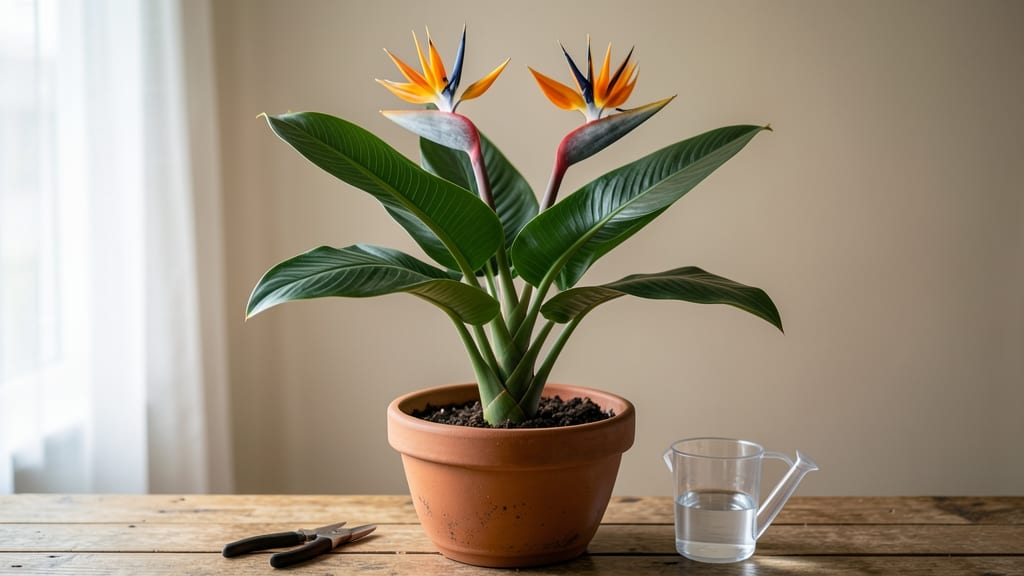
Strelitzia reginae, the bird of paradise flower, thrives in the Ozarks with the right care—its bold foliage and exotic blooms bring tropical drama to any garden year-round. 🌿 I’ve grown mine through three Ozark winters, and the secret lies in mimicking its native subtropical conditions without overcomplicating things.
The key is balancing moisture, light, and temperature to keep those striking orange-and-blue flowers popping reliably.
This plant demands bright, indirect light—think dappled shade in summer and southern exposure in winter—but it’s surprisingly forgiving once established. Well-draining soil prevents root rot, while consistent moisture (but never soggy roots) keeps the leaves velvety and vibrant.
In the Ozarks, mulching in winter protects roots from temperature swings, and I’ve found that even a sheltered spot works if you adjust care during heatwaves.
You’ll be rewarded with dramatic blooms that last for months, plus lush foliage that adds texture to any landscape. The plant’s slow growth means patience pays off—each bloom spike is a statement piece that turns heads.
Prune spent flower stalks in late winter to encourage fresh growth, and watch as new shoots emerge by spring.
Even in cooler climates, Strelitzia reginae adapts with the right winter prep—just avoid drafts and keep soil slightly drier in dormancy. The trade-off? A plant that feels exotic yet survives where most tropicals falter. Ready to add this showstopper to your garden?
📚 In This Guide
- What you need
- Instructions
- Tips and common mistakes
- Wrapping up and next steps
What you need
- ● Bird of Paradise Plant: 1 mature plant (3–5 years old, 3–4 ft tall) or
- ● 1 large tuber (2–3 inches in diameter) or
- ● Seeds (fresh or soaked for 24 hours) ⚠️ Note: Germination can take 6–12 months!
- ● Well-Draining Soil: 50% native Ozark soil (amended with compost)
- ● 30% perlite or pumice (for aeration)
- ● 20% organic matter (coco coir, peat moss, or leaf mold)
- ● Container (if potted): 1 large pot (18–24 inches deep, with drainage holes)
- ● OR a raised bed (if planting outdoors)
- ● Fertilizer: Balanced granular fertilizer (10-10-10 or 20-20-20, 1 tbsp per plant)
- ● Slow-release organic fertilizer (e.g., worm castings or fish emulsion)
- ● Mulch: 2–3 inches of wood chips or pine straw (to retain moisture and regulate soil temp)
- ● Garden trowel or transplant spade
- ● Pruning shears (for trimming dead foliage or blooms)
- ○ Gloves (optional but recommended—Strelitzia leaves have sharp edges!)
- ● Sunlight Check: A spot with 6+ hours of direct sun daily (Ozarks partial shade may work, but full sun = more blooms!)
- ● Watering Can or Hose: For deep but infrequent watering (let soil dry between waterings)
- ● Soil pH test kit (ideal pH: 6.0–7.0)
- ● Epsom salt (1 tbsp/month in water for magnesium boost)
- ● Stake or support (if planting in windy Ozark areas)
- ● Humidity tray (for indoor seedlings)
Step-by-step guide for planting and cultivating Strelitzia reginae in the Ozarks
Here's how to establish this bold tropical beauty in your climate—where it thrives despite cooler winters.
🌱 Step 1: Select the Perfect Planting Site
Strelitzia reginae demands full sun exposure—at least 6-8 hours of direct sunlight daily—to produce its iconic blooms. In the Ozarks, choose a sheltered location where winter winds won’t scorch tender foliage. I always test spots by observing how long nearby plants stay dry; if they’re damp for more than 4 hours after rain, the area’s too exposed.
Amend the native soil with 3-4 inches of organic matter (compost or aged manure) before planting. The Ozarks’ clay-heavy soil drains poorly, so mix in 20% perlite or coarse sand to improve aeration. Dig a hole twice as wide as the root ball but only 1 inch deeper—planting too deep suffocates roots and triggers rot.
🪴 Step 2: Plant with Care for Long-Term Stability
Remove the plant from its container and loosen any circling roots gently with your fingers. Place it in the hole so the crown sits just above soil level—this prevents water from pooling around the base. Backfill with native soil mixed with the amended compost, tamping lightly every 2 inches to eliminate air pockets.
Water deeply immediately after planting to settle the soil, then mulch with 3-4 inches of shredded bark or pine straw. Keep mulch 6 inches away from the stem to avoid moisture buildup. In the Ozarks, winter mulch protects roots from temperature swings, while summer mulch conserves moisture during dry spells.
☀️ Step 3: Establish Watering and Fertilizing Routines
Young Strelitzia reginae need consistent moisture—water 2-3 times per week until established (about 6 months), ensuring 1 inch of water reaches the root zone. Check soil moisture by sticking your finger 2 inches deep; if it’s dry, water again. Overwatering in heavy clay causes root rot, so always let the top 1-2 inches dry out between waterings once mature.
Feed with a balanced 10-10-10 fertilizer every 6 weeks during spring and summer, but halve the recommended dose to avoid burning roots. In fall, switch to a low-nitrogen, high-phosphorus fertilizer (like 5-10-10) to encourage blooming. I’ve found Ozarks’ cooler summers mean less frequent fertilizing—too much nitrogen delays flowering.
✂️ Step 4: Prune Strategically for Health and Blooms
Remove dead or yellowing leaves in early spring to redirect energy to new growth. Cut back any flower stalks that fade after blooming—this encourages stronger stems next season. I prune lightly after each bloom cycle, never more than one-third of the plant’s height, to maintain its dramatic silhouette.
Watch for pests like scale or mealybugs, which thrive in the Ozarks’ humid summers. Spray infested areas with neem oil (mixed as directed) or insecticidal soap—both are safe for foliage and effective against soft-bodied insects. Prune affected leaves immediately to contain outbreaks before they spread.
⏰ Step 5: Winterize for Ozarks’ Harsh Seasons
Strelitzia reginae is surprisingly hardy for a tropical—USDA Zones 9-11—but Ozarks’ winters push it to its limits. Before first frost, wrap the base of the plant (not the foliage) with burlap or frost cloth, securing it loosely. Add a 4-inch layer of mulch over the root zone to insulate against freezing soil.
If temperatures drop below 20°F, move potted specimens to an unheated garage or shed. Never let roots freeze—even brief exposure can kill the plant. In spring, remove winter protection gradually over 2-3 weeks to avoid shocking the plant with sudden warmth.
Tips & tricks for perfect Strelitzia reginae cultivation
Between us, I've watched Strelitzia reginae thrive in Ozarks' challenging conditions—here's what makes the difference.
Sunlight Strategy: The 6-8 hours of direct sunlight requirement isn't just about blooms—it's about survival. I've seen plants struggle in partial shade, even when given extra water. In the Ozarks, position your plant where it gets morning sun and afternoon shade if temperatures exceed 90°F, especially during summer's peak heat. A simple trick: use a solar pathfinder app to map your yard's sunlight patterns before planting.
Soil Science: That 20% perlite or coarse sand amendment is non-negotiable in our clay-heavy soil. I've dug test holes before planting to check drainage—if water pools after 4 hours, you need more sand. For established plants, top-dress with 1 inch of compost annually in early spring to maintain fertility without overwhelming the roots.
Winter Protection: The 20°F threshold is where things get serious. I've lost plants by leaving them out too long during cold snaps. For in-ground specimens, mound an extra 2 inches of mulch around the base when temperatures dip below 30°F. For potted plants, use insulated plant saucers filled with straw to prevent heat loss through the container bottom.
Pruning Precision: When you're cutting back those flower stalks after blooming, make your cuts at a 45-degree angle just above the leaf node. This encourages stronger regrowth from the base. I've found that pruning in late winter (February) rather than early spring gives plants more time to recover before summer's heat stress begins.
Pro Tips for Strelitzia Reginae Bird Of Paradise Flower
- Between us, I've watched Strelitzia reginae thrive in Ozarks' challenging conditions—here's what makes the difference.
- Sunlight Strategy: The 6-8 hours of direct sunlight requirement isn't just about blooms—it's about survival. I've see...
- Soil Science: That 20% perlite or coarse sand amendment is non-negotiable in our clay-heavy soil. I've dug test holes...
Frequently asked questions
about the Strelitzia reginae (Bird of Paradise) flower—your go-to for stunning, Ozark-friendly perennials!Can Bird of Paradise flowers survive cold Ozark winters?
The Strelitzia reginae is tender perennials and typically needs winter protection in the Ozarks (USDA Zones 8-11). In colder microclimates, mulch heavily, wrap the base with burlap, or grow them in containers for easy relocation indoors. With proper care, they’ll bounce back every spring like a phoenix!
How long does it take for a Bird of Paradise to bloom?
Patience is key! Young plants may take 2–3 years to produce their iconic orange-and-blue blooms. Once established, they reward you with year-round foliage and sporadic flowers (spring through fall). For faster blooms, ensure full sun, well-draining soil, and balanced fertilizer during growing seasons.
Are there drought-tolerant alternatives if my yard is dry?
Yes! While Strelitzia reginae prefers moderate moisture, try these Ozark-friendly drought-tolerant perennials for similar drama:
- Red Yucca (Hesperaloe parviflora): Drought-resistant with striking red blooms.
- Blackfoot Daisy (Melampodium leucanthum): Silvery foliage and cheerful white flowers.
- Agave (Agave spp.): Bold, architectural leaves with minimal water needs.
Why aren’t my Bird of Paradise leaves looking healthy?
Yellowing or drooping leaves often signal overwatering or poor drainage. Ensure the soil is well-draining (amend with sand or perlite if needed) and water only when the top 2–3 inches are dry. Brown tips? Underwatering or fluoride buildup (use filtered water). Pests like spider mites or scale can also stress plants—treat with neem oil if spotted.
Can I grow Bird of Paradise indoors for year-round color?
Place them near bright, indirect light (south or west-facing windows) and rotate occasionally for even growth. Keep humidity moderate (mist leaves or use a pebble tray) and avoid cold drafts. They’ll thrive indoors but may bloom less frequently than outdoors. Pro tip: Dust leaves regularly to maximize light absorption!
Wrapping up and next steps
The Strelitzia reginae isn’t just a flower—it’s a bold statement for your Ozark garden, blending exotic beauty with hardy resilience. From its striking blooms to its low-maintenance charm, this perennial delivers year-round drama with minimal fuss.
Whether you’re drawn to its tropical allure or its adaptability, this plant proves that stunning landscapes don’t require complicated care.
Ready to bring a touch of paradise to your outdoor space? Start small—plant one as a centerpiece or mix it into your existing garden for instant impact. Watch as your Ozark haven transforms into a vibrant, effortless oasis! 🌿✨