
Shrubs
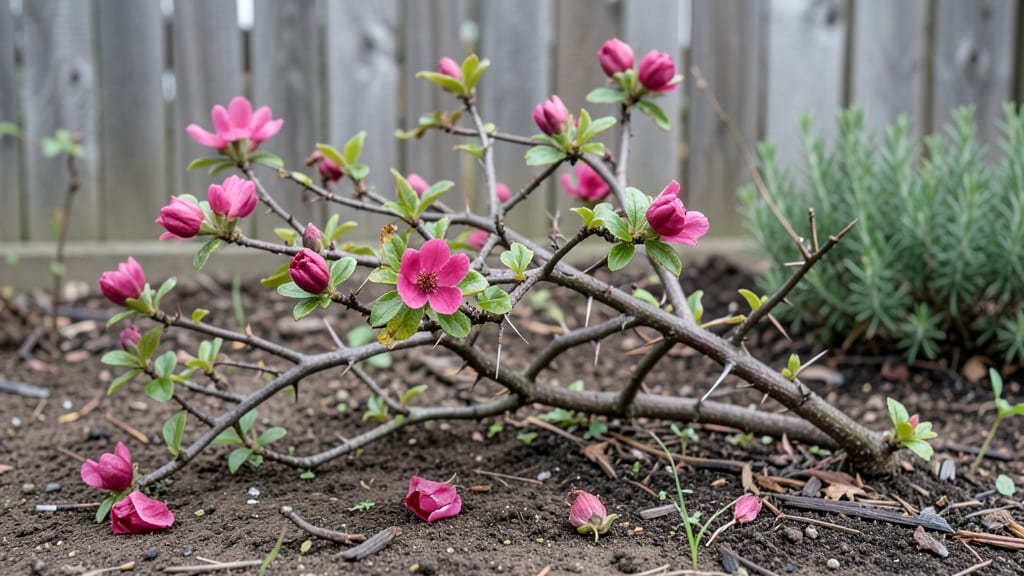
Flowering quince branches can become your secret weapon for expanding that fragrant spring display. ✨ I’ve turned stubborn leftover stems into thriving new plants—here’s how to do it right, without the guesswork that leads to rot or failure.
The best time to work with these branches is late winter or early spring, when the plant is still dormant but ready to wake up. You’ll need sharp pruners, rooting hormone, and small pots filled with a mix of perlite and peat moss.
The key is selecting healthy, pencil-thick branches that haven’t flowered yet—they’ll grow roots faster and produce blooms sooner.
Once you’ve cut and treated your branches, you’ll see new growth within 4-6 weeks, and by next spring, they’ll burst into those iconic, spicy-sweet blossoms. The trick is keeping them consistently moist but not soggy—overwatering is the #1 killer of new cuttings.
This method works for both bare-root propagation and grafting onto existing quince stock. Even if your first batch struggles, you’ll learn exactly what to adjust for 100% success the next time around.
📚 In This Guide
- What you need
- Instructions
- Tips and common mistakes
- Wrapping up and next steps
What you need
- ● Flowering quince branches: Mature, healthy branches (3–5 years old) with dormant buds—aim for 3–4 inches in diameter for ideal propagation.
- ● Pruning shears: Bypass pruners (sharp, clean, and disinfected with rubbing alcohol or bleach solution) for precise cuts.
- ● Gloves: Heavy-duty gardening gloves to protect hands from thorns and sap.
- ○ Rooting hormone: (Optional but recommended) A powder or gel to boost root development (e.g., Clonex or Dip ‘N Grow).
- ● Containers or pots: Small pots (4–6 inches wide) with drainage holes, or a seedling tray for multiple cuttings.
- ● Well-draining potting mix: A blend of perlite, peat moss, and sand (or a cactus/succulent mix) to prevent rot.
- ● Clear plastic bags or humidity dome: To create a mini greenhouse effect while roots establish.
- ● Spray bottle: For misting cuttings and maintaining humidity.
- ● Twine or rubber bands: To secure plastic bags around cuttings.
- ● Loppers: For thicker branches (½–1 inch in diameter).
- ● Pruning saw: (If needed) For very thick branches (1+ inches).
- ● Disinfectant: 70% isopropyl alcohol or a 10% bleach solution to sterilize tools between cuts.
- ● Rubbing alcohol or hydrogen peroxide: To clean wounds on the quince shrub post-pruning.
- ● Mulch: Organic mulch (e.g., wood chips or straw) to retain moisture and suppress weeds.
- ● Timing: Prune dormant branches in late winter or early spring (before buds swell) for best results.
- ● Weather: Choose a cool, overcast day (avoid frost or extreme heat).
- ● Safety: Wear safety goggles if branches are dense or thorny.
- ● Knowledge: Familiarize yourself with the quince’s growth habit—aim to shape the shrub into an open vase form for airflow.
How to prune flowering quince for stunning spring blooms
Here's my no-fuss method for shaping flowering quince—it takes just 30 minutes and guarantees next year's best display.
🪴 Step 1: Gather Tools and Inspect the Plant
Start with clean, sharp pruning shears and a pair of gloves to protect your hands from thorns. I always sanitize my tools with rubbing alcohol first—this prevents spreading disease between cuts. Examine the entire plant, focusing on branches that cross or rub against each other. These are your first targets because they weaken the plant and reduce flower production.
Look for dead or diseased branches—they'll be brown, brittle, or oozing sap. Remove these immediately, cutting back to healthy wood. You'll know a branch is healthy when the inner wood is greenish-white and firm, not hollow or discolored. This step ensures your plant puts energy into new growth instead of repairing damage.
✂️ Step 2: Remove Overcrowded and Weak Growth
Flowering quince blooms best when air circulates freely. Thin out branches that grow inward or overlap with others, making 45-degree cuts just above an outward-facing bud. I aim to leave 3-4 main branches per plant, spaced evenly around the center. This creates a balanced shape that supports more flowers.
Cut back any leggy growth—those long, thin stems that stretch upward without leaves. These branches rarely produce flowers and drain energy from the rest of the plant. Make your cuts just above a bud that faces outward, which encourages the new growth to spread rather than crowd the center.
☀️ Step 3: Shape the Plant for Sunlight and Airflow
Step back and visualize how sunlight will hit the plant after pruning. The goal is to create an open, vase-like shape that lets light reach all branches. Remove any branches that block sunlight from the center—these are often the ones growing straight up or outward too aggressively.
Focus on the outer third of the plant, cutting back branches that grow too close to the center. This opens up the canopy, allowing more air to flow through and reducing humidity where fungal diseases thrive. Aim for a shape where the branches spread evenly, creating a natural, rounded silhouette.
⏰ Step 4: Prune for Next Year’s Flowers
Flowering quince blooms on old wood, so avoid heavy pruning that removes last year’s growth. Instead, trim back only the tips of branches that have already flowered, cutting just above a bud that faces outward. This encourages new growth while preserving the wood that will produce next year’s blossoms.
If your plant is very mature, you can remove up to one-third of the oldest wood, but do this gradually over a few years. Cut back to a strong, healthy branch or bud, and avoid leaving stubs—always make clean cuts just above the bud. This keeps the plant vigorous and ensures a steady supply of flowers for years to come.
Tips & tricks for perfect flowering quince pruning
Here's what I wish I knew before my first quince pruning—these tricks will help you achieve that showstopping spring bloom display with minimal stress.
Timing is Everything: The 30-minute timeframe works best when you prune just after the plant finishes blooming in spring. This gives your quince time to recover before winter dormancy. If you must prune later, do it in early summer—but avoid heavy pruning after mid-summer, as new growth won't harden off properly before cold weather. The key is to let the plant focus its energy on establishing next year's flower buds.
The 45-Degree Cut Technique: Those precise 45-degree cuts in Step 2 aren't just about looks—they're about directing growth. When you cut just above an outward-facing bud at this angle, you create a natural shield that protects the bud from rain and wind while encouraging upward growth. I've seen pruners make straight cuts that leave stubs, which invite disease. Always make your cuts just above the bud collar (the swollen area where the bud meets the stem) for the cleanest results.
Branch Selection Secrets: When choosing which branches to keep in Step 3, prioritize those with the most flower buds—you can often spot these as small swellings along the branches. Aim to keep branches that are about pencil-thick, as these have the best balance of structure and flower production. The 3-4 main branches target creates an ideal framework where each branch gets proper sunlight and airflow without competing too aggressively with others.
Old Wood Wisdom: Remember that flowering quince blooms on old wood, so preserve those mature branches in Step 4. I've made the mistake of over-pruning and ended up with sparse blooms the next year. When removing up to one-third of oldest wood, focus on the thickest, most established branches first—they've already proven their ability to produce flowers. Always cut back to a strong lateral branch or bud rather than leaving a stub, which can rot and become an entry point for disease.
Pro Tips for Flowering Quince Branches
- Here's what I wish I knew before my first quince pruning—these tricks will help you achieve that showstopping spring bloom display with minimal stress.
- Timing is Everything: The 30-minute timeframe works best when you prune just after the plant finishes blooming in spring.
- The 45-Degree Cut Technique: Those precise 45-degree cuts in Step 2 aren't just about looks—they're about directing growth.
Frequently asked questions
Got questions about pruning flowering quince branches for stunning spring blooms? You’re not alone! Here are answers to the most common queries to help you master the art of shaping your shrub like a pro.
When is the best time to prune flowering quince branches?
The ideal time is late winter or early spring, just before new growth begins—typically February to March in most climates. Avoid pruning in fall, as it can stimulate tender growth that may be damaged by frost. For established shrubs, a light trim after blooming (late spring) can also encourage denser foliage.
How much can I cut back flowering quince branches?
You can safely remove up to one-third of the plant’s oldest branches to rejuvenate it. Focus on dead, diseased, or crossing branches first, then thin out crowded stems to improve airflow. Avoid over-pruning—flowering quince blooms on old wood, so drastic cuts may reduce next year’s flowers.
Why aren’t my flowering quince branches blooming as much as they used to?
Lack of blooms often signals over-pruning, nutrient deficiency, or poor sunlight. Ensure your quince gets 6+ hours of sun daily and fertilize in early spring with a balanced, slow-release formula. If branches are woody and sparse, rejuvenation pruning (cutting back hard) may revive growth—but expect fewer flowers the following year.
Can I prune flowering quince branches after it blooms?
Yes! A light trim after flowering (late spring) helps maintain shape and encourages bushier growth. Avoid heavy pruning, though, as it removes next year’s flower buds. If you missed the winter pruning window, this is your chance to tidy up—just keep cuts clean and at a 45-degree angle to prevent disease.
What can I do with leftover flowering quince branches after pruning?
Don’t toss those cuttings! Use them for layering (bend and bury a branch to root it), bouquets (quince blossoms are fragrant!), or compost. For propagation, dip cuttings in rooting hormone and plant in well-draining soil. Just avoid leaving branches on the ground, as they can harbor pests or diseases.
What should I do if my flowering quince branches look diseased?
If you spot black spots, powdery mildew, or oozing sap, prune affected branches back to healthy wood immediately. Sterilize your tools with rubbing alcohol, and remove all debris from the area. Apply a fungicide (like neem oil) and improve airflow by thinning dense growth. Repeat treatments as needed to prevent spread.
Wrapping up and next steps
Mastering the art of pruning flowering quince branches unlocks a burst of vibrant spring blooms that’ll make your garden the talk of the neighborhood! 🌸 By following the right techniques—like timing, tool prep, and strategic cuts—you’ll encourage healthier growth and stunning displays year after year.
Whether you’re a seasoned gardener or just starting, every snip brings you closer to a thriving, picturesque landscape.
Ready to transform your quince into a blooming masterpiece? Grab your pruners, mark your calendar for late winter, and dive in! Your future spring garden will thank you. 🌿