Shrubs
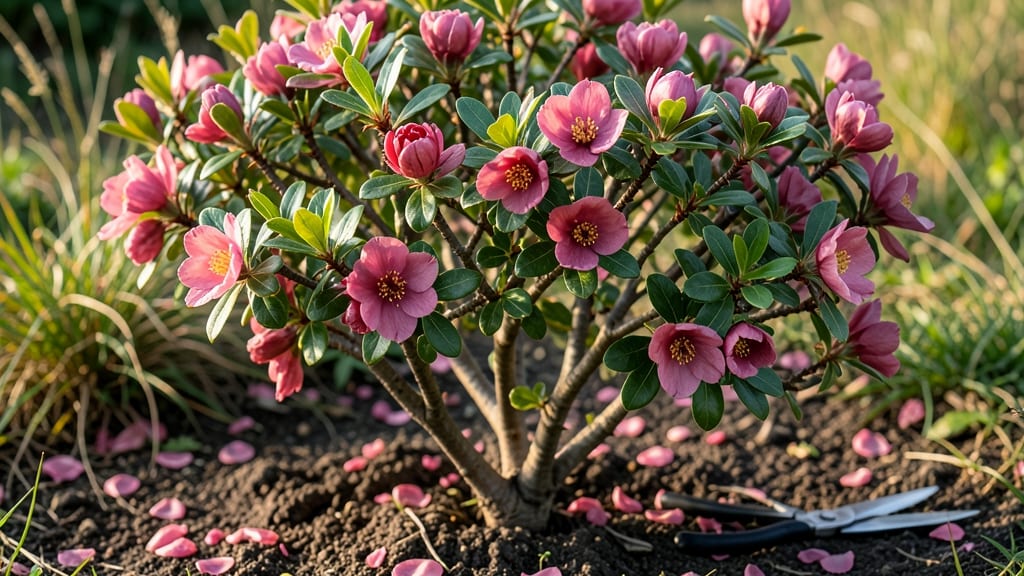
A flowering quince hedge delivers four seasons of interest with almost no fuss—fragrant blooms in spring, glossy foliage all summer, and fiery autumn color that lasts well into winter. 🌿 I planted mine along a shady property line, and neighbors now stop to ask about the "mystery hedge" that smells like spiced apples in April.
The secret isn’t complicated: these shrubs thrive in tight spaces, tolerate neglect, and reward you with minimal pruning while other hedges demand constant shaping.
The real magic happens in the details: plant them 3-4 feet apart for a dense, 6-8 foot tall barrier by year three, and choose a cultivar like 'Flore Pleno' for double blooms or 'Golden Spray' for golden foliage contrast.
They handle poor soil better than most hedges, and their disease resistance means fewer headaches than roses or privet. My hedge stays lush with just a light trim after flowering—no shearing, no fuss, just year-round texture that softens any landscape.
By late summer, you’ll notice the velvety red berries (edible but bitter) adding winter interest, and the scented blossoms returning the next spring without extra effort. Pair them with boxwood for structure or hellebores for early shade companions, and you’ve created a low-maintenance focal point that outperforms most hedges.
The best part? This hedge pays you back in beauty without demanding your time.
Works in zones 5-8, handles both sun and partial shade, and adapts to urban or rural settings. Whether you’re replacing an overgrown fence or adding seasonal drama to a border, flowering quince delivers effortless elegance that keeps giving. Let’s get yours planted right from the start.
📚 In This Guide
- What you need
- Instructions
- Tips and common mistakes
- Wrapping up and next steps
What you need
- ● Flowering quince plants: 10–20 plants (depending on hedge height/width goals; standard spacing is 3–4 feet apart).
- ● Choose Chaenomeles speciosa or C. japonica varieties for best fragrance and hardiness.
- ● Soil amendments: 5–10 lbs of compost or well-rotted manure per plant.
- ○ 1–2 lbs of balanced fertilizer (10-10-10 or similar) per plant (optional but recommended for faster establishment).
- ● Mulch: 2–3 inches of organic mulch (e.g., wood chips, pine straw) to retain moisture and suppress weeds.
- ● Garden shovel or spade (for digging holes).
- ● Hand trowel (for amending soil around roots).
- ● Measuring tape (to ensure proper spacing).
- ● Garden gloves (to protect your hands from thorns!).
- ● Pruning shears (for shaping after planting).
- ● Watering can or hose (with a gentle spray nozzle).
- ○ Wheelbarrow (optional, for hauling soil/amendments).
- ● A sunny location (6+ hours of direct sunlight daily).
- ● Well-draining soil (flowering quince tolerates poor soil but thrives with amendments).
- ● Access to a water source (for the first 2–3 weeks post-planting).
- ● Pro tip: 💡 Test your soil’s pH (ideal range: 6.0–7.0). If needed, adjust with lime (to raise pH) or sulfur (to lower it).
Instructions for planting and maintaining a fragrant flowering quince hedge
Here’s how to establish a low-maintenance, ever-blooming hedge that rewards you with intoxicating spring fragrance.
🌱 Step 1: Select and Prepare Planting Sites
Choose a location with full sun to partial shade—flowering quince thrives in 6+ hours of direct sunlight daily but tolerates light shade in hotter climates. Dig holes twice as wide as the root ball but only as deep as the container’s height—burying too deeply stresses the plant.
Space plants 4-6 feet apart for a dense hedge. I like to lay out a garden hose to mark the row before digging—this ensures perfect alignment. Amend the native soil with compost (mixed into the bottom of each hole) to improve drainage, as quince hates soggy roots.
🪴 Step 2: Plant Bare-Root or Container-Grown Quince
For bare-root plants, soak roots in water for 1-2 hours before planting to revive them. Position the plant so the graft union (visible bump near the base) sits 1-2 inches above soil level—this prevents disease. Spread roots outward gently, then backfill with native soil, tamping lightly every 2 inches to eliminate air pockets.
If using container-grown plants, remove the root ball and loosen any circling roots with your fingers. Water deeply after planting to settle the soil and eliminate gaps. Mulch with 2-3 inches of wood chips, keeping it 6 inches away from the trunk to prevent rot.
☀️ Step 3: Water and Fertilize for Establishment
Water deeply 2-3 times per week for the first 6-8 weeks, ensuring moisture reaches 12 inches deep. You’ll know it’s enough when water runs out the drainage holes if planted in containers. Overwatering now leads to root rot—always let the top 2 inches of soil dry between waterings.
Apply a balanced 10-10-10 fertilizer at planting, then again in early spring. Quince is low-maintenance but responds well to a light feeding. Avoid high-nitrogen fertilizers—they promote leafy growth at the expense of flowers, which is the whole point of this hedge!
✂️ Step 4: Prune for Shape and Health
Wait until late winter or early spring (just before buds swell) to prune. Remove any dead, diseased, or crossing branches first—these compete with healthy growth. Then, shape the hedge by cutting back 1/3 of the previous year’s growth to encourage dense blooms.
Use sharp bypass pruners for clean cuts, and avoid heavy pruning in fall—it stimulates tender new growth that won’t survive winter. You’ll see fragrant pink blossoms in early spring, followed by ornamental fruit that adds winter interest.
🌿 Step 5: Mulch and Monitor for Pests
Reapply 2-3 inches of mulch annually in spring to retain moisture and suppress weeds. Quince is generally pest-resistant, but watch for aphids or scale insects on new growth. Spray with neem oil if you spot clusters of sticky residue (honeydew) on leaves.
This hedge thrives with minimal care—just an annual pruning and occasional watering once established. In 3-5 years, you’ll have a fragrant, ever-blooming barrier that outshines most ornamental hedges.
Tips & tricks for perfect flowering quince hedge establishment
Here's what I've learned after years of working with these fragrant beauties—simple tricks that make all the difference between a struggling hedge and one that thrives with minimal effort.
Soil Preparation Matters: Before planting, test your soil's drainage by digging a 12-inch hole and filling it with water. If it doesn't drain completely within 2 hours, amend with additional compost or coarse sand. Quince roots need excellent drainage to prevent rot, and this simple test tells you exactly what your site needs before you invest in plants. I've seen too many quince hedges fail because of poor drainage, so don't skip this step!
Planting Depth is Critical: The graft union should sit 1-2 inches above soil level—this isn't optional. When I first planted quince, I buried the graft union too deeply, and it led to disease issues that took years to correct. Use a small stake or marker to note the correct depth before planting. For container-grown plants, gently loosen any circling roots with your fingers—this prevents girdling as the plant matures.
Watering Strategy for Establishment: Those first 6-8 weeks are crucial for root development. I recommend using a soaker hose set on low for 20-30 minutes, 2-3 times per week, rather than surface watering. This ensures moisture reaches 12 inches deep without creating surface crusting. Check soil moisture by sticking your finger 2 inches down—if it's dry, water again. Overwatering is the #1 killer of young quince plants.
Pruning Timing Makes All the Difference: Late winter/early spring pruning (just before buds swell) is non-negotiable. I've seen hedges stressed by fall pruning develop winter dieback. When shaping, cut back 1/3 of the previous year's growth—this encourages dense blooming while maintaining the plant's natural shape. Always use sharp bypass pruners for clean cuts that heal properly. For large hedges, consider thinning from the center first to improve air circulation.
Pro Tips for Flowering Quince Hedge
- Here's what I've learned after years of working with these fragrant beauties—simple tricks that make all the differen...
- Soil Preparation Matters: Before planting, test your soil's drainage by digging a 12-inch hole and filling it with wa...
- Planting Depth is Critical: The graft union should sit 1-2 inches above soil level—this isn't optional. When I first ...
Frequently asked questions
Got questions about creating and maintaining a flowering quince hedge? You’re not alone! Here are answers to the most common queries to help you grow a stunning, low-maintenance hedge with year-round charm.
How fast does a flowering quince hedge grow?
A flowering quince hedge grows moderately fast—typically 12 to 24 inches per year under ideal conditions. With proper spacing (4–6 feet apart) and regular pruning, it can reach its mature height (6–10 feet) in 3 to 5 years. Patience pays off, but the fragrant blooms make it worth the wait!
When is the best time to plant flowering quince?
The ideal planting window is in early spring or fall, when soil temperatures are cool but not freezing. Avoid extreme heat or winter planting, as the roots need time to establish before stress. Pro tip: Water deeply after planting and mulch to retain moisture!
How often should I prune a flowering quince hedge?
Prune once a year, right after flowering (late spring), to shape the hedge and encourage dense growth. Light trimming in late winter (before buds swell) also helps remove dead wood. Avoid heavy pruning—this shrub thrives with minimal intervention!
Are flowering quince hedges deer-resistant?
While not completely deer-proof, flowering quince is less appealing than many other shrubs. Deer may nibble young plants, but mature hedges are usually left alone. For extra protection, consider a light fence or repellent spray during high-risk seasons.
What’s a good alternative if flowering quince doesn’t thrive in my climate?
If your zone is too hot (USDA 7+) or humid, try abelia, mock orange, or pittosporum for similar fragrance and structure. For cooler climates (USDA 5–6), potentilla or hawthorn are hardy, low-maintenance options with seasonal blooms.
Wrapping up and next steps
A flowering quince hedge isn’t just a beautiful addition to your landscape—it’s a fragrant, low-maintenance powerhouse that thrives with minimal effort. With its year-round charm, stunning blooms, and resilience, it’s the perfect choice for gardeners who love nature’s simplicity.
Ready to transform your outdoor space? Start by selecting the right plants, preparing the soil, and giving them the care they deserve—your future hedge (and your nose!) will thank you.
Next steps:
- 🌱 Plant your quince hedge this season for spring blooms.
- 📝 Bookmark this guide for quick pruning and care tips.
- 👨🌾 Share your progress—tag us in your garden photos!