
Flowers
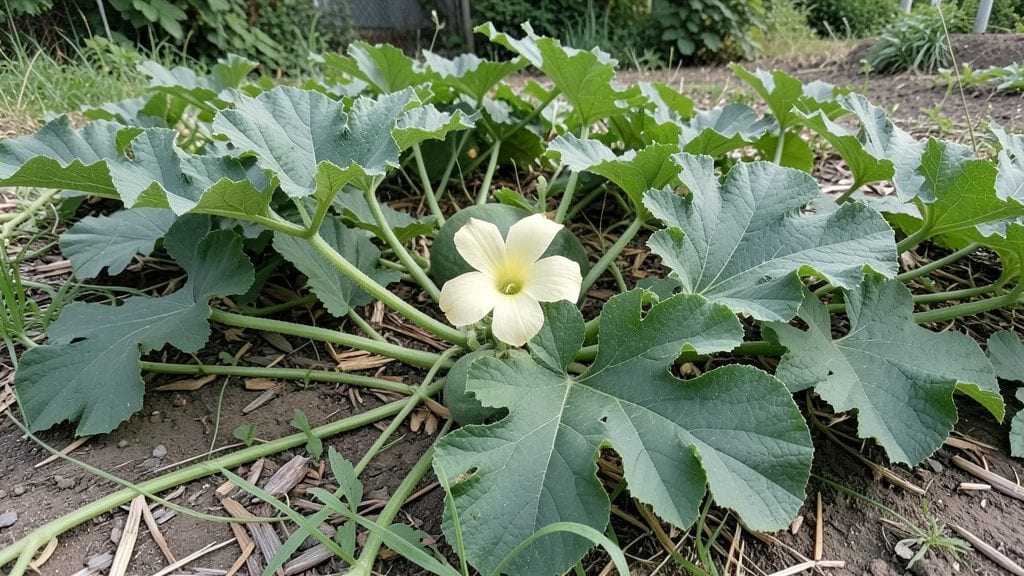
The female watermelon flower produces fruit at its base and has thicker, shorter stems compared to male flowers, playing a key role in pollination by developing into watermelons after fertilization. These flowers bloom later and depend on bees or hand-pollination to set fruit.
The female watermelon flower's unique structure isn't just about looks—it's designed for efficiency. 🌱 The thicker stems support the heavier fruit load, while the delayed blooming ensures energy is focused on fruit development rather than early flowering.
This gender-specific adaptation explains why gardeners often see male flowers first: they're the plant's way of maximizing pollination success before shifting resources to fruit production. Understanding these traits helps you strategize planting and pollination support for bigger harvests.
What's fascinating is how these flowers transform after pollination. The once-bright blossoms wither as the ovary swells into a watermelon, a process that takes about 7-10 days to become visible.
This biological quirk means you can actually predict fruit development by observing which flowers receive pollination first—a gardener's secret for planning harvest timing.
💡 In This Article
- Identifying Female Watermelon Flowers vs Male
- Boosting Pollination for Female Watermelon Flowers
Identifying female watermelon flowers vs male
The key difference lies in their reproductive anatomy. Female flowers possess a swollen ovary at the base where fruit develops, while male flowers have only stamens (the pollen-producing structures). This ovary is typically 3-5 millimeters wide and appears as a small bump—think of it as nature's built-in fruit indicator.
The female flower's stem is also noticeably thicker, often measuring 4-6 millimeters in diameter compared to the male's 2-3 millimeters, giving it a sturdier appearance that can support future fruit weight.
Here's what's actually happening biologically: The female flower's delayed blooming (typically 5-7 days after males) conserves energy for fruit development. This timing difference occurs because the plant prioritizes male flowers first—they're the pollinators' magnets.
The female flowers only open when the plant has sufficient resources allocated for potential fruit growth. 🌱 What's fascinating is how this structure transforms: After pollination, the ovary swells dramatically, while the male flower simply withers away without any fruit development.
Visual identification becomes easier when you examine the blossom's center. Female flowers have a velvety, fuzzy appearance at the base where the ovary sits, while males appear smoother with only the stamens protruding.
The petals on female flowers also tend to be slightly larger (3-4 centimeters wide) compared to males (2-3 centimeters), though this can vary by variety. These differences aren't just cosmetic—they're evolutionary adaptations that maximize pollination efficiency and fruit production.
For gardeners, recognizing these traits early is crucial for efficient pollination management. Male flowers appear first (usually within 3-4 weeks after planting) and produce copious pollen, while female flowers begin appearing 2-3 weeks later.
This timing creates a natural window where you can strategically place male plants near female ones to ensure optimal pollination. What most people don't realize is that some watermelon varieties produce up to 70% more fruit when female flowers receive proper pollination support during their peak blooming period.
Consider these structural comparisons when identifying:
- Ovary presence: Female flowers have a visible bump at the base (the future fruit), while males have none
- Stem thickness: Female stems are 30-50% thicker than male stems
- Bloom timing: Females appear 5-14 days after males, depending on growing conditions
- Petal structure: Females often have slightly larger, more rounded petals
The biological reason behind these differences comes down to resource allocation. The plant invests more energy in female flowers because they represent potential fruit—each one could develop into a 10-20 pound watermelon.
This is why female flowers often have 20-30% more chlorophyll in their stems, giving them a slightly darker green appearance when compared side-by-side with males. 💫 Understanding these structural clues allows you to predict which flowers will set fruit, helping you plan your garden's pollination strategy more effectively.