
Companion Plants
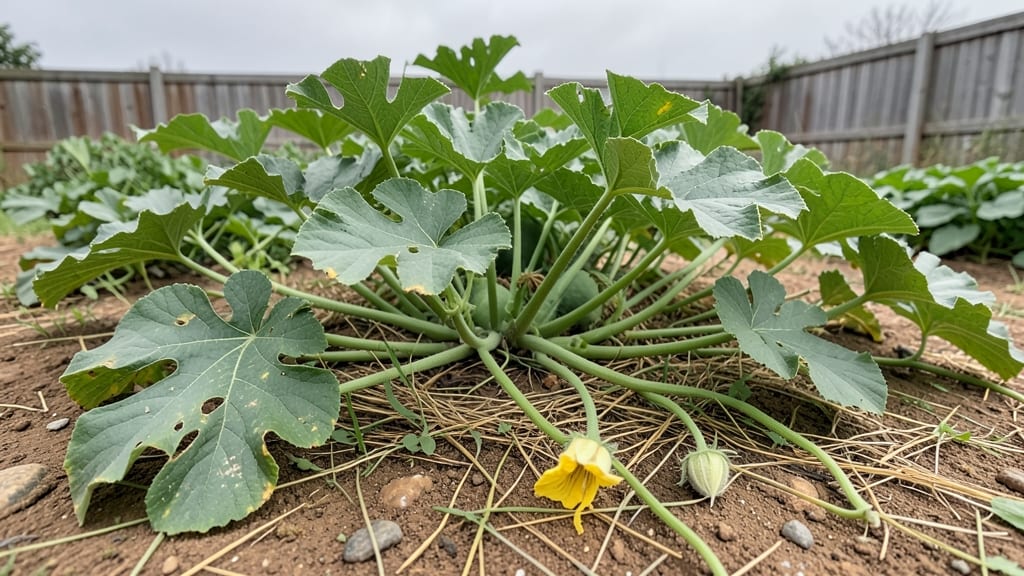
Yes, watermelon plants have flowers, and they produce distinct male and female blooms that drive fruit development. The male flowers emerge first, while female flowers—identified by their tiny fruit at the base—signal readiness for pollination.
Watermelon flowers aren’t just pretty—they’re the heart of your harvest. 🌸 Male blooms appear first, sporting long stems and no fruit, while female flowers have a tiny watermelon at their base. These gender differences ensure efficient pollination, which is why you’ll often see bees buzzing between them.
If you notice fewer female flowers, it could signal stress from heat, drought, or poor soil—so check your plant’s conditions and consider hand-pollinating with a paintbrush if needed.
Pro tip: Healthy flowers mean bigger fruit. I always fertilize with compost or a balanced 10-10-10 mix when the first blooms appear, and I avoid overwatering—soggy roots can stunt flowering.
The key is balance: enough water to keep the soil moist but not waterlogged, and plenty of sunlight to fuel those energy-hungry blooms.
💡 In This Article
- Watermelon Flower Types and Their Role in Fruit Production
- Encouraging Healthy Watermelon Flowers for Bigger Harvests
Watermelon flower types and their role in fruit production
Watermelon plants produce two distinct flower types that work together like a botanical team. The male flowers appear first, typically in clusters of 3-5, with long, slender stems and no fruit at their base.
These blooms are primarily responsible for producing pollen, which must reach the female flowers for fertilization to occur. Their bright yellow petals (about 1.5-2 inches wide) open early in the morning, making them prime targets for pollinators like bees and butterflies.
The female flowers, which emerge 5-7 days after the males, are easier to identify because they already have a tiny watermelon—about the size of a grape—attached to their base. These flowers have shorter stems and thicker petals that curve slightly upward, creating a more compact structure.
The key difference lies in their reproductive organs: male flowers have only stamens (pollen-producing structures), while female flowers contain both stamens and a pistil (the ovary that develops into fruit).
Here's what happens when pollination succeeds: After a bee transfers pollen from a male flower to a female flower's stigma, the pollen grains germinate and grow a tube down the pistil to fertilize the ovules. This triggers the ovary to swell and develop into a watermelon.
Without this process, the tiny fruit at the base of female flowers would remain undeveloped. The entire cycle from pollination to fruit formation typically takes 24-48 hours to initiate visible growth.
Temperature plays a critical role in this process. Watermelon flowers thrive in 75-85°F conditions, with ideal daytime temperatures between 80-90°F. Below 60°F, flowers may fail to open properly, while above 95°F, they can become heat-stressed and drop prematurely.
This is why gardeners in cooler climates often face challenges with fruit set—it's not just about having flowers, but ensuring they're in the right environmental conditions to perform their reproductive roles effectively.
You can often predict fruit development by observing the flowers' behavior. Successful pollination causes the female flower's petals to wilt and fall within 2-3 days, leaving behind the developing fruit.
The first fruits to appear are usually the smallest, as the plant prioritizes establishing a strong root system before committing resources to larger melons. This sequential development is a clever survival strategy that maximizes the plant's chances of producing at least some viable fruit, even under less-than-perfect conditions.
What most gardeners don't realize is that watermelon vines can produce both flower types simultaneously, creating a dynamic ecosystem on each plant. A single mature vine might have dozens of male flowers in early bloom while female flowers with developing fruits appear later in the season.
This staggered production ensures continuous pollination opportunities and increases the chances of successful fruit development throughout the growing season.