
Trees
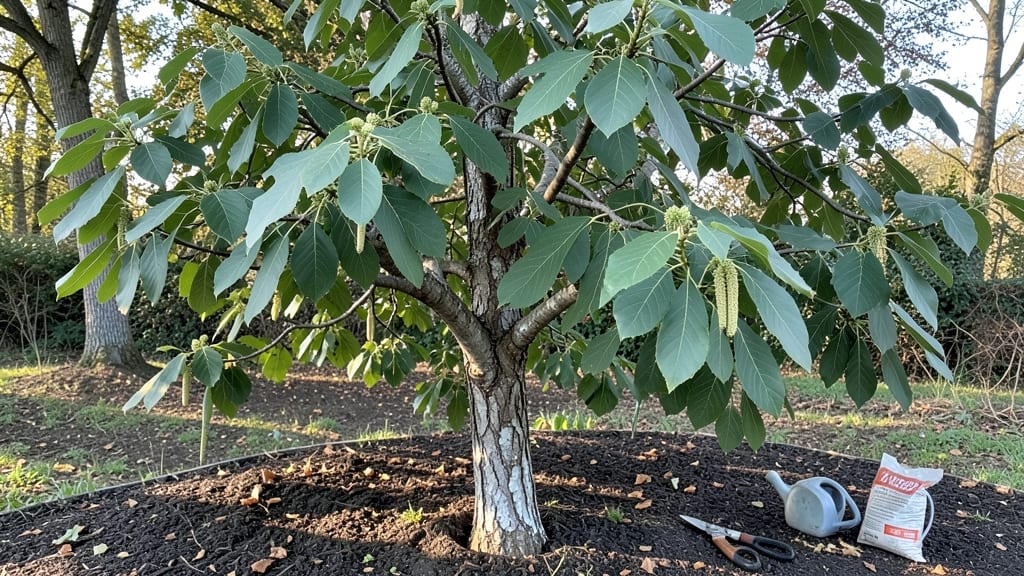
Walnut trees do flower, producing small, insignificant-looking catkins in early spring before leaves emerge, though their showy blooms are rarely noticed due to the tree’s focus on nut production.
Walnut trees may not grab attention with flashy blooms, but their early spring catkins play a crucial role in nut production. 🌸 These delicate flowers appear before leaves unfurl, with male catkins dangling like tassels and female flowers tucked close to branches.
The timing of this bloom—typically between March and April—depends heavily on climate, as warmer temperatures can trigger earlier flowering. What’s fascinating is how this subtle process determines the entire year’s harvest, since successful pollination leads to those prized nuts we love.
If you’ve ever wondered why walnut trees seem so quiet in spring, it’s because their beauty lies in function, not form.
The male flowers release pollen that fertilizes the female flowers, setting the stage for nut development. 🌿 This dual-phase flowering system ensures cross-pollination, which is why you’ll often see multiple walnut trees planted together in orchards.
Understanding this cycle helps gardeners predict yields and troubleshoot potential issues when blooms appear sparse or delayed.
💡 In This Article
- Walnut Tree Flowering Process Explained
- Signs of Healthy Walnut Tree Flowering
Walnut tree flowering process explained
Here's what's actually happening when walnut trees bloom: they follow a dioecious system, meaning male and female flowers grow on separate trees. The male flowers appear as 2-4 inch long yellow-green catkins that hang in clusters, while female flowers are tiny, red, and almost invisible without close inspection.
These catkins emerge in early spring—typically between late March and early April—when daytime temperatures consistently reach 50-60°F for at least 5-7 days. The male catkins release pollen over 2-3 weeks, creating a cloud of fine yellow dust that's carried by wind to fertilize female flowers.
The female flowers, though unassuming, are the key to nut production. Each female flower contains a single ovule that will develop into a walnut if successfully pollinated.
What's fascinating is how sensitive this process is to environmental conditions: humidity below 40% can reduce pollen viability by up to 30%, while rain during flowering can wash away pollen before fertilization occurs.
The tree's focus on nut production means it allocates 70% of its energy to reproductive structures during this critical period, leaving little for flashy displays that would attract pollinators like bees or butterflies.
Timing is everything in walnut pollination. Male catkins typically open 1-2 weeks before female flowers become receptive, creating what's called a "pollination window." This staggered timing ensures maximum pollen transfer efficiency. In commercial orchards, growers often plant 1 male tree for every 6-10 female trees to guarantee adequate pollen distribution.
The entire flowering cycle takes about 4-6 weeks, during which the tree's metabolic rate increases dramatically—you can sometimes see sap flowing more visibly from pruning wounds during this period.
What most people don't realize is how temperature fluctuations affect this process. A sudden cold snap below 32°F can damage male catkins, while prolonged warmth above 85°F before full bloom can cause premature pollen release.
The ideal scenario is gradual warming with 10-15°F daily temperature swings, which helps synchronize the flowering process across the entire tree. This is why walnut orchards in different climates often have staggered flowering times—trees in cooler regions may bloom 2-3 weeks later than those in warmer areas.
There's also a fascinating chemical aspect to walnut flowering. The male catkins produce volatile organic compounds that help attract wind currents, creating microclimates that enhance pollen dispersal. These same compounds give freshly opened walnut catkins their distinctive sweet, almost honey-like aroma that's often overlooked because it's so subtle.
The female flowers, meanwhile, produce a sticky substance that helps capture pollen—this is why you'll sometimes see tiny yellow dots on leaves during peak flowering season.
The entire flowering process is nature's way of ensuring walnut trees prioritize reproduction over other functions. This biological focus explains why you rarely see walnut trees with decorative flowers—they're too busy preparing for their main mission: producing those delicious nuts we harvest in fall.
Understanding this cycle helps explain why some years yield better than others, as environmental factors can disrupt this delicate balance at any stage. 🌿