Companion Plants
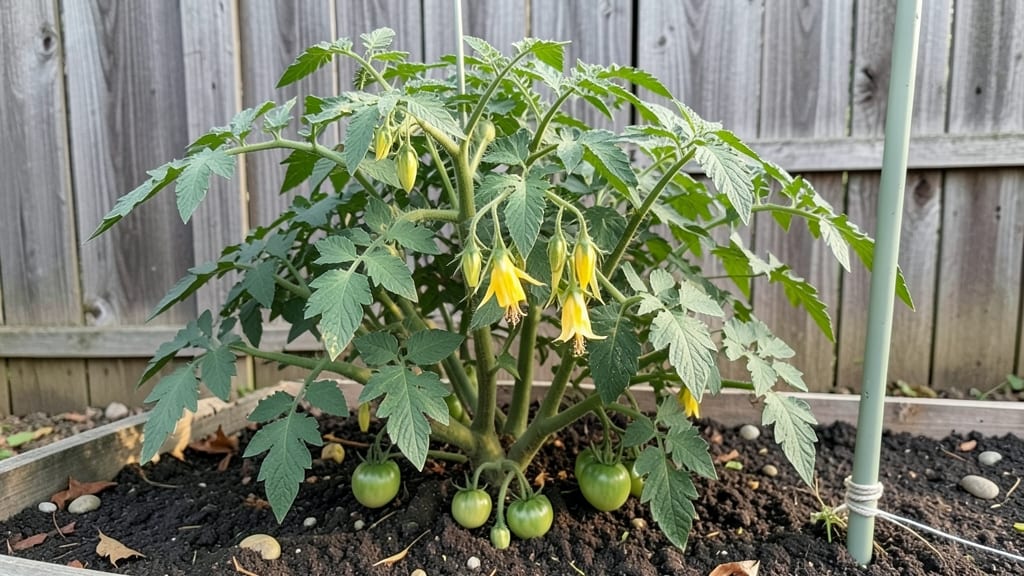
Yes, tomato plants have flowers before producing fruit, and these blossoms are essential for fruit development. The yellow or purple blooms appear in clusters and must be pollinated to form tomatoes.
Tomato plants produce flowers as part of their natural growth cycle, and these blooms are the foundation for fruit development. 🌸 Without proper pollination, flowers will drop off without forming tomatoes, which is why gardeners often need to encourage bees or hand-pollinate plants—especially in greenhouses.
The process starts when flowers open, revealing their reproductive parts, and successful pollination triggers the transformation into fruit over the following days.
Healthy tomato flowers typically appear in clusters along the plant's stems, with colors ranging from bright yellow to deep purple depending on the variety. These blooms require consistent sunlight and moderate temperatures to thrive—too much heat or drought stress can cause flowers to drop before pollination occurs.
Understanding this cycle helps gardeners optimize their plants for better yields.
💡 In This Article
- How Tomato Plant Flowers Develop Into Fruit
- Identifying and Supporting Healthy Tomato Flowers
How tomato plant flowers develop into fruit
The transformation from tomato flower to fruit begins with a biological process called pollination, where pollen from the flower's male anthers must reach the female stigma. Tomato flowers have both male and female reproductive parts, but they require external agents like bees, butterflies, or wind to transfer pollen.
Once pollen lands on the stigma, it triggers a chain reaction: enzymes break down the pollen wall, and sperm cells travel down the style to fertilize the ovules inside the ovary. This fertilization process typically takes 12-24 hours before the flower begins its transformation into fruit.
After successful fertilization, the ovary swells as it develops into a tomato, while the petals wilt and fall away. The key factor here is auxin, a plant hormone that promotes cell division and growth in the fertilized ovary.
Without pollination, the flower's energy goes toward seed development, but since tomato flowers are self-pollinating, they can produce fruit even without cross-pollination.
However, environmental stressors like extreme temperatures (below 55°F or above 90°F) or drought can disrupt this process, leading to blossom drop—where flowers fall off without forming fruit.
Bees play a crucial role in this process, as they're attracted to tomato flowers' bright colors and sweet nectar. A single bee can pollinate dozens of flowers in minutes, increasing fruit set by up to 30%.
In greenhouses or areas with fewer pollinators, gardeners often use hand-pollination techniques, like gently shaking plants or using a small brush to transfer pollen. The result? More consistent fruit development and fewer dropped blossoms. 🌿
Not all tomato flowers will develop into fruit, though. Some varieties, like cherry tomatoes, are more prolific bloomers, while others, like beefsteaks, may drop flowers due to their larger energy demands.
The plant prioritizes resources, so if it's under stress (from heat, water issues, or poor soil), it may sacrifice some flowers. This is why experienced gardeners monitor their plants closely—removing excess flowers early can help the plant focus energy on developing fewer, larger fruits.
Here's what's actually happening at the cellular level: once fertilized, the ovules inside the ovary divide rapidly, forming the seeds, while the ovary wall thickens to become the tomato's flesh.
The flower's corolla (petals) and calyx (sepals) wither away as the fruit matures over 25-50 days, depending on the variety. The ripening process involves another hormone, ethylene, which triggers color changes from green to red, yellow, or purple, depending on the tomato type.
The science behind why some flowers drop without forming fruit comes down to hormonal signals. When a flower isn't pollinated, it detects the lack of fertilization and begins to produce ethylene gas, which accelerates the aging process.
This causes the flower to detach from the plant, conserving energy. In contrast, a successfully pollinated flower receives a signal to continue growing, leading to fruit development. Understanding this helps gardeners troubleshoot why their tomato plants might be underproducing.