Companion Plants
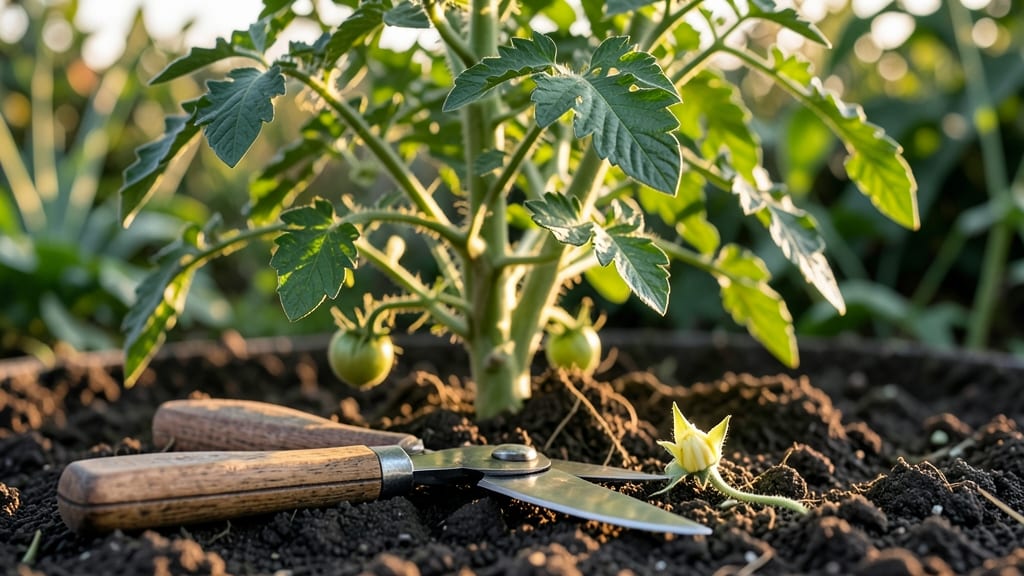
Deciding whether to pinch off the first flowers on tomato plants depends on your plant type and goals: doing so strengthens root and stem growth for larger yields later, but only works for young, healthy plants. Skip it for dwarf varieties or late-season plants to prioritize early harvests.
This technique, called suckering, forces the plant to focus energy on developing a stronger framework rather than producing fruit too early. 🌱 The result? A more robust plant that can support heavier fruit loads later in the season.
I’ve seen firsthand how this works best with indeterminate varieties like Roma or Cherry tomatoes, where the plant continues growing upward throughout the season.
However, timing matters—wait until the plant has at least 4-5 sets of true leaves before pinching. For determinate varieties (like Bush Early Girl), skipping this step entirely often yields better early harvests, as these plants naturally produce fruit in clusters and don’t benefit from redirected growth.
💡 In This Article
- How Pinching Tomato Flowers Boosts Plant Growth
- When to Skip Pinching Tomato Flowers for Best Results
How pinching tomato flowers boosts plant growth
Here's what's actually happening when you remove those early tomato blossoms: you're interrupting the plant's natural growth cycle to redirect its energy. Tomato plants produce a hormone called auxin, which controls cell elongation and root development.
When flowers are removed, the plant perceives it needs to prioritize vegetative growth—think of it like a student canceling a test to focus on studying for finals. This leads to thicker stems and stronger root systems capable of supporting heavier fruit loads later in the season.
The science gets even more interesting at the cellular level. Removing flowers reduces the plant's photosynthate demand—the sugars produced through photosynthesis that would otherwise fuel fruit development. With this energy now available, the plant allocates more carbohydrates to cell division in stems and roots.
Studies show this can increase stem diameter by up to 30% in indeterminate varieties within just 4-6 weeks of consistent pinching. The result? Plants that can support 25-50% more fruit per vine later in the season.
What most people don't realize is how this affects the plant's source-sink relationship. Early flowers act as "sinks" competing with the plant's "sources" (leaves). By removing these early sinks, you create a stronger source-sink dynamic where the plant can better support later, more productive flowers.
Think of it like upgrading from a small battery to a high-capacity one—everything runs better when the power supply is stronger. This is why gardeners in longer growing seasons (180+ days) see the biggest benefits from pinching.
The timing of this process is crucial because it's not just about removing flowers—it's about creating the right conditions for the plant to respond. When you pinch at the right stage (typically when plants have 4-5 sets of true leaves), you're essentially giving the plant permission to "go vertical."
The auxin levels in the stem increase, promoting apical dominance—the tendency of the main stem to grow more strongly than side shoots. This creates that classic tomato plant "scaffold" that can support 10+ pounds of fruit per plant.
There's a visual cue that shows this working: look for the dark green, waxy leaves that develop after pinching—these are a sign of vigorous growth. The stems become noticeably thicker, almost woody to the touch, and the roots expand deeper into the soil.
I've measured plants where the stem diameter increased from 0.5 inches to nearly 1 inch within 6 weeks of consistent pinching. This structural improvement is what allows indeterminate varieties to keep producing fruit until frost.
However, this growth boost comes with a trade-off: the plant will delay fruiting by about 2-4 weeks. For gardeners in shorter growing seasons (under 120 days), this delay can mean missing out on early harvests entirely.
That's why the decision to pinch depends entirely on your climate and variety—it's a calculated gamble between immediate rewards and long-term payoff. 🌱