
Shrubs
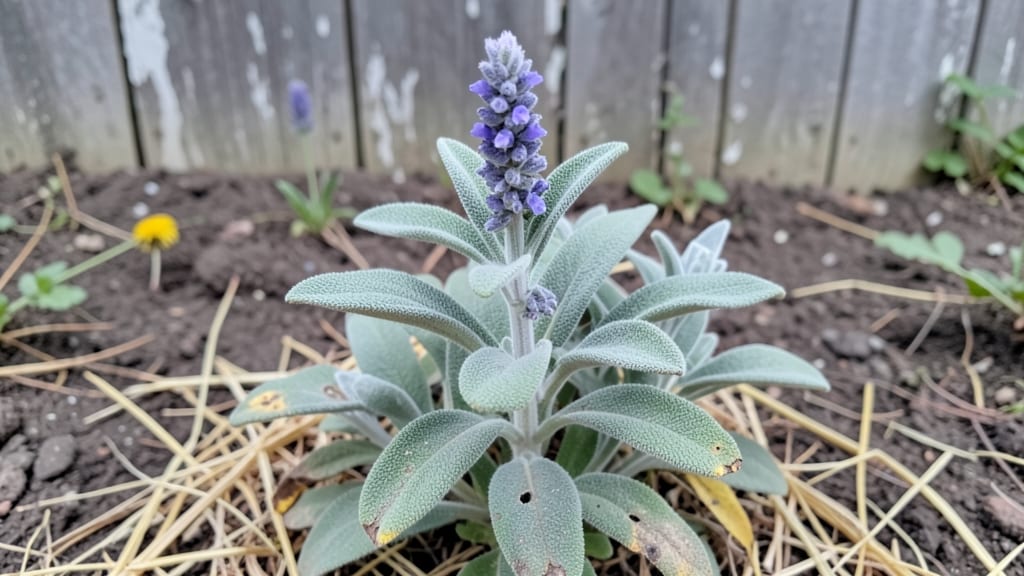
A sage flowering shrub is easy to spot with its fragrant gray-green leaves, upright form growing 2–6 feet tall, and striking lavender, blue, or white flower spikes that appear in late spring through summer. Popular types like Salvia officinalis or Salvia nemorosa love full sun and well-drained soil, producing both aromatic foliage and vibrant blooms.
A sage flowering shrub isn't just about its leaves—those eye-catching flower spikes are a dead giveaway. 🌸 The blooms appear in dense clusters at the tips of stems, often contrasting beautifully against the velvety foliage.
What's fascinating is how these plants double as pollinator magnets, attracting bees and butterflies while adding visual interest to gardens. I always recommend planting them near pathways or patios so you can enjoy both their scent and their showy display up close.
Beyond their ornamental value, these shrubs are surprisingly low-maintenance once established. They thrive in USDA hardiness zones 5–9, making them adaptable for many climates. The key is giving them well-draining soil and avoiding overwatering—they're far more drought-tolerant than you might expect.
This resilience, combined with their dual-purpose appeal (foliage and flowers), is why gardeners often choose them for both culinary and decorative spaces.
💡 In This Article
- Distinguishing Sage Shrub Leaves and Flowers
- Optimal Growing Conditions for Sage Flowering Shrubs
Distinguishing sage shrub leaves and flowers
The leaves of a flowering sage shrub are what first catch your attention with their lanceolate shape—long, oval, and tapering to a point, much like a spearhead.
The edges are typically entire (smooth, not serrated), and the surface often feels wrinkled or fuzzy to the touch, especially on the underside.
This texture comes from tiny glandular hairs that release the plant's signature aroma when crushed. 🌿 For example, Salvia officinalis (common sage) has leaves that are about 1–3 inches long and 0.5–1.5 inches wide, while Salvia nemorosa (woodland sage) features slightly broader leaves with a more pronounced velvety feel.
The flowers are where sage shrubs truly shine, emerging in terminal spikes that rise above the foliage like vertical candles. These blooms appear in late spring to early summer, with colors ranging from soft lavender to deep violet or pure white.
The flower clusters are typically whorled—meaning they grow in circular arrangements around the stem—with individual blooms measuring about 0.5–1 inch in length. The contrast between the lavender-blue flowers and the gray-green leaves creates a striking visual effect that's hard to miss.
Unlike non-flowering varieties, these shrubs produce blooms that last 4–6 weeks if deadheaded regularly.
One common point of confusion is distinguishing flowering sage from look-alikes like lavender or oregano. Lavender, for instance, has narrower, needle-like leaves and a more compact, bushy growth habit, while its flowers grow in dense, rounded clusters rather than spikes.
Oregano, on the other hand, has smaller, rounded leaves and produces tiny white or pink flowers in flat-topped clusters. Sage leaves also have a more robust, earthy-camphor aroma, whereas lavender smells floral and sweet, and oregano has a more herbaceous, slightly bitter scent. 🌸
For those who grow non-flowering sage varieties (like Salvia officinalis 'Berggarten'), the absence of flower spikes is the key difference. These cultivars focus solely on producing dense, aromatic foliage without the showy blooms.
However, even these varieties can produce occasional flowers if grown in ideal conditions, though they're typically pruned to maintain their compact shape. The trade-off is that flowering varieties often have slightly less intense leaf fragrance because energy is divided between growth and blooming.
If you're still unsure, consider the growth habit—flowering sage shrubs tend to grow 2–6 feet tall with a more upright, semi-woody structure, while culinary sage (non-flowering) stays shorter and bushier.
The flowers also serve as a natural indicator: if you see bees and butterflies flocking to your shrub, it's almost certainly a flowering sage variety, as these pollinators are drawn to its nectar-rich blooms. This is a great way to confirm your identification without needing a magnifying glass! 🐝
Pro tip: If you're harvesting leaves for culinary use, always pick from flowering shrubs in the morning after dew has dried. The essential oils that give sage its flavor are most concentrated at this time, and the leaves will have a fresher aroma and brighter green color.
Avoid picking leaves that are near flower spikes, as they tend to be slightly less potent in flavor. This ensures you get the best of both worlds—beautiful blooms and top-tier herbs for your kitchen! 💚