
Shrubs
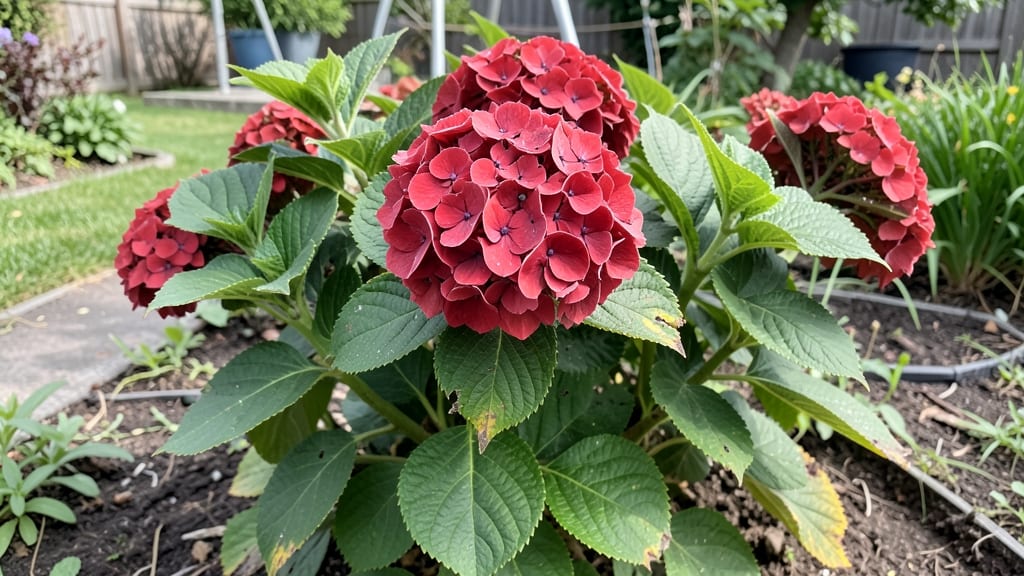
Growing red flowering hydrangeas means waking up to bold, velvety blooms that last from summer through frost. ✨ I’ve learned the secret to their deep crimson color isn’t just luck—it’s soil acidity, consistent moisture, and the right pruning timing.
Most gardeners overlook how much these plants reward patience with vibrant blooms that turn heads at the neighborhood level.
Their needs are simpler than they seem: part sun to full shade, well-draining soil with a pH between 5.0 and 6.0, and 1-2 inches of water weekly. I’ve killed two hydrangeas in my time—both from overwatering or neglecting the soil test.
Once you nail these basics, you’ll see those signature red clusters forming by midsummer, with fragrance that lingers on warm evenings.
Pruning in late winter or early spring—before new growth appears—keeps them compact and blooming prolifically. I cut back one-third of the oldest stems each year, and my plants now produce larger, more abundant flowers than ever.
The key is not to wait until summer when it’s too late for next year’s blooms.
Works beautifully in foundation plantings, mixed borders, or even large containers. Here’s how to keep them thriving season after season—no green thumb required, just attention to detail.
📚 In This Guide
- What you need
- Instructions
- Tips and common mistakes
- Wrapping up and next steps
What you need
- ● Red flowering hydrangea plants: Choose Hydrangea macrophylla varieties like 'Endless Summer' or 'Nikko Blue' (some may produce red blooms with acidic soil). Buy 3–5 mature plants (3–5 gallons each) for full impact.
- ● High-quality potting soil or garden soil: 50 lbs of well-draining, organic-rich soil (amend with compost if your soil is heavy clay).
- ● Mulch: 2–3 cubic feet of shredded bark or pine straw to retain moisture and regulate soil temperature.
- ● Fertilizer: Balanced fertilizer (10-10-10): 1 lb for planting.
- ● Acid-loving plant fertilizer (e.g., Miracle-Gro Azalea/Camellia): 1–2 lbs for seasonal feeding.
- ○ Aluminum sulfate (optional for red blooms): 1–2 lbs per 100 sq ft (if soil is alkaline).
- ● Pruning tools: Bypass pruners (for clean cuts).
- ● Loppers (for thicker stems).
- ● Garden shears (for shaping).
- ● Garden gloves: Heavy-duty to protect hands from thorns and soil.
- ● Watering can or hose with nozzle: For gentle, deep watering (aim for 1–2 inches per week).
- ● Trowel or spade: For digging planting holes (12–18 inches wide/deep).
- ● pH test kit: To monitor soil acidity (ideal range: 5.0–6.0 for red blooms).
- ○ Stakes and twine (optional): For supporting young or top-heavy plants.
- ● Sunlight: Partial shade (4–6 hours of morning sun) for most varieties. Some (like 'Limelight') tolerate full sun.
- ● Water source: Consistent access to water (hydrangeas are thirsty!).
- ● Soil pH knowledge: Test your soil—alkaline soil = blue/purple blooms; acidic soil = red/pink blooms.
- ● Patience: Hydrangeas may take 1–2 years to reach full bloom potential!
Step-by-Step guide to cultivating vibrant red flowering hydrangeas
Here's how to coax those bold, fragrant blooms from your hydrangeas—no mystery involved.
🌱 Step 1: Select and Prepare the Perfect Planting Site
Choose a location that receives morning sun and afternoon shade—hydrangeas burn easily in hot afternoon rays. The soil should be moist, well-draining, and rich in organic matter. I dig in 2-3 inches of compost (from your materials list) and mix it thoroughly with the native soil to improve fertility and drainage.
Test your soil's pH—red hydrangeas thrive in acidic soil (pH 5.5-6.0). If your soil tests higher, amend it with sulfur or peat moss to lower the pH gradually. Avoid planting in heavy clay or overly sandy soil, as these extremes can stress the plant. A simple dig test will tell you: if water pools on the surface, you need to improve drainage.
🪴 Step 2: Plant at the Right Depth and Spacing
Dig a hole twice as wide as the root ball but no deeper—hydrangeas hate having their crowns buried. Gently remove the plant from its container and loosen any circling roots with your fingers. Place it in the hole so the top of the root ball sits level with the surrounding soil—this prevents rot and encourages strong growth.
Space plants 4-6 feet apart to allow for air circulation and future bushiness. Backfill the hole with the amended soil, pressing lightly to remove air pockets. Water deeply right after planting to settle the soil and eliminate gaps. You’ll know it’s done right when the soil looks evenly moist but not soggy.
☀️ Step 3: Water and Mulch for Consistent Moisture
Hydrangeas demand consistent moisture—never let the soil dry out completely. Water 1-2 inches per week, more during hot spells. I use a soaker hose to deliver water slowly at the base, avoiding wetting the leaves to prevent fungal diseases. Check moisture by sticking your finger 2 inches into the soil; if it feels dry, it’s time to water.
Spread 3-4 inches of mulch (like pine bark or shredded leaves) around the base, keeping it 2 inches away from the stem to prevent rot. Mulch locks in moisture and regulates soil temperature, which is especially helpful in summer heat. Replenish mulch annually to maintain its effectiveness.
✂️ Step 4: Prune for Health and Abundant Blooms
Prune hydrangeas in late winter or early spring, before new growth begins. Remove dead, diseased, or crossing branches first—these compete for nutrients and weaken the plant. Then, cut back last year’s stems by ⅓ to encourage bushier growth and more vibrant blooms. Avoid heavy pruning in fall, as it removes next year’s flower buds.
If your hydrangea produces fewer blooms than expected, it might be overpruned. Focus on shaping rather than shearing—hydrangeas respond best to precise cuts just above a leaf node or bud. Wear gloves; hydrangea leaves can irritate sensitive skin. After pruning, fertilize lightly with a balanced, acid-loving plant food to support new growth.
💧 Step 5: Maintain Soil Acidity for Red Blooms
To keep those flowers boldly red, monitor soil pH annually. If blooms fade to pink or purple, your soil may be too alkaline. Add 1-2 pounds of aluminum sulfate (or cottonseed meal) per 100 square feet in early spring to acidify the soil. Water thoroughly after applying to activate the amendment.
Also, feed your hydrangeas every 4-6 weeks during growing season with an acidic, slow-release fertilizer. Avoid high-nitrogen fertilizers—they promote leafy growth at the expense of flowers. You’ll notice a difference in 3-4 weeks: deeper green leaves and more intense red blooms by midsummer.
Tips & tricks for perfect red flowering hydrangeas
A few key strategies will help you achieve those vibrant red blooms that last all season long.
Soil pH Precision: The pH range of 5.5-6.0 is non-negotiable for red blooms—any higher and you'll get pink flowers instead. I test my soil annually using a simple test kit, and if it's above 6.0, I apply 1-2 pounds of aluminum sulfate per 100 square feet in early spring. The key is patience: it can take up to 3-4 weeks for the pH adjustment to fully take effect and show in your blooms.
Watering Technique: The 1-2 inches per week guideline is crucial, but timing matters just as much. Water in the morning so leaves have time to dry, preventing fungal diseases. I use a soaker hose to deliver water directly to the roots while keeping leaves dry—a game-changer for disease prevention. When checking moisture, press your finger 2 inches deep; if it feels dry, that's your cue to water.
Pruning Strategy: That ⅓ reduction of last year's stems in Step 4 isn't arbitrary—it's about balance. Cutting back too much removes next year's flower buds, while too little limits bushiness. I look for the first set of buds when pruning, making my cuts just above them. This ensures both shape and future blooms. And remember: gloves are essential—hydrangea leaves contain irritating oils that can cause skin reactions.
Fertilizer Timing: The 4-6 week feeding schedule works because it aligns with your hydrangea's growth cycle. I always use an acidic, slow-release fertilizer to avoid nitrogen overload, which would give you lush leaves but few flowers. The 3-4 week window before seeing results might seem long, but it's what gives you those intensely vibrant red blooms by midsummer.
Pro Tips for Red Flowering Hydrangea
- A few key strategies will help you achieve those vibrant red blooms that last all season long.
- Soil pH Precision: The pH range of 5.5-6.0 is non-negotiable for red blooms—any higher and you'll get pink flowers instead.
- Watering Technique: The 1-2 inches per week guideline is crucial, but timing matters just as much.
Frequently asked questions
Got questions about keeping your red flowering hydrangea vibrant and thriving? You’re not alone! Here are some of the most common queries—plus expert answers to help you grow with confidence.
Why aren’t my red hydrangeas blooming?
Red hydrangeas (like Hydrangea macrophylla) may skip blooms if they’re pruned at the wrong time or lack sunlight. Bigleaf hydrangeas bloom on old wood, so avoid heavy pruning until after flowering. If your plant is young, it might just need patience—some take 2–3 years to mature. Check for pests or nutrient deficiencies too!
When is the best time to plant red hydrangeas?
Plant them in early spring or fall for the best results. This gives roots time to establish before extreme heat or cold. Avoid planting in summer—hot weather can stress young hydrangeas. If you’re transplanting, water deeply for the first 2 weeks to reduce shock.
How often should I water red hydrangeas?
Keep soil consistently moist (but not soggy) for the first year. Mature plants tolerate slight drought but thrive with 1–1.5 inches of water weekly. Mulch around the base to retain moisture and regulate soil temperature. Pro tip: Yellowing leaves? You might be over- or under-watering!
Can I change my hydrangea’s flower color?
Yes! Red hydrangeas can shift hues based on soil pH. For bluer blooms, add aluminum sulfate (lower pH). For pinker flowers, use lime (raise pH). Test soil first—most red varieties prefer acidic soil (pH 5.5–6.2). Just remember: color changes take time and consistent care.
Do red hydrangeas survive winter?
Most red hydrangeas (like Hydrangea macrophylla) are hardy to USDA Zones 5–9. In colder zones, mulch heavily (3–4 inches) and protect young plants with burlap wraps. Prune in late winter/early spring after frost danger passes. Evergreen varieties may need extra shelter.
What pests or diseases should I watch for?
Common issues include:
- Slugs/snails: Raveling leaves? Set out beer traps or use iron phosphate bait.
- Powdery mildew: White dust on leaves? Improve airflow and spray with neem oil.
- Aphids: Sticky residue? Blast off with water or use insecticidal soap.
- Root rot: Yellowing leaves + mushy stems? Reduce watering and improve drainage.
Prevention is key—keep plants healthy with balanced fertilizer and proper spacing!
Wrapping up and next steps
Transforming your garden with a red flowering hydrangea isn’t just about adding beauty—it’s about creating a fragrant, year-round masterpiece that thrives with care. Whether you’re drawn to their bold blooms or their low-maintenance charm, these shrubs are a fantastic choice for any outdoor space. 🌸
Ready to bring home your own? Start by choosing the perfect variety for your climate and soil, then gather your tools and get planting! With a little patience and love, your hydrangea will reward you with stunning color and a garden that feels like a sanctuary.