
Flowers
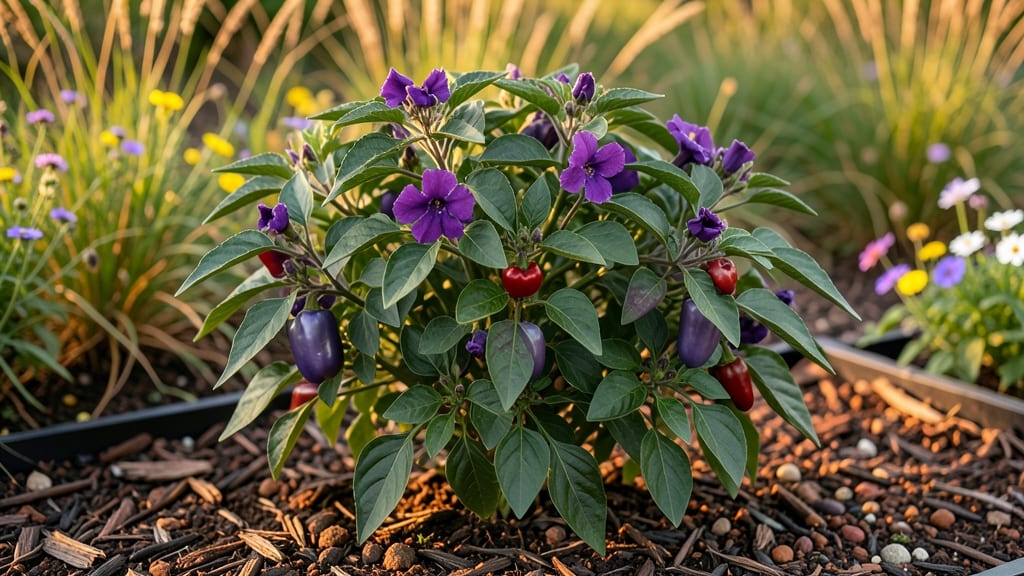
Purple pepper flowers aren’t just pretty—they’re the showstoppers of summer containers, turning patios into jewel-toned gardens. 🌿 I’ve grown them for years, and the secret to their vibrant blooms lies in matching their bold colors with the right care.
These peppers aren’t just for looks; some varieties even produce mild, fruity peppers for cooking, making them a two-for-one garden star.
They thrive in full sun and well-draining soil, but the real trick is keeping them consistently moist without drowning the roots. A 5-gallon container gives them enough space to flourish, and adding a slow-release fertilizer at planting time ensures steady nutrition.
Prune spent blooms regularly to encourage more flowers, and watch as your plants burst with color from early summer until frost.
By midseason, you’ll have a plant covered in deep magenta, violet, and lavender blooms that attract hummingbirds and butterflies. The peppers themselves—when they appear—taste like a cross between bell pepper and tomato, with a subtle sweetness. Even if you’re not harvesting, the flowers alone make these plants worth growing.
Works equally well in pots on balconies or as edging plants in garden beds. Here’s how to keep them blooming all season long—without the guesswork.
📚 In This Guide
- What you need
- Instructions
- Tips and common mistakes
- Wrapping up and next steps
What you need
- ● Purple pepper flower seeds or seedlings: Choose disease-resistant varieties like Capsicum annuum (e.g., 'Purple Flash' or 'Purple Beauty'). Start with 3–5 seeds or 1–2 seedlings per container.
- ● Containers: Use 5–7 gallon pots with drainage holes (or a raised bed if gardening in-ground). Ensure they’re at least 12–18 inches deep.
- ● Well-draining potting mix: A blend of 60% peat moss/coco coir, 30% perlite or vermiculite, and 10% compost works best. Avoid heavy clay soil.
- ● Slow-release fertilizer: Opt for a balanced 10-10-10 or 5-5-5 fertilizer with micronutrients. Use 1–2 tablespoons per plant at planting.
- ● Organic mulch: 1–2 inches of straw or shredded leaves to retain moisture and suppress weeds.
- ● Trowel or small shovel for planting.
- ○ Gloves (optional but recommended—pepper plants can be prickly!).
- ● Watering can or hose with a gentle spray nozzle (avoid soaking the soil).
- ● Pruning shears for trimming dead leaves or shaping plants.
- ○ pH testing kit (optional but helpful—purple peppers thrive in 6.0–6.8 pH).
- ● Sunlight: 6–8+ hours of direct sunlight daily (south-facing windows or full sun outdoors).
- ● Temperature: Keep soil temps above 70°F (21°C) for germination. Mature plants tolerate 60–90°F (15–32°C).
- ● Water: 1–1.5 inches per week (let soil dry slightly between waterings to prevent root rot).
- ● Patience: Purple pepper flowers take 70–90 days to mature from seed (or 60–70 days from seedlings).
- ● Cage or trellis for tall varieties (e.g., 'Purple Flash').
- ● Fish emulsion or compost tea for a mid-season nutrient boost.
- ● Row covers or shade cloth (30–50%) for hot climates.
- ● Decorative pebbles or mulch for a polished container look.
Step-by-step instructions for cultivating purple pepper flowers in containers
Here’s how to coax vibrant purple blooms from these striking annuals—container-friendly and packed with personality.
🌱 Step 1: Prepare Containers and Soil Mix for Optimal Drainage
Start with 5-gallon containers for each plant, ensuring they have drainage holes—purple pepper flowers despise soggy roots. I use terra cotta pots because they wick moisture away naturally, preventing the fungal issues that often plague container-grown peppers. Fill each pot with a custom mix of 50% premium potting soil, 30% perlite, and 20% compost—this lightens the soil while providing nutrients.
Moisten the mix until it’s damp like a wrung-out sponge, but not dripping. Press it down gently so the surface is firm enough to support young stems without compacting the structure. The goal is air pockets for roots but no empty spaces where water could pool. I always tap the sides of the pot once to settle everything evenly before planting.
🌱 Step 2: Plant Seeds or Transplants at the Right Depth
If starting from seed, sow two seeds per pot at a depth of ¼ inch, which is roughly the width of a pencil eraser. Planting deeper slows germination because the seedling must push through more soil to reach light. For transplants, bury the root ball to the same depth it was in its nursery pot—this prevents stem rot from buried stems.
Space seeds or transplants 12 inches apart within the pot. I know it seems like overkill, but purple pepper flowers need room to branch out. After planting, water gently until moisture seeps from the drainage holes below. This ensures the soil settles around roots without displacing them.
☀️ Step 3: Provide Warmth and Bright Light for Strong Growth
Purple pepper flowers thrive in full sun, so position containers in a spot that gets at least 6-8 hours of direct sunlight daily. A south-facing patio or balcony works best, but if you’re in a shaded area, supplement with a grow light kept 6 inches above the plants for 14 hours a day. Without enough light, stems stretch weakly and flowers stay small.
Keep soil temperatures above 65°F—a heat mat helps if your evenings cool below that. Watch for first true leaves (the second set after the initial seed leaves) as your signal that roots are establishing. Once they appear, reduce watering slightly—overwatering now causes damping-off, a fungal disease that collapses seedlings overnight.
💧 Step 4: Water Deeply and Fertilize for Bold Blooms
Water when the top 2 inches of soil feel dry to the touch, which usually means every 2-3 days in warm weather. I water deeply at the base, avoiding the leaves to prevent fungal spores from splashing onto foliage. Purple pepper flowers are drought-tolerant once established, but consistent moisture encourages lush blooms.
After the first set of true leaves appears, feed with a balanced liquid fertilizer (10-10-10) diluted to half strength. Apply every 2 weeks during the growing season. You’ll see the difference in 3-4 weeks—plants develop thicker stems and more vibrant purple flowers. Stop fertilizing in late summer to let the plant focus on blooming rather than foliage.
✂️ Step 5: Prune and Deadhead for Continuous Blooms
Pinch off the first few flowers that appear to encourage bushier growth. This redirects energy from fruit production to stronger branches. Once the plant is established, deadhead spent blooms regularly—this prevents seed pods from forming and extends the flowering season. I use clean, sharp scissors to snip just above a leaf node.
If stems grow leggy, prune back by one-third to promote branching. Purple pepper flowers respond well to pruning, so don’t hesitate to shape them. Mulch the soil surface with 1 inch of organic mulch to retain moisture and suppress weeds. With consistent care, your containers will burst with bold purple blooms from early summer until frost.
Tips & tricks for cultivating purple pepper flowers in containers
Here's what I've learned after nurturing these stunning blooms—small details make all the difference between modest growth and show-stopping purple cascades.
Container Selection Wisdom: While terra cotta pots are ideal, plastic containers work too—just ensure they have drainage holes. I've found that adding a layer of gravel or broken pottery shards at the bottom of any container improves drainage further. This prevents waterlogging, which purple pepper flowers absolutely hate. For extra insulation in cooler climates, nestle your 5-gallon containers in larger decorative pots filled with straw or mulch.
Soil Mix Secrets: The 50-30-20 ratio of potting soil, perlite, and compost is perfect, but don't skimp on the perlite. I've seen plants with insufficient aeration develop root rot within weeks. For an extra boost, mix in 1 tablespoon of worm castings per pot—it provides gentle, slow-release nutrients without burning tender roots. The key is maintaining that airy texture while keeping the soil moist but never soggy.
Lighting Strategy: Those critical 6-8 hours of sunlight are non-negotiable, but here's the thing: morning sun is more valuable than afternoon sun. Position your containers to catch the east-facing sun first, then supplement with a grow light in the late afternoon if needed. I've had plants that got too much afternoon sun develop sunburned leaves—watch for yellowing or crispy edges as a warning sign. The 14-hour grow light requirement is strict, but you can achieve this by using a timer to automate your lighting schedule.
Pruning Technique: When pruning back leggy stems by one-third, always make cuts just above a leaf node where new growth will emerge. I use clean pruning shears and dip them in rubbing alcohol between cuts to prevent spreading disease. The best time to prune is in the morning when humidity is lowest—this gives any small cuts time to heal before evening moisture sets in. Remember, purple pepper flowers respond beautifully to shaping, so don't be afraid to get creative with their form.
Pro Tips for Purple Pepper Flowers
- Here's what I've learned after nurturing these stunning blooms—small details make all the difference between modest growth and show-stopping purple cascades.
- Container Selection Wisdom: While terra cotta pots are ideal, plastic containers work too—just ensure they have drainage holes.
- Soil Mix Secrets: The 50-30-20 ratio of potting soil, perlite, and compost is perfect, but don't skimp on the perlite.
Frequently asked questions
Got questions about growing purple pepper flowers? You’re not alone!
Here are answers to the most common queries—from planting tips to troubleshooting—so you can enjoy vibrant blooms without the guesswork.
Do purple pepper flowers need full sun to thrive?
While they prefer 6–8 hours of direct sunlight daily, purple pepper flowers can tolerate partial shade (4–6 hours). In hot climates, afternoon shade helps prevent stress. Just watch for fewer blooms if light is limited—think of it like a cozy blanket for your plants!
How long does it take for purple pepper flowers to bloom?
Patience is key! With proper care, expect blooms 6–12 weeks after planting (or 4–6 weeks for container-grown plants). Young plants may take longer, but consistent watering and fertilizer boosts speed. Pro tip: Deadhead spent flowers to encourage more blooms!
Why aren’t my purple pepper flowers blooming?
Common culprits include:
- Underwatering: Soil should stay evenly moist (not soggy).
- Overcrowding: Trim nearby plants for better airflow.
- Nutrient deficiency: Use a balanced fertilizer (10-10-10) every 4–6 weeks.
- Temperature stress: They thrive in 60–85°F; extreme heat/cold halts blooming.
Can I grow purple pepper flowers in containers?
They’re perfect for pots (5+ gallon size). Use well-draining soil, and place containers where they get morning sun. Just ensure pots have drainage holes to avoid root rot. Bonus: Container plants often bloom earlier than garden beds!
What are some purple pepper flower alternatives for similar color?
If you love the purple hue but want variety, try:
- Lantana: Drought-tolerant with clustered blooms.
- Petunias: Vibrant and great for hanging baskets.
- Salvia: Heat-loving with striking spikes.
- Cleome: Unique spider-like flowers (edible seeds!).
Are purple pepper flowers toxic to pets?
Generally non-toxic to dogs and cats, but individual reactions vary. If your pet nibbles, monitor for vomiting or diarrhea. For peace of mind, keep plants out of reach or opt for pet-safe alternatives like marigolds or zinnia. When in doubt, consult your vet!
Wrapping up and next steps
Growing purple pepper flowers is a rewarding journey that brings vibrant color and unique texture to your space—whether in pots or garden beds! 🌸 With the right care, these bold blooms can thrive year after year, offering both beauty and culinary potential.
Whether you're a seasoned gardener or just starting out, your efforts will pay off in stunning displays and delicious harvests.
Ready to take the next step? Start small—plant a single container or two—and watch your confidence (and garden!) grow. Before you know it, you’ll be sharing tips with fellow plant lovers! 🌱 Happy growing!