
Companion Plants
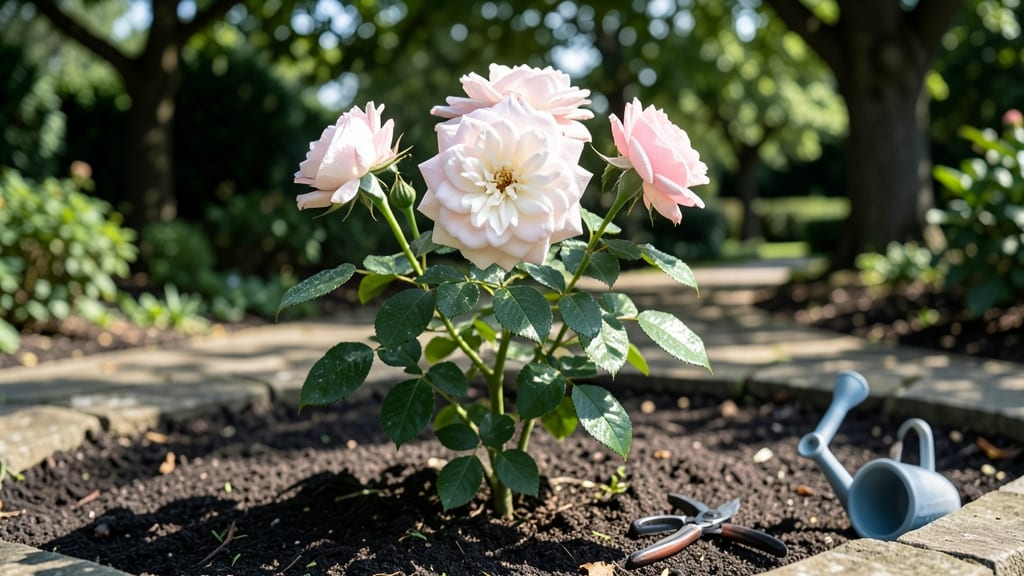
Plants with flowers are called angiosperms, the dominant group of flowering plants that produce seeds enclosed within a protective fruit. They include trees, shrubs, grasses, and most garden flowers, making up about 80% of all plant species.
Angiosperms stand out in the plant kingdom because their seeds develop inside a protective ovary, which later becomes fruit. 🌸 This unique trait sets them apart from gymnosperms like pine trees, whose seeds are exposed on cones.
The flower itself is their evolutionary masterpiece—a reproductive powerhouse that attracts pollinators through color, scent, and nectar, ensuring successful seed dispersal. My garden is packed with these plants, from vibrant roses to humble tomatoes, all thriving because of this sophisticated system.
What's fascinating is how this adaptation revolutionized plant life over 140 million years ago. Flowers didn't just evolve for beauty—they became survival tools, allowing plants to spread efficiently across ecosystems. 🌿 This is why you'll find angiosperms everywhere, from tropical rainforests to urban sidewalks.
Their versatility makes them the backbone of both natural landscapes and human agriculture.
💡 In This Article
- Angiosperms: The Science Behind Flowering Plants
- Identifying Flowering Plants: Key Characteristics and Examples
Angiosperms: the science behind flowering plants
The defining feature of these plants is their closed seed development—unlike gymnosperms like pine trees, whose seeds sit exposed on cones, angiosperms encase their seeds within a protective ovary.
This ovary matures into fruit, creating a natural dispersal package that animals happily consume and spread. 🌱 The flower itself is a specialized reproductive organ that combines male (stamens producing pollen) and female (pistils containing ovules) structures in one elegant package, maximizing efficiency.
Here's what makes their reproduction so efficient: Flowers attract pollinators through vibrant colors (like sunflowers that reflect ultraviolet patterns), sweet nectar, and even heat (some orchids mimic female bees!). The pollen travels to the stigma, where fertilization occurs inside the ovary.
This internal fertilization creates seeds that develop while protected—unlike gymnosperms, which rely on wind for pollination and lack this protective layer. 🌸 The result? Angiosperms can produce seeds in weeks rather than months, giving them a massive evolutionary advantage.
This reproductive strategy explains why angiosperms dominate today's ecosystems. Their flowers evolved approximately 140 million years ago, coinciding with the rise of insects and birds—perfect pollinator partners.
The fruit that develops from the ovary serves dual purposes: it protects seeds during development and provides incentives (like sweet flesh) for animals to spread them. Compare this to gymnosperms, which still rely on wind for pollination and lack this dual-function structure.
The diversity of angiosperms stems directly from this reproductive flexibility. Flowers come in every color, shape, and size—from the 1-inch-wide blossoms of water lilies to the 12-inch-wide blooms of Rafflesia. Some even mimic insects or release pheromones to attract specific pollinators.
This specialization allows angiosperms to occupy nearly every ecological niche, from deserts to swamps, while gymnosperms remain limited to more specialized environments like coniferous forests.
Consider the tomato plant: Its bright red fruit isn't just food for us—it's a dispersal mechanism. Animals eat the fruit, digest the flesh, and excrete the seeds far from the parent plant.
This "free service" from wildlife explains why angiosperms make up 90% of all plant species—they've perfected the art of teamwork with animals for survival. 🌿 The flower isn't just decoration; it's a sophisticated survival tool that turns chance encounters with pollinators into reproductive opportunities.
What most people don't realize is how this system affects us daily. Nearly all our food crops—wheat, rice, apples, coffee—are angiosperms that rely on this perfect reproductive package. Without flowers, our grocery stores would look very different indeed.
The next time you enjoy a strawberry, remember: that red exterior isn't just fruit—it's the sophisticated result of millions of years of evolutionary innovation in plant reproduction.