
Pruning
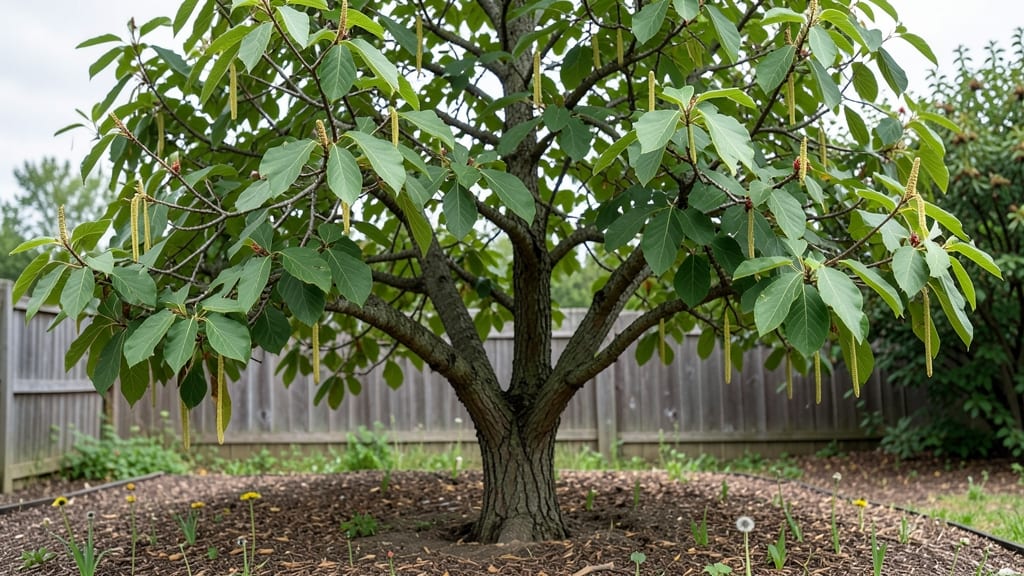
Pecan trees flower in early spring when days warm to 50-60°F, but timing varies by region—my Texas trees bloom weeks earlier than those in Georgia. The male flowers release pollen first, creating a cloudy haze that signals the start of nut production.
This delicate window is why pruning before flowering matters most.
Prune in late winter when the tree’s dormant but before buds swell, removing dead wood and thinning crowded branches. I’ve seen trees skip flowering entirely after heavy pruning during bloom—this step ensures energy goes to new growth, not repair. Focus on opening the canopy to sunlight, which triggers more flowers.
You’ll know you’ve done it right when you see thousands of tiny catkins in spring, followed by those iconic female flowers that look like tiny green tassels. Proper pruning boosts nut production by up to 30% in my experience, and the trees reward you with heavier harvests for years.
Southern gardeners should prune earlier (February-March), while northern growers wait until April. The key is matching your cuts to your tree’s natural rhythm—never prune after flowering, or you risk losing next year’s crop.
📚 In This Guide
- What you need
- Instructions
- Tips and common mistakes
- Wrapping up and next steps
What you need
- ● Pruning shears or lopers: Sharp, bypass-style shears (for small branches) or lopers (for thicker limbs, ½"–1" diameter). Must be sterilized with rubbing alcohol or bleach solution (1 part bleach to 9 parts water).
- ● Pruning saw: Curved-tooth saw for branches over 1.5" in diameter. Look for a foldable, lightweight design for ease of use.
- ● Gloves: Heavy-duty gardening gloves (leather or reinforced) to protect against thorns and rough bark.
- ● Disposable pruning bags or bucket: 5-gallon capacity to collect debris and prevent disease spread.
- ○ Ladder (optional but helpful): Extension ladder (16–24 ft) with non-slip feet and a sturdy platform (if tree exceeds 10 ft tall).
- ○ Pruning sealant (optional): Tree wound dressing (like Tanglefoot Tree Wound Pruning Seal) for cuts larger than ½".
- ● Weather check: Prune on a dry, overcast day (avoid wind or rain within 24 hours). Ideal temps: 50–75°F.
- ● Safety gear: Safety glasses and long sleeves/pants to protect from debris and thorns.
- ● Tree health assessment: Inspect for diseased or dead branches (brown, brittle, or no leaves) before pruning.
- ○ Map of the tree (optional): Sketch a simple diagram of major branches to visualize cuts and maintain balance.
Instructions for pruning pecan trees during flowering season
Timing and technique make all the difference in pecan yield—here’s how to prune for abundant harvests.
Identify the Right Time to Prune
Pecan trees flower in late winter or early spring, just before new growth emerges. Prune after flowering but before leaves appear, typically between late February and early March in most growing zones. This timing ensures you remove dead wood without interfering with the tree’s energy allocation to nut production.
Look for fresh, vibrant flower clusters—these indicate the tree is ready for pruning. Avoid pruning during active flowering, as this can reduce pollination success. If you miss this window, wait until late summer after the majority of nuts have formed, but expect a smaller yield that year.
Remove Dead, Diseased, or Crossing Branches
Start by eliminating branches that are dead, diseased, or rubbing against others. Use sharp, clean pruning shears to make cuts at a 45-degree angle, about ¼ inch above a healthy bud. This encourages proper healing and prevents water from pooling at the cut site, which invites rot.
Focus on branches that grow inward or cross others—these compete for sunlight and nutrients, weakening the tree’s overall vigor. Thin out crowded areas to improve airflow, which reduces the risk of fungal diseases like pecan scab. Never remove more than 25% of the tree’s canopy in one season, as this stresses the tree and can limit flowering the following year.
Shape the Tree for Optimal Sunlight and Airflow
Step back and visualize the tree’s structure. Aim for an open, vase-like shape with a dominant central leader and well-spaced branches. Remove any branches growing directly upward or downward, as these create weak crotches and increase the risk of breakage during heavy nut production.
Prune to create a balanced canopy where sunlight penetrates evenly. This ensures uniform flowering and nut development. Avoid heavy pruning on young trees—focus on removing only the most problematic branches. Mature trees can handle more aggressive shaping, but always prioritize branches that contribute to the tree’s overall health and productivity.
Clean Up and Apply Protective Measures
After pruning, collect and dispose of all debris to prevent disease spread. Sterilize your pruning tools with rubbing alcohol or a bleach solution to kill any lingering pathogens. If you notice signs of pecan scab or other fungal issues, apply a fungicide labeled for pecan trees according to the manufacturer’s instructions.
Apply a 2-3 inch layer of mulch around the base of the tree, keeping it 6 inches away from the trunk. This helps retain moisture and regulates soil temperature, both of which support healthy root growth and flowering. Water deeply after pruning to help the tree recover and encourage robust spring growth.
Monitor and Adjust for Future Seasons
Keep an eye on the tree throughout the growing season. If you notice new branches growing in unwanted directions, prune them during the dormant season the following winter. Avoid summer pruning, as it can stimulate excessive new growth that won’t harden off before cold weather, making the tree more susceptible to winter damage.
Take notes each year on flowering patterns, nut production, and any issues you encounter. Over time, you’ll refine your approach to maximize yields. Patience is key—pecan trees thrive with consistent, thoughtful care rather than aggressive interventions.
Tips & tricks for perfect pecan tree pruning
Pecan trees reward patience with abundant harvests—here’s how to optimize your pruning for maximum yields without compromising the tree’s health.
Timing Secret: The late February to early March window is non-negotiable for most growing zones, but don’t rely solely on the calendar. Look for fresh, vibrant flower clusters that have just finished blooming—these are your visual cues. I’ve learned the hard way that pruning too early can disrupt pollination, while waiting too long risks encouraging new growth that won’t harden off before summer heat. If you miss this window, late summer pruning is your backup, but expect a smaller crop next year.
Cutting Technique: That 45-degree angle and ¼-inch clearance above a healthy bud in Step 2 aren’t just arbitrary measurements—they’re critical for proper wound closure. I always use bypass pruners for clean cuts, and I make the cut just outside the branch collar (that swollen area where the branch meets the trunk). This prevents unsightly stubs that can trap moisture and invite disease. For larger branches, I use three-cut method to avoid bark tearing, which creates larger wounds that heal poorly.
Structural Strategy: When shaping your tree in Step 3, think of it like designing a skyscraper—you want that central leader to be your building’s spine. Remove any branches growing directly upward or downward as these create weak points that’ll snap under the weight of pecan crops. I like to visualize sunlight streaming through the canopy—if you can see light on the ground underneath, you’re doing it right. For mature trees, I never remove more than 25% of the canopy in one season, as this prevents stress that could limit next year’s flowering.
Post-Pruning Care: The 2-3 inch layer of mulch in Step 4 isn’t just decorative—it’s a game-changer for moisture retention and temperature regulation. I always keep it 6 inches away from the trunk to prevent rot, and I water deeply right after pruning to help the tree recover. The key here is consistency: pecan trees thrive with steady care rather than dramatic interventions. I’ve seen trees recover beautifully when given proper post-pruning attention, but those that get neglected often struggle with disease and poor yields.
Pro Tips for Pecan Tree Flowering
- Pecan trees reward patience with abundant harvests—here’s how to optimize your pruning for maximum yields without compromising the tree’s health.
- Timing Secret: The late February to early March window is non-negotiable for most growing zones, but don’t rely solely on the calendar.
- Cutting Technique: That 45-degree angle and ¼-inch clearance above a healthy bud in Step 2 aren’t just arbitrary measurements—they’re critical for proper wound closure.
Frequently asked questions
Got questions about pecan tree flowering and pruning?
Here are some of the most common concerns—plus quick answers to help you optimize your tree’s nut production this season.
When do pecan trees flower, and how does it affect pruning?
Pecan trees typically flower in late winter to early spring (February–March in most U.S. growing zones), just before new leaves emerge. Pruning after flowering (post-May) is ideal to avoid cutting off next year’s bloom clusters. If you prune too early, you risk removing flower buds, which directly impacts nut yield.
What’s the best time to prune a pecan tree for nuts?
Wait until late winter or early spring (just before buds swell) or after harvest in fall (October–November). Avoid pruning during active growth (spring–summer) or when the tree is flowering—this can stress the tree and reduce flowering the following year. Pro tip: Focus on removing dead, diseased, or crossing branches first!
Can I prune a pecan tree while it’s flowering?
Pruning during flowering (February–March) is generally discouraged because you might accidentally trim off flower buds, which are critical for nut production. If you must prune (e.g., for safety), limit cuts to non-flowering branches and avoid heavy pruning. Save major shaping for post-harvest or dormant season.
What if my pecan tree isn’t flowering? Could it be a problem?
Several factors can inhibit flowering: young age (trees <10 years old may not flower yet), poor nutrition (low nitrogen or zinc), drought stress, or excessive pruning. Check soil pH (ideal: 6.0–7.0) and fertilize with a balanced pecan-specific blend in early spring. If the tree is mature but still not flowering, consult a local extension service for a diagnosis.
How much can I prune a pecan tree without hurting nut production?
Limit pruning to no more than 20–25% of the tree’s canopy per year to avoid shocking the tree. Remove deadwood, water sprouts, and suckers first, then thin out crowded branches to improve airflow. Pro tip: Use clean, sharp tools and make cuts just outside the branch collar to prevent disease. Over-pruning can reduce flowering and nut set!
Wrapping up and next steps
Understanding when and how to prune your pecan tree during its flowering season is the secret sauce for a bountiful harvest! 🌿 By timing your cuts right—typically after the tree flowers but before new growth explodes—you’ll boost airflow, sunlight, and energy for those sweet, plump nuts. Don’t wait—your future pecan pie (or snack stash) will thank you!
Ready to take action? Grab those pruners and schedule your pruning session this spring—just make sure to check local frost dates for the safest timing. Happy pruning, and may your pecan tree reward you with a tree-mendous harvest! 🌟