Shrubs
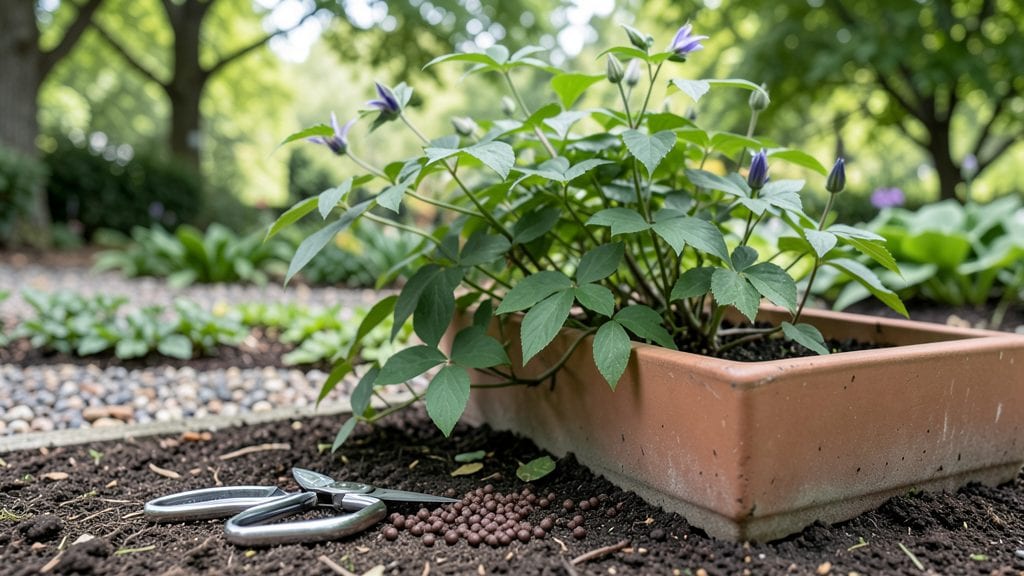
Your clematis not flowering this season might be a quick fix away. 🌿 I’ve had my share of leafy vines with zero blooms, and the culprit was almost always one of three overlooked details—sunlight, pruning, or nutrients.
The good news? All three can be adjusted in under an hour, and you’ll see buds forming within weeks.
The most common mistake is assuming clematis just needs "sun." But six hours of direct sunlight—especially morning sun—is non-negotiable for most varieties. Mine sat under a tree for years, and all I got were lush green tendrils.
Then I moved it to a south-facing spot, and by June, it was covered in blooms. Pruning also plays a role: cutting at the wrong time or too aggressively sends energy into foliage instead of flowers.
You’ll know you’re on the right track when new growth appears bright green and vigorous—not leggy or yellowing. A balanced fertilizer with phosphorus (the middle number) boosts blooms, and a light trim after flowering encourages next year’s buds.
The first signs of success? Tiny flower buds forming by late spring, followed by a cascade of blooms by summer.
Works for both early- and late-flowering varieties, and the fixes adapt to containers or garden beds. Let’s get those vines blooming again—fast.
Root Causes Behind Missing Blooms
When your clematis refuses to flower, it’s often a cry for help from the plant itself—whether it’s struggling with basic needs, hormonal imbalances, or environmental stress.
Understanding the why behind the problem is the first step to revival. Let’s break down the most common culprits, backed by science and actionable insights.
Clematis are heavily pruned plants, and getting the timing or method wrong can stall flowering for a full season—or worse, kill the plant. Here’s what’s likely happening:
- Pruning at the wrong time: Clematis are divided into three pruning groups (based on bloom time), and each has a strict window.
If you prune after the plant has set buds (e.g., cutting back a Group 2 or 3 clematis in early spring), you’re removing next year’s flowers before they even form. - Group 1 (Early spring bloomers): Prune immediately after flowering (late spring/early summer). - Group 2 (Mid-season bloomers): Prune in early spring (before buds swell). - Group 3 (Late summer/fall bloomers): Prune in early spring (but leave some old stems for early flowers).
- Over-pruning or aggressive cuts: If you’re shearing stems back to the ground (like a hedge), you’re removing the basal buds where new growth—and flowers—emerge. Clematis need at least 12–18 inches of stem to support regrowth.
- Deadheading incorrectly: Pinching off spent blooms on Group 1 and 2 clematis can encourage more flowers—but if you’re too aggressive, you might remove the flowering nodes (the small bumps where buds form). Wait until the flower fully wilts before cutting.
💡 Pro Tip: Take a photo of your clematis before pruning next year. Label it with the bloom time (e.g., "June bloomer") and prune groups separately to avoid confusion.
Clematis are light-hungry climbers, and if they’re not getting the right conditions, they’ll focus energy on leaves instead of flowers. Check these three critical factors:
- Insufficient sunlight: Most clematis need 6–8 hours of direct sun daily (Group 3 varieties tolerate partial shade).
If yours is tucked under a tree or in a shady corner, it’s likely producing foliage but no blooms. - Symptom: Long, leggy stems with sparse leaves and zero buds. - Fix: Move it to a south- or west-facing wall or provide a sunny trellis.
If relocating isn’t possible, opt for shade-tolerant varieties like Clematis montana or Clematis armandii.
- Wrong soil type or pH: Clematis thrive in well-draining, fertile soil with a pH of 6.0–7.5.
Heavy clay or sandy soil can starve roots of nutrients, while compacted soil leads to root rot, cutting off nutrient flow to the stems. - Symptom: Yellowing leaves, stunted growth, or no flower buds at all. - Fix: - Amend soil with compost or aged manure for fertility. - Add perlite or grit to improve drainage. - Test pH with a soil kit—if too acidic (<5.5), add lime; if too alkaline (>8.0), use sulfur or peat moss.
- Lack of proper support: Clematis are twining vines that need physical support to grow upward.
Without a trellis, arbor, or sturdy fence, they sprawl horizontally, wasting energy on weak stems instead of flowering. - Symptom: Long, floppy stems with buds forming but never opening. - Fix: Install a strong trellis, obelisk, or wire mesh and train vines upward as they grow.
Use soft ties (not wire) to avoid damaging stems.
Too little—or too much—of the wrong nutrients can halt flower production. Clematis are heavy feeders, but they’re sensitive to nitrogen overload (which promotes leaves over blooms).
- Excess nitrogen (N): If you’re using a high-nitrogen fertilizer (like lawn food) or over-applying compost, your clematis will prioritize leafy growth over flowers.
- Symptom: Lush, dark green foliage with no buds or tiny, weak flowers.
- Fix: Switch to a balanced, bloom-boosting fertilizer (e.g., 10-10-10 or 5-10-10) high in phosphorus (P)—the nutrient responsible for flower development.
- When to feed:
- Early spring (after pruning): Light feeding to stimulate growth.
- Late spring/early summer (when buds form): Phosphorus-rich feed (e.g., bone meal or bloom booster).
- Avoid fertilizing in fall—it encourages tender growth that won’t survive winter.
- Lack of key micronutrients: Deficiencies in magnesium, iron, or potassium can also stunt flowering.
- Magnesium deficiency (yellowing between leaf veins): Apply Epsom salt (1 tbsp per gallon of water, foliar spray).
- Iron deficiency (yellow new leaves): Use chelated iron or apply iron sulfate to soil.
- Potassium deficiency (weak stems, poor bud formation): Add wood ash or a potassium-rich fertilizer.
- Over-fertilizing: Too much fertilizer (especially synthetic types) can burn roots or lead to salt buildup, stressing the plant and preventing blooms. - Symptom: Crispy leaf edges, stunted growth, or no flowers despite lush foliage. - Fix: Flush soil with water to leach excess salts.
Reduce feeding to once every 4–6 weeks in growing season.
Hidden invaders can sap your clematis’ strength, leaving it too weak to produce flowers. Watch for these culprits:
- Clematis wilt (Fusarium oxysporum): A fungal disease that clogs the plant’s vascular system, cutting off water and nutrient flow.
Infected stems suddenly wilt and die mid-season. - Symptom: One or two stems collapse while others stay green (classic "sudden death" sign). - Fix: - Remove and destroy infected stems immediately. - Drench soil with fungicide (e.g., copper-based or systemic like Myclobutanil). - Improve air circulation around the plant to reduce humidity.
- Aphids, spider mites, or scale insects: These sap-sucking pests weaken the plant by robbing it of sugars, leading to small, deformed leaves and no blooms.
- Symptom: Sticky residue (honeydew), yellowing leaves, or white webs on stems.
- Fix:
- Blast off pests with a strong spray of water.
- Apply neem oil or insecticidal soap (repeat every 5–7 days).
- Introduce ladybugs or lacewings (natural predators).
- Vine weevils: The larvae of these beetles munch on clematis roots, stunting growth and preventing flowering.
- Symptom: Chewed stems at the base, wilting despite watering.
- Fix:
- Handpick adult weevils at night (they’re slow-moving).
- Apply beneficial nematodes (Heterorhabditis bacteriophora) to soil in early summer.
- Mulch heavily to deter adults from laying eggs.
Clematis are hardy but sensitive to temperature swings, drought, or waterlogging. Even minor stress can trigger bud drop or prevent flowering entirely.
- Winter damage (late frosts or poor hardiness): If your clematis is newly planted
Revive Your Clematis Blooms Now
Here’s your step-by-step guide to diagnosing and fixing the most common reasons your clematis isn’t flowering—plus tips to keep it blooming beautifully for years.
If your clematis is overgrown, tangled, or pruned at the wrong time, it may skip flowering. Pruning is the #1 way to encourage blooms, but timing and technique matter.
🔥 When to Prune (Group by Type)
Clematis fall into three pruning groups—pick yours and follow the rules:
| Group | Flowering Time | Prune Time | How Much to Cut |
|---|---|---|---|
| Group 1 | Early spring (March–April) | Late winter/early spring (before buds swell) | Cut back hard to 12–18 inches from the ground |
| Group 2 | Mid-to-late summer | Right after flowering (or late winter) | Trim lightly, removing dead wood but keeping last year’s framework |
| Group 3 | Late summer/fall | Late winter/early spring (after last frost) | Cut back moderately to 2–3 feet tall |
👨🍳 How to Prune Correctly
- Use sharp, clean shears (sterilize with rubbing alcohol to prevent disease).
- Cut at a 45° angle just above a bud facing outward (this encourages bushier growth).
- Remove dead, weak, or crossing branches first—they steal energy from blooms.
- Avoid "topping" (cutting the main stem back too short)—this can shock the plant.
> 💡 Pro Tip: If your clematis is woody and leggy, it’s likely Group 1 or 3—give it a hard prune now to stimulate new growth. For Group 2, wait until after flowering to avoid cutting off next year’s blooms.
Clematis are sun-worshippers but hate scorching roots. A few tweaks can trigger a flowering explosion.
🌡️ Light & Soil Secrets
- Morning sun + afternoon shade is ideal (especially in hot climates).
- Avoid deep shade—this leads to leggy, non-flowering growth.
- Test your soil pH (aim for 6.0–7.0).
Too acidic or alkaline? Amend with lime (to raise pH) or sulfur (to lower it).
🍽️ Feeding Schedule for Blooms
Clematis are heavy feeders, especially when they’re growing. Follow this 3-phase feeding plan:
- Early Spring (March–April)
- What to use: Balanced 10-10-10 fertilizer or composted manure.
- How to apply: Sprinkle around the base (not touching the stem) and water deeply.
- After First Blooms (June–July)
- What to use: High-phosphorus fertilizer (like 5-10-10) to encourage more flowers.
- How to apply: Side-dress with a handful of bone meal or use a slow-release granular fertilizer.
- Late Summer (August–September)
- What to use: Potassium-rich fertilizer (like 0-0-50) to strengthen stems for winter.
- How to apply: Mix into the soil or use a liquid feed every 2 weeks.
> ✨ Bonus Tip: Mulch heavily (3–4 inches of organic mulch like wood chips) to retain moisture and cool roots—this prevents stress that can halt flowering.
Drought stress or poor support can completely shut down blooms. Clematis need consistent moisture and proper trellising to thrive.
👨🌾 Watering Rules
- Deep water 1–2 times per week (1–2 inches per week total).
- Water at the base (avoid wetting leaves to prevent fungal diseases).
- Use drip irrigation or soaker hoses—they deliver water directly to roots without splashing.
> 💡 Pro Tip: If your clematis is wilting or dropping buds, it’s thirsty. Give it a deep soak immediately.
🏗️ Trellis & Support Hacks
Clematis climb for sunlight, but poor support = fewer blooms.
Try these: - Install a trellis early (before vines get too long). - Use a sturdy structure (metal arches, obelisks, or strong wooden frames). - Train vines properly: - Group 1 & 3: Let them climb upward (they bloom on new growth). - Group 2: Encourage horizontal growth (they bloom on old wood).
> 🎯 Prevention Tip: Prune and train vines in early spring—this sets the stage for a bloom-heavy season.
To keep your clematis flowering year after year, follow this maintenance plan:
✅ Prune at the right time (based on your group). ✅ Feed in 3 phases (spring, summer, fall). ✅ Water deeply but infrequently (no soggy roots!). ✅ Support vines properly (no flopping = no blooms). ✅ Watch for pests (slugs, aphids, and spider mites can stress plants—spray with neem oil if needed). ✅ Protect from winter cold (mulch heavily in Zone 5 and colder).
Your clematis can bloom again—start with one fix today! 🌸 Which one will you try first?
Frequently asked questions about non-flowering clematis
Why does my clematis have leaves but no flowers?
This usually means your plant is getting too much nitrogen (promoting leafy growth) or not enough sunlight. Clematis need 6-8 hours of sun daily and a balanced fertilizer with phosphorus (the middle number) to encourage blooms. Check your pruning too—cutting at the wrong time removes next year's flower buds.
When should I prune my clematis to get more flowers?
Timing depends on your variety! Group 1 (early spring bloomers) should be pruned right after flowering. Group 2 (mid-season) gets a light trim in early spring, while Group 3 (late summer) can be pruned in late winter. Always leave 12-18 inches of stem to support new growth.
Can overwatering cause my clematis to stop flowering?
Yes! Clematis hate soggy roots. Water deeply 1-2 times per week (1-2 inches total) and ensure your soil drains well. Poor drainage leads to root rot, which stresses the plant and prevents bud formation. A well-draining soil mix with perlite helps prevent this.
What should I do if my clematis has buds but they never open?
This often means your plant needs better support or more sunlight. Clematis vines need a sturdy trellis to grow upward—floppy stems waste energy. Also check for pests like aphids, which can drain the plant's energy. Try a neem oil spray if you spot any.
Is my clematis too old to flower?
Not at all! Many clematis keep flowering beautifully for decades. If your mature plant has stopped blooming, check for root-bound conditions (repot if growing in containers) or nutrient deficiencies. A balanced fertilizer in early spring often revives even older plants.