Pruning
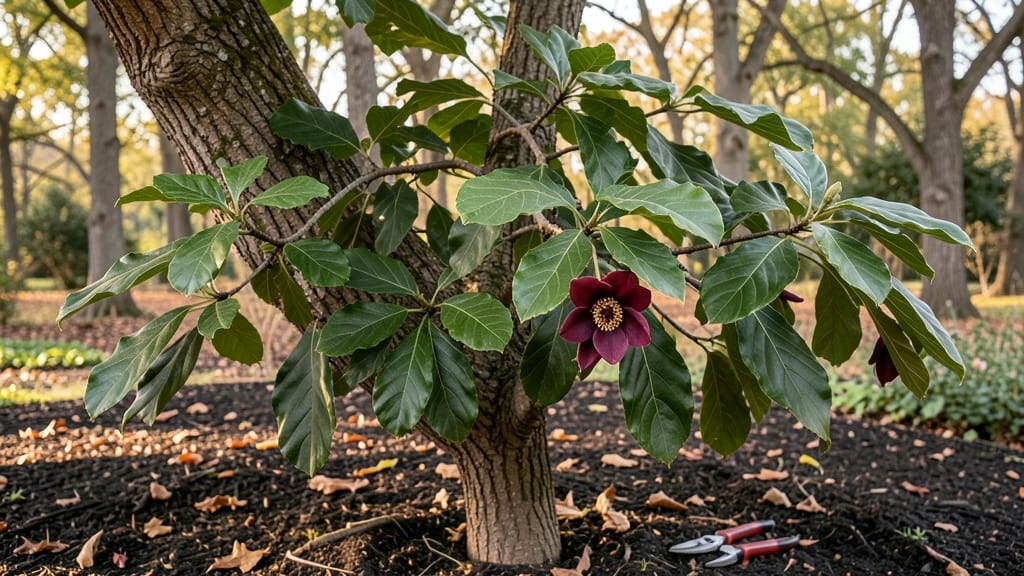
Pruning pawpaw tree flowers isn’t just about shaping the tree—it’s about unlocking a second flush of blooms you’d never expect. Those unusual maroon-green blossoms appear in late spring, but with the right cuts, you’ll coax them into reblooming later in summer.
I’ve seen my own pawpaws produce fruit twice in one season just by trimming at the right time.
The secret lies in light penetration and airflow—two things most gardeners overlook. Pawpaws hate dense canopies, so you’ll focus on thinning out crowded branches rather than harsh pruning. A pair of sharp loppers, a sunny morning, and 10 minutes of focused work are all you need.
Even if you’ve never pruned before, this tree forgives mistakes better than most.
What you’ll end up with is a tree that blooms reliably year after year, with fruit ripening in late summer instead of just one small harvest.
The flowers smell faintly sweet, almost like tropical fruit, and the maroon petals fade to green as they age—a sight that always makes neighbors stop and ask questions. Deer leave them alone, too, which is a bonus in my yard.
This works for both young trees and established ones, though younger pawpaws respond fastest. The key is timing—spring and summer are your windows, but don’t wait until fall. I’ll show you exactly which branches to cut and which to leave alone for maximum blooms.
📚 In This Guide
- What you need
- Instructions
- Tips and common mistakes
- Wrapping up and next steps
What you need
- ● Pruning shears: Bypass pruners (sharp, clean, and sterilized with rubbing alcohol or bleach) for small branches (up to ½-inch thick). Pro tip: Invest in high-quality shears like blank">Felco or blank">Fiskars for precision cuts!
- ● Loppers: For branches ½-inch to 2-inches thick. Look for anvil-style loppers if you’re on a budget, but bypass loppers are gentler on the bark.
- ● Pruning saw: A curved-tooth pruning saw (like the blank">Corona brand) for branches thicker than 2 inches.
- ● Gloves: Heavy-duty gardening gloves (e.g., blank">Wolfe or blank">Southwood) to protect against thorns and sap.
- ● Disinfectant: 70% isopropyl alcohol or a 10% bleach solution (1 part bleach to 9 parts water) to sterilize tools between cuts and prevent disease.
- ● Rubbing alcohol wipes: For quick cleanups on the go (10–20 wipes).
- ○ Twine or zip ties: (Optional) To secure heavy branches temporarily during pruning.
- ● Weather check: Prune on a dry, overcast day (avoid wet or windy conditions). Early morning is ideal—cooler temps reduce stress on the tree!
- ● Safety gear: Safety glasses (to shield from debris) and closed-toe shoes.
- ● Tree knowledge: Familiarize yourself with pawpaw tree anatomy—identify deadwood, suckers, and water sprouts (the nemeses of blooms!).
- ● Cleanup supplies: A garden bag (10–20 gallon) or bucket for clippings and a small broom to sweep up debris.
- ● Tree health assessment: Inspect the tree for diseases (e.g., anthracnose) or pests before pruning. Treat issues after trimming.
- ● Pruning sealant: (e.g., blank">Tanglefoot Tree Wound Pruning Seal) for large cuts over 2 inches in diameter—controversial but some swear by it!
- ● Ladder or step stool: If your pawpaw tree is over 6 feet tall (extendable ladders like blank">Little Giant are great).
- ● Marking spray: (e.g., blank">Fiskars pink spray paint) to tag branches for removal before cutting.
- ● Tree growth regulator: (e.g., Bonide Fruit Tree Spray) to encourage healthier regrowth post-pruning.
- ● Camera or phone: To document “before” and “after” shots—because progress is rewarding!
Simple pruning techniques for pawpaw tree flowers
Here’s how to keep your pawpaw tree flowering beautifully year after year—no complicated techniques required.
Identify and Remove Dead or Diseased Branches
Start by inspecting your pawpaw tree for any branches that are brown, brittle, or showing signs of disease like fungal spots or oozing sap. These branches won’t produce flowers and can spread problems to healthy growth. Use sharp pruning shears to cut just outside the branch collar—the swollen area where the branch meets the trunk. This ensures the tree heals cleanly and reduces the risk of infection.
If a branch is larger than 2 inches in diameter, use a pruning saw instead. Always sterilize your tools with rubbing alcohol before and after pruning to prevent spreading disease. Focus on removing only what’s clearly dead or damaged—pawpaw trees are naturally resilient and don’t need heavy pruning to thrive.
Thin Out Crowded Growth for Better Airflow
Pawpaw trees produce flowers on new growth, so you’ll want to encourage an open, airy structure. Look for branches that cross or rub against each other—they compete for sunlight and nutrients, which weakens flowering. Select one of the healthier branches in each pair and cut the other back to its point of origin. This also reduces the risk of fungal diseases by improving airflow through the canopy.
Pay special attention to the center of the tree. If it’s too dense, sunlight won’t reach the inner branches, and you’ll see fewer flowers there. Thin out 10-20% of the total branches in the center, starting with the smallest or weakest ones. You’ll notice new shoots emerging in the spring where you made cuts—that’s a sign the tree is redirecting energy to healthier growth.
Prune to Shape and Encourage Flowering Branches
Pawpaw trees flower best on 2- to 4-year-old wood, so avoid cutting back into older, thicker branches unless they’re dead or diseased. Instead, focus on shaping the tree by trimming back any overly long or leggy branches to just above a bud or side branch. This encourages the tree to produce more compact, flowering growth in the following season.
For a more natural shape, step back and look at the tree from all sides. Remove branches that disrupt the overall form, such as those growing inward or downward. Make your cuts at a 45-degree angle just above an outward-facing bud. This ensures the new growth will fill out the canopy more evenly. Avoid over-pruning—pawpaw trees respond well to light trimming, so a little goes a long way.
Prune for Spring Flowering and Summer Maintenance
The best time to prune pawpaw trees for flowers is late winter or early spring, just before new growth begins. This gives the tree time to heal before the flowering season. If you notice any water sprouts—thin, fast-growing shoots that appear after pruning—remove them in early summer. These shoots divert energy away from fruit and flower production.
During the growing season, keep an eye out for suckers—shoots that grow from the base of the tree. These can be pruned back to the ground in late summer to redirect the tree’s energy toward established branches. Avoid heavy pruning in fall, as the tree needs time to harden off before winter. A light cleanup of dead branches is fine, but wait until spring for major shaping.
Clean Up and Monitor for Next Year’s Blooms
After pruning, rake up and dispose of any fallen leaves or debris from the tree. This helps prevent fungal diseases from overwintering in the soil. Keep the base of the tree clear of weeds and grass, as they compete with the pawpaw for water and nutrients. A 3-foot radius around the trunk should stay mulched with organic material like wood chips to retain moisture and suppress weeds.
Watch for new flower buds forming in late winter—they’ll look like small, fuzzy clusters along the branches. If you pruned correctly, you should see more of these buds than in previous years. Pawpaw trees are slow to mature, so be patient—it can take 3-5 years for a newly planted tree to produce significant flowers and fruit. But with consistent, gentle pruning, you’ll set the stage for beautiful blooms every spring.
Tips & tricks for perfect pawpaw tree flower pruning
A few simple techniques will transform your pawpaw tree into a flowering powerhouse with minimal effort.
Tool Preparation: Before you begin pruning, take 5 minutes to sterilize your tools with rubbing alcohol. I've seen so many gardeners skip this step, only to find their tree's health decline after pruning. A quick wipe-down between cuts prevents fungal spores from spreading between branches. Also, make sure your pruning shears are sharp—dull blades crush rather than cleanly cut, which stresses the tree and slows healing.
Branch Selection Strategy: When thinning crowded branches in Step 2, focus on removing the weaker branch in each pair rather than randomly cutting. The stronger branch will have thicker bark and more vibrant green leaves. This small detail makes a big difference in how quickly your tree recovers and produces new growth. You'll notice the tree's energy focuses on the healthier branches, leading to more abundant flowering the following spring.
Seasonal Timing Insight: The late winter to early spring timing mentioned in Step 4 is critical because it coincides with the tree's dormant period. During dormancy, the tree isn't actively growing, so pruning wounds heal more quickly. If you must prune in summer, do it on a cool, cloudy day to reduce stress on the tree. I've found that summer pruning can sometimes stimulate unwanted water sprouts if done during hot periods.
Post-Pruning Care: After your pruning session, don't forget to dispose of all pruned branches properly. While it might seem like composting is the green choice, diseased branches should be burned or put in the trash to prevent spreading pathogens. For the mulch ring mentioned in Step 5, I recommend using shredded hardwood mulch rather than pine straw—it breaks down more slowly and provides better moisture retention for those critical root zones.
Pro Tips for Pawpaw Tree Flower
- A few simple techniques will transform your pawpaw tree into a flowering powerhouse with minimal effort.
- Tool Preparation: Before you begin pruning, take 5 minutes to sterilize your tools with rubbing alcohol.
- Branch Selection Strategy: When thinning crowded branches in Step 2, focus on removing the weaker branch in each pair rather than randomly cutting.
Frequently asked questions
Got questions about pruning pawpaw tree flowers to keep those fragrant blooms coming year-round? You’re in the right place! Here are answers to the most common queries—so you can trim with confidence and enjoy more pawpaw blossoms (and fruit!) sooner.
When is the best time to prune pawpaw tree flowers for maximum blooms?
The ideal time to prune pawpaw trees is late winter to early spring (before buds swell) or summer after fruiting. Avoid pruning in fall—it can stimulate new growth that’s vulnerable to frost. For year-round blooms, light pruning in late spring (after flowering) also works!
Can I prune pawpaw flowers in winter? What if it’s freezing?
Pruning in mild winter (temperatures above 40°F/4°C) is fine, but avoid heavy pruning during hard freezes. Pawpaw trees are semi-dormant in winter, so focus on shaping or removing dead wood. If you must prune in cold weather, do it on a warm, sunny day to reduce stress on the tree.
I pruned my pawpaw tree, but now it’s not flowering. Did I do it wrong?
Don’t panic! Pawpaws are slow to respond, and heavy pruning can temporarily reduce blooms. If you removed too many branches, focus on light maintenance pruning next year. Ensure your tree gets full sun (6+ hours/day) and well-draining soil—these are key for flowering. Patience pays off!
Are there alternatives to pruning if my pawpaw tree isn’t blooming well?
Yes! Try these tips:
- Fertilize: Use a balanced, low-nitrogen fertilizer in early spring to encourage blooms.
- Water deeply: Pawpaws need consistent moisture, especially during drought.
- Check sunlight: If shaded, gradually move it to a sunnier spot (avoid transplant shock).
- Watch for pests: Japanese beetles and borers can stress trees—use organic sprays if needed.
How often should I prune a pawpaw tree for continuous flowers?
Prune lightly every 1–2 years to maintain shape and remove dead/diseased wood. Avoid over-pruning—pawpaws thrive with minimal intervention. Focus on:
- Removing suckers (shoots from the base) to redirect energy to flowering.
- Thinning crowded branches to improve airflow (reduces disease).
- Avoid cutting flower buds—they appear in late winter/early spring.
What should I do if my pawpaw tree’s flowers keep falling off?
Flower drop is often due to stress—check for:
- Under/over-watering: Keep soil moist but not soggy.
- Temperature swings: Pawpaws dislike extreme heat or cold.
- Pollinator issues: Hand-pollinate with a soft brush if bees are scarce.
- Nutrient deficiency: Test soil and amend with compost or potassium-rich fertilizer.
Wrapping up and next steps
Pruning your pawpaw tree’s flowers isn’t just about aesthetics—it’s a game-changer for healthier blooms and bountiful fruit! 🌸 By mastering simple trimming techniques and timing, you’ll unlock year-round vibrancy and stronger growth.
Whether you’re a seasoned gardener or just starting, every snip brings your tree one step closer to its full potential.
Ready to level up your pawpaw care? Grab those shears and start small—your tree (and future fruit harvests) will thank you! Next step: Schedule your first pruning session and observe how your tree responds. Happy gardening! 🌱