
Shrubs
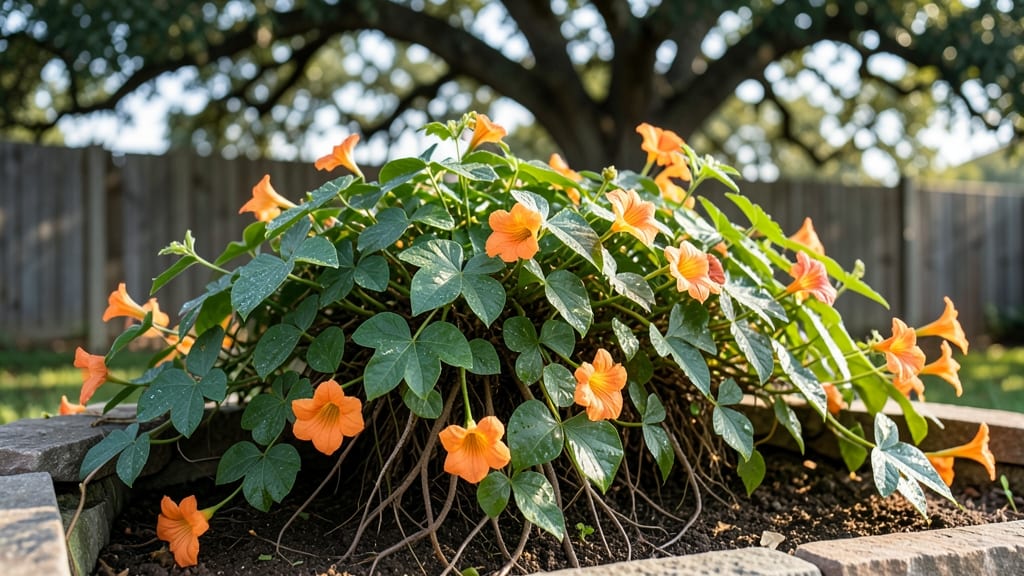
Orange flowered climbers like trumpet vine and crossvine transform blank walls into living tapestries of bold color and fragrance. 🌿 I’ve watched them turn my backyard’s dullest corner into a summer showstopper—vibrant blooms that hum with bees and fill the air with sweet scent.
These plants aren’t just pretty; they’re tough, thriving in heat and drought once established, and they climb with purpose, not mess.
The right spot makes all the difference. Plant them near trellises, arbors, or chain-link fences where they can stretch upward without competing with other plants. Pair them with deep green foliage like hostas or ivy for contrast, or let their fiery blooms pop against a dark evergreen backdrop.
Most bloom from late spring through fall, giving you months of drama with minimal effort.
You’ll love how these climbers add height without taking up precious ground space. Their trumpet-shaped flowers attract hummingbirds and butterflies, turning your garden into a wildlife haven. Plus, they’re low-maintenance—just prune back dead growth in winter, and they’ll bounce back stronger than ever.
Perfect for small yards, large estates, or anything in between. Whether you’re covering a fence or dressing up a patio, these orange bloomers deliver year after year with almost no fuss. Let’s get yours growing!
📚 In This Guide
- What you need
- Instructions
- Tips and common mistakes
- Wrapping up and next steps
What you need
- ● Orange-flowered climber plant: Choose between: Seeds (10–20, for germination)
- ● Young plant (1–2, 12–18" tall)
- ● Cuttings (3–5, 4–6" long with nodes)
- ● Support structure: Trellis (6–8 ft tall, sturdy lattice or metal)
- ● Arbor or pergola (for larger gardens)
- ● String/rope (for DIY climbing guides)
- ● Potting mix or soil: Well-draining potting soil (5–10 gallons, depending on pot size)
- ● Compost (1 part, mixed into soil for nutrients)
- ● Fertilizer: Slow-release granular (10–15–10 NPK ratio, 1–2 cups per plant)
- ● Must-haves: Garden trowel or shovel
- ● Pruning shears (sharp, for trimming)
- ● Watering can or hose (with gentle spray nozzle)
- ● Gloves (to protect hands from thorns, if applicable)
- ● Nice-to-haves: Mulch (2–3 inches, organic like bark or straw)
- ● Plant ties (soft fabric strips, 1–2 per plant)
- ● Soil moisture meter (to track hydration)
- ● Decorative stakes or labels (for garden organization)
- ● Sunlight: 6+ hours of direct sun daily (partial shade tolerates some varieties).
- ● Climate: USDA Zones 7–10 (check your local hardiness zone!)
- ● Space: Vertical support within 6–12 ft of a wall or fence (or a freestanding structure).
- ● Water access: Drip irrigation or a watering schedule (1–2 inches per week, more in heat).
Step-by-Step guide to planting an orange flowered climber
Here’s how to transform your garden’s vertical space into a fragrant, sun-drenched display.
🌱 Step 1: Choose the Right Spot and Prepare the Soil
Orange-flowered climbers thrive in full sun to partial shade—at least 6 hours of sunlight daily—so pick a south- or west-facing wall or trellis. Avoid deep shade, where blooms will fade to pale yellow and fragrance weakens. I always test the spot by placing a white sheet of paper in the sun for an hour; if it stays cool to the touch, the area gets too little light.
Loosen the soil in a 12-inch wide trench or planting hole to a depth of 18 inches, breaking up any compacted layers. Amend the soil with 2 inches of compost (from your materials list) to improve drainage and nutrient availability. Orange-flowered climbers hate soggy roots, so if your soil drains poorly, mix in 1 part perlite per 3 parts soil. Tap the amended soil lightly to settle it before planting.
🪴 Step 2: Plant the Climber Along the Trellis or Support
Dig a hole twice as wide as the root ball but no deeper—this encourages roots to spread horizontally for stability. Gently remove the climber from its container and tease apart any circling roots with your fingers. Place the plant in the hole so the top of the root ball sits just below soil level—burying the stem too deep can cause rot.
Backfill the hole with soil, pressing firmly around the edges to eliminate air pockets. Water deeply to settle the soil and help roots make contact. Immediately after planting, attach the climber to its support using soft garden twine or flexible plant ties. Secure the main stem loosely to the trellis at a 45-degree angle—this encourages upward growth. Avoid wrapping the twine too tightly; you’ll notice new growth bending toward the light within 2-3 weeks.
☀️ Step 3: Water and Fertilize for Strong Growth
Water the climber once a week for the first 4 weeks, providing 1 gallon per plant each time. Check soil moisture by sticking your finger 2 inches deep—if it feels dry, water again. Overwatering is the biggest mistake here; orange-flowered climbers are drought-tolerant once established, but young plants need consistent moisture to develop strong roots.
After 6 weeks, apply a balanced, slow-release fertilizer (like the 10-10-10 from your materials list) at half strength. Scatter the granules 6 inches away from the base and water lightly to activate them. You’ll see a surge in new leaves and stems within 2-3 weeks—this is your signal the plant is thriving. Fertilize again in late spring to support blooming.
✂️ Step 4: Prune for Shape and Encourage More Blooms
Prune your climber twice a year: once in early spring to shape the plant and again in late summer after the first flush of flowers. Use clean, sharp pruners to cut back any leggy or overcrowded stems by one-third. This redirects energy to new growth and ensures a bushier, more vibrant display. Always prune just above a leaf node or bud—you’ll notice fresh shoots emerging within 10-14 days.
Deadhead spent blooms regularly throughout the season by snipping the stem just below the faded flower. This prevents seed formation and encourages the plant to produce more fragrant blooms. I like to do this on a dry morning when the stems are firm; you’ll see new buds forming within 3-4 weeks if the plant is healthy. Avoid heavy pruning in fall, as this can stress the plant before winter.
🌿 Step 5: Protect and Maintain Through Seasons
In winter, if you’re in a colder climate, wrap the trellis and plant in burlap or frost cloth to shield them from harsh winds and frost. Orange-flowered climbers are generally hardy, but young plants benefit from this extra protection. Remove the wrap in early spring once new growth appears—you’ll spot it as tiny green shoots poking through the soil.
Monitor for pests like aphids or spider mites, which love the tender new growth. Spray the plant with neem oil (from your materials list) if you notice sticky residue on leaves or tiny webs. Apply the solution in the early morning on a calm day to avoid burning the foliage. With consistent care, your climber will reward you with vibrant orange blooms and intoxicating fragrance for years to come.
Tips & tricks for perfect orange flowered climber planting
Transforming your vertical space into a fragrant display starts with these essential tips that'll help your orange flowered climber thrive from the very beginning.
Sunlight Secret: The 6 hours of sunlight mentioned in Step 1 is non-negotiable for vibrant orange blooms. I've seen climbers in partial shade produce pale flowers that lose their signature fragrance. Test your spot with the white sheet trick—if it stays cool after an hour, your climber won't reach its full potential. For maximum impact, choose a south-facing wall where the afternoon sun can really intensify those orange hues.
Root Development Strategy: When planting in Step 2, focus on creating that 12-inch wide trench - this isn't just about space, it's about encouraging horizontal root growth. I've found that gently scoring the sides of the trench with a garden fork (before planting) creates tiny root channels that help establish the plant faster. This simple step makes all the difference when you're checking for that 2-3 week growth spurt after planting.
Watering Wisdom: That first 4 weeks of weekly watering (1 gallon each time) is crucial, but timing matters just as much. Water in the morning so the foliage has all day to dry, preventing fungal issues. I've ruined several climbers by watering at night - the damp leaves attract pests and encourage rot. For the 2-inch deep moisture check, I like to use a wooden skewer instead of my finger - it gives me a more consistent measurement.
Pruning Precision: The twice-yearly pruning schedule in Step 4 is perfect, but here's the pro move: when you're cutting back those leggy stems by one-third, always make your cuts just above a leaf node that's facing outward. This encourages bushier growth that will cascade beautifully down your trellis. I mark these nodes with a pencil before pruning - it takes seconds but makes a huge difference in how your climber fills out.
Pro Tips for Orange Flowered Climber
- Transforming your vertical space into a fragrant display starts with these essential tips that'll help your orange flowered climber thrive from the very beginning.
- Sunlight Secret: The 6 hours of sunlight mentioned in Step 1 is non-negotiable for vibrant orange blooms.
- Root Development Strategy: When planting in Step 2, focus on creating that 12-inch wide trench - this isn't just about space, it's about encouraging horizontal root growth.
Frequently asked questions
What’s the best orange flowered climber for my garden?
Popular choices include Campsis radicans (trumpet vine) for bold blooms or Bignonia capreolata (cross vine) for milder climates. For fragrant options, Tecoma capensis (cape honeysuckle) shines. Match your pick to your zone, sunlight, and trellis type!
How long does it take for an orange flowered climber to flower?
Most climbers take 1–3 years to establish and bloom, depending on care. Young vines may produce sparse flowers; patience pays off! Ensure full sun, well-draining soil, and consistent watering to speed up the process.
Can I grow an orange flowered climber in a container?
Yes, but choose compact varieties like Tecoma stans or dwarf trumpet vines. Use a large pot (15+ gallons) with drainage holes, rich potting mix, and a sturdy trellis. Repot every 2–3 years and prune aggressively to control growth.
Why aren’t my orange flowers showing up?
Check for these culprits:
- Insufficient sunlight: Most climbers need 6+ hours of direct sun daily.
- Over/under-watering: Keep soil evenly moist but not soggy.
- Poor pruning: Trim dead blooms and leggy growth in late winter.
- Nutrient deficiency: Feed with a balanced fertilizer (10-10-10) in spring.
What’s a good alternative if I don’t want a vine?
For vertical drama without the commitment, try:
- Buddleia davidii (butterfly bush) – Drought-tolerant and pollinator-friendly.
- Clematis (varieties like ‘Jackmanii’) – Offers purple/pink blooms but thrives in partial shade.
- Abelia × grandiflora – Evergreen shrub with white/pink flowers and low maintenance.
Wrapping up and next steps
Transforming your garden into a vertical masterpiece with an orange flowered climber is easier—and more rewarding—than you think! 🌸 From selecting the perfect variety to mastering pruning and troubleshooting, you now have all the tools to create a fragrant, eye-catching focal point.
Whether you’re a seasoned gardener or just starting, the key is patience and a little creativity.
Ready to take the next step? Start small—plant a single climber in a sunny spot and watch it thrive. Then, expand your vision: mix textures, add trellises, or even train it over an arch for a romantic touch. Your garden’s vertical drama awaits—go make it happen! 🌿✨