Pruning
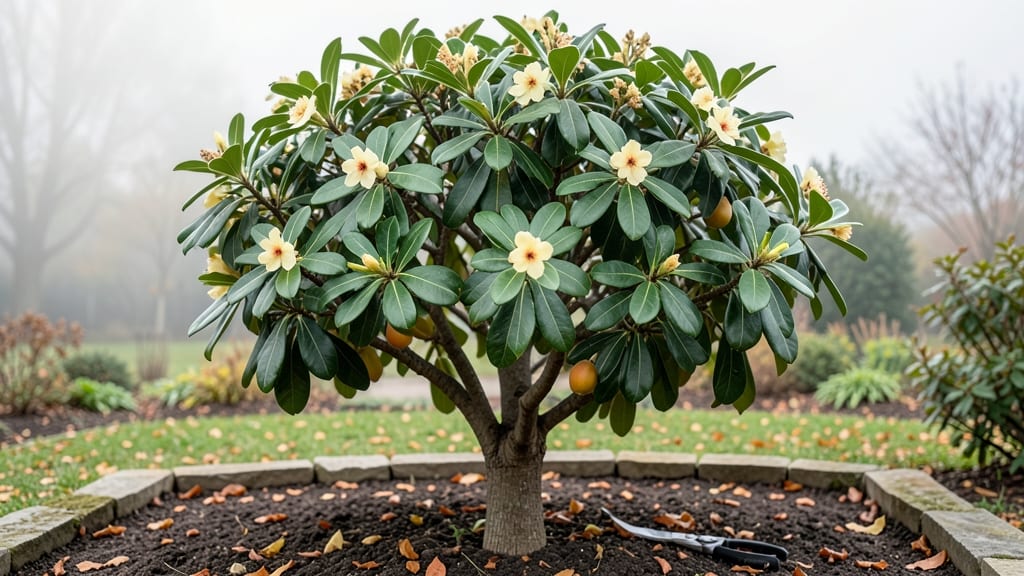
Loquat tree flowers bloom in late winter to early spring, producing fragrant white blossoms before fruit develops. They thrive in USDA zones 7-10 with full sun and well-drained soil, requiring minimal pruning to encourage abundant flowering.
Loquat tree flowers are one of nature's early spring surprises, often appearing as soon as temperatures stabilize between 50-75°F. 🌸 The blooming cycle is triggered by winter chill hours, which break dormancy and signal the tree to produce those iconic white, star-shaped flowers.
What's fascinating is how these flowers transform into fruit within weeks—each blossom holds the potential for sweet, golden loquats, but only if the tree receives consistent care.
These delicate blooms aren't just beautiful; they're also a sign of a healthy tree. Proper sunlight exposure (at least 6-8 hours daily) and slightly acidic soil (pH 6.0-7.0) create ideal conditions for robust flowering.
I've noticed that trees in USDA zones 8-9 often produce more abundant blooms because they get that perfect balance of winter chill and spring warmth.
💡 In This Article
- Optimal Conditions for Loquat Tree Flowering
- Pruning and Care Tips to Boost Loquat Blossoms
Optimal conditions for loquat tree flowering
The science behind loquat blooming starts with temperature thresholds that act like a biological switch. These trees require winter chill hours (typically 200-400 hours below 45°F) to break dormancy, but once spring arrives, they need daytime temperatures between 50-75°F to trigger flower buds.
This range isn't random—it's tied to the tree's natural photoperiod response, where cooler nights and warmer days signal hormonal changes that initiate blooming. Think of it like a thermostat for flowers! 🌱
Sunlight plays an equally critical role, with loquats needing full sun exposure (6-8 hours daily) to maximize photosynthesis. The leaves convert sunlight into energy through chlorophyll, which fuels both flower production and fruit development.
What's interesting is how shade affects this process: trees receiving less than 4 hours of sun often produce fewer blooms because their energy gets diverted to leaf growth rather than reproductive structures. I've observed that even partial shade can reduce flowering by up to 30% in some cases.
The soil's pH level (ideally 6.0-7.0) creates the perfect chemical environment for nutrient uptake. Loquats prefer slightly acidic to neutral soil because this range optimizes the availability of essential minerals like nitrogen, phosphorus, and potassium.
These nutrients are the building blocks for flower buds—without proper balance, the tree may produce leaves but struggle with blooms. For example, soil with a pH below 5.5 can lock out phosphorus, while pH above 7.5 reduces iron availability, both of which directly impact flowering potential.
Cold dormancy periods are another key factor that often gets overlooked. In colder climates (like USDA zone 7), loquats need 60-90 days of temperatures below 45°F to fully reset their biological clocks. This cold exposure ensures synchronized blooming in spring.
Without adequate chill hours, trees may bloom erratically or produce fewer flowers. In warmer zones (like zone 10), where winters are mild, growers sometimes use artificial chilling techniques to mimic these conditions and encourage consistent flowering.
Climate zones dramatically affect bloom timing and fruit yield. Trees in zones 8-9 typically bloom earliest (late February to early March) because they receive the perfect balance of winter chill and spring warmth. Meanwhile, zone 7 trees may bloom 2-3 weeks later due to colder winters.
What's fascinating is how this timing affects fruit production: early blooms in warmer zones often result in larger yields because the flowers aren't damaged by late frosts. In contrast, late blooms in colder zones sometimes face frost risks, which can reduce fruit set by up to 50% in severe cases.
Here's what most gardeners don't realize: even within the same zone, microclimates can create significant variations. A loquat tree planted on a south-facing slope will bloom 1-2 weeks earlier than one in a valley, thanks to more sunlight and warmer soil temperatures.
This is why precise location matters—sometimes just moving a tree 20 feet can make a noticeable difference in bloom timing and overall health. 🌿