
Pruning
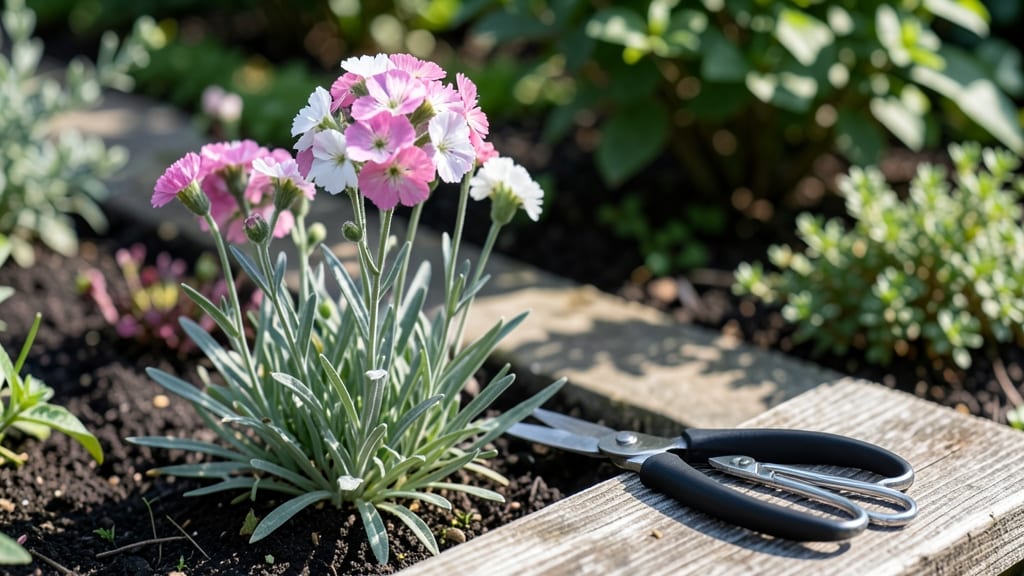
Deadheading dianthus flowers keeps them blooming all season—here’s how to do it right without harming your plants. ✨ I’ve learned the hard way that cutting too late or too aggressively can stunt regrowth, but the right technique turns a single flush of blooms into months of color.
The key is timing: snip just as petals fade but before seed pods form, and you’ll trigger fresh flowers in weeks.
You only need two things: sharp pruners (clean blades prevent disease) and a pair of gloves (dianthus spines can be sneaky). Work on a dry morning when flowers are fully open but starting to droop—this gives you the clearest signal it’s time.
For clusters, cut back to the first set of healthy leaves below the spent bloom, never to bare wood. Over-pruning is the fastest way to shock your plant, so resist the urge to trim back hard.
After a few weeks, you’ll notice new buds forming at the base of stems, and those turn into vibrant pink, red, or white blooms that last longer than store-bought flowers. The plants stay bushier too, resisting flopping and looking fuller from every angle.
This method works for both perennial and annual dianthus—just adjust your timing based on your climate’s frost dates.
Here’s the pro tip: if you see leggy stems by midseason, give your dianthus a light haircut across the board, cutting back to about 4 inches tall.
It looks drastic, but within weeks, you’ll have a dense, flowering machine that rivals what you’d buy at the nursery. Now go enjoy that extra-long bloom season!
📚 In This Guide
- What you need
- Instructions
- Tips and common mistakes
- Wrapping up and next steps
What you need
- ● Pruning shears or sharp scissors: By-pass or anvil-type (clean, sharp blades only!)
- ● Disinfect with rubbing alcohol before/after use (prevents disease spread).
- ○ Garden gloves (optional but recommended): Lightweight, breathable fabric (e.g., cotton or nitrile-coated).
- ● Trash bag or bucket: Medium-sized (1–2 gallons) for spent blooms.
- ○ Garden twine or rubber bands (optional): For bundling cuttings if propagating (if you’re feeling ambitious!).
- ● Sunny day: Choose a morning or late afternoon (avoid midday heat stress on plants).
- ● Dry weather: Wait 1–2 hours after watering to ensure stems aren’t soggy.
- ● Patience: Take your time—rushing can damage new buds!
Step-by-Step instructions for deadheading dianthus flowers
Here’s how to keep your dianthus blooming all season without harming the plant.
✂️ Step 1: Wait for the Right Time to Prune
Deadhead dianthus only after a flower fades completely—don’t cut too early. The best time is late morning when dew has dried but before afternoon heat stresses the plant. Look for petals that’ve fallen naturally or are wilted and brown at the edges.
If you cut too soon, you remove buds that haven’t opened yet. I always check 2-3 flowers first to confirm they’re truly spent. Once you see the center turning brown, it’s safe to prune. This ensures you’re not accidentally shortening the plant’s blooming cycle.
✂️ Step 2: Use Clean, Sharp Pruners for Precision Cuts
Grab your bypass pruners (never dull scissors—they crush stems) and sterilize them with rubbing alcohol. Dianthus stems are thin but woody, so clean cuts heal faster. Hold the stem at a 45-degree angle just above a set of leaves or where the flower stem meets the main growth.
Never cut into leaf tissue—this invites rot. I like to make my cuts about ¼ inch above a leaf node to encourage new growth from that spot. If you’re unsure where the node is, follow the stem downward until you see a small bump where leaves attach.
✂️ Step 3: Remove Only the Spent Blooms, Not the Stem
Dianthus often produces multiple blooms on one stem. Pinch off only the faded flower head, leaving the rest of the stem intact. This prevents shocking the plant and encourages more buds to form. If the entire stem is leafless and brown, you can trim it back—but most stems will rebloom if you leave them.
Here’s the thing—if you cut the stem too short, you remove potential future blooms. I always leave at least 2-3 inches of healthy stem with leaves. This gives the plant energy to produce new flowers while maintaining its structure.
✂️ Step 4: Clean Up and Encourage New Growth
After deadheading, remove all fallen petals and debris from around the plant. This reduces pests and disease risk. Water the base lightly if the soil feels dry to the touch—1 inch of water per week is ideal. Avoid wetting the foliage to prevent fungal issues.
Within 2-3 weeks, you’ll see new buds forming at the base of the trimmed stems. This is your reward for precise pruning! If blooms slow down in late summer, give the plant a light balanced fertilizer to boost energy for another round of flowers.
⏰ Step 5: Time Your Deadheading for Season-Long Blooms
Repeat the process every 7-10 days during peak blooming season (spring through early fall). Regular deadheading keeps dianthus producing flowers instead of going to seed. In late summer, cut back 1/3 of the plant’s height to rejuvenate growth before winter.
Don’t overdo it—if you prune too aggressively, the plant may focus on regrowth instead of blooming. I promise, with consistent care, your dianthus will reward you with continuous color from spring until frost. Just stay patient and keep those pruners handy!
Tips & tricks for perfect dianthus deadheading
A few simple tricks will help you keep your dianthus blooming beautifully all season without stressing the plant.
The Timing Secret: I can't stress this enough—wait until the flower is completely faded and the center turns brown before deadheading. The late morning timing mentioned in Step 1 is key because it lets dew dry while avoiding midday heat stress. If you're unsure, gently pull on a petal—if it comes off easily, the flower is ready.
Precision Cutting Technique: In Step 2, that 45-degree angle isn't just for looks—it helps water run off the cut and prevents rot. I like to make my cuts right above a leaf node (about ¼ inch up) because this is where new growth will sprout. If you're struggling to find the node, run your finger down the stem until you feel that little bump where leaves attach.
Stem Savvy: Remember in Step 3 how we leave at least 2-3 inches of stem? This isn't just random—I'm giving your plant energy reserves to produce new flowers. Think of it like saving money in a bank account: you want enough left over for future blooms. If you cut too aggressively, you're essentially telling the plant to take a break from flowering.
Seasonal Strategy: The 7-10 day schedule in Step 5 works because it matches the plant's natural bloom cycle. In late summer, when blooms slow down, I cut back about 1/3 of the plant's height—this gives it a fresh start before winter. It's like giving your dianthus a spa day to rejuvenate before the cold months.
Pro Tips for Deadhead Dianthus Flowers
- A few simple tricks will help you keep your dianthus blooming beautifully all season without stressing the plant.
- The Timing Secret: I can't stress this enough—wait until the flower is completely faded and the center turns brown before deadheading.
- Precision Cutting Technique: In Step 2, that 45-degree angle isn't just for looks—it helps water run off the cut and prevents rot.
Frequently asked questions
Got questions about deadheading dianthus? You’re not alone! Here are answers to the most common queries to keep your blooms thriving with minimal fuss.
When is the best time to deadhead dianthus?
Deadhead dianthus right after the flowers fade—ideally in the morning when the blooms are still dry. This prevents seed formation and encourages more blooms. For spring-blooming varieties, focus on early summer; for repeat bloomers, deadhead regularly all season long. Pro tip: If blooms are leggy, trim stems back to a healthy leaf node for bushier growth!
Do I need special tools for deadheading?
Nope! While sharp pruners or clean scissors make the job easier, you can also pinch off spent blooms with your fingers. Just ensure your tools are clean and sanitized (rubbing alcohol works) to avoid spreading disease. For large batches, small hand pruners save time and reduce hand fatigue.
What if my dianthus stops blooming after deadheading?
Don’t panic—it might need a growth reset! Over-trimming or poor soil/nutrients can stunt blooms. Try fertilizing lightly with a balanced, low-nitrogen formula (like 10-10-10) and ensure it gets full sun (6+ hours daily). If the issue persists, check for pests (like aphids) or root rot, which can stress the plant.
Can I skip deadheading and still get flowers?
Yes, but expect fewer blooms and a messier plant. Deadheading redirects energy from seed production to new growth, so skipping it may lead to shorter flowering seasons. However, if you love the rustic look or have limited time, let a few spent blooms stay—just remove most to balance aesthetics and plant health.
Should I deadhead dianthus in fall or winter?
In cold climates, stop deadheading by late summer/early fall to let the plant prepare for dormancy. Trim back any dead or damaged foliage, but avoid heavy pruning—this helps hardy varieties (like Dianthus barbatus) overwinter better. In mild winters, light deadheading can continue until frost.
| Quick Troubleshooting |
|---|
|
Problem: Yellowing leaves after pruning Fix: Over-trimming or root stress. Reduce pruning and water deeply but infrequently. |
|
Problem: Blooms turn brown before fading Fix: Likely fungal issues (e.g., powdery mildew). Improve airflow, avoid overhead watering, and treat with neem oil if needed. |
|
Problem: No new blooms after deadheading Fix: Check sunlight (dianthus craves sun!) and fertilize lightly. If potted, repot if roots are crowded. |
Wrapping up and next steps
Deadheading dianthus flowers is a simple yet rewarding task that keeps your garden vibrant and encourages long-lasting blooms! 🌸 With just a few minutes of care, you’ll enjoy healthy, bushier plants and a steady display of color.
Ready to take your gardening skills to the next level? Try deadheading one section at a time—your dianthus will thank you with even more stunning flowers!