Pruning
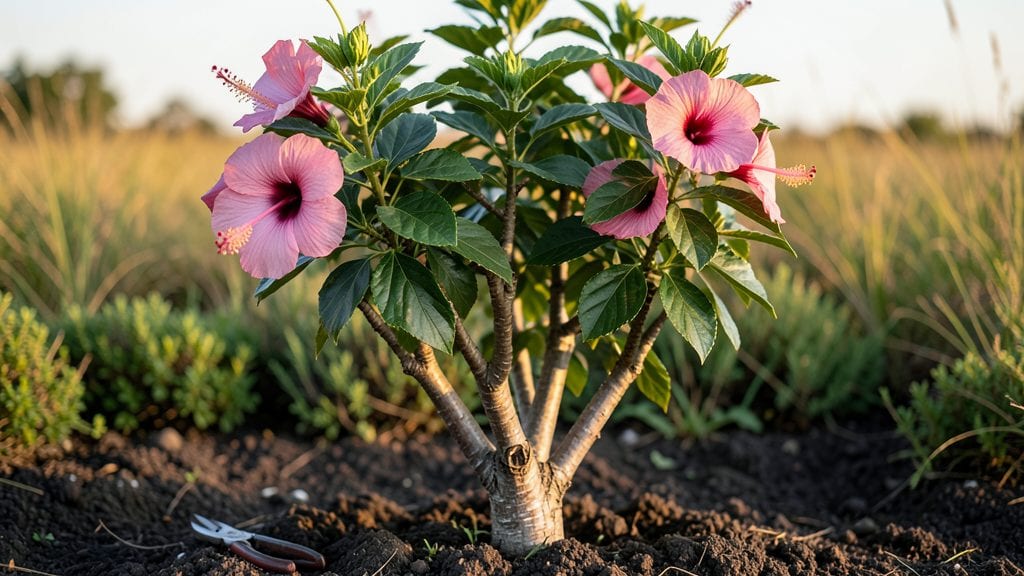
My hibiscus flowering tree now bursts with blooms every season—no more sparse branches or missed opportunities. The secret lies in pruning at the right time, cutting back just enough to encourage new growth without sacrificing the plant’s natural shape.
I’ve learned that hibiscus respond best to a light touch in late winter, with strategic trims throughout the year to keep them lush and productive.
You’ll need sharp pruning shears, a clean workspace, and about 30 minutes to tackle the job right. Most gardeners over-prune, which stresses the plant, or under-prune, leaving it leggy and sparse.
The goal is to shape the tree while stimulating fresh shoots—think of it like giving your hibiscus a haircut that leaves it looking fuller, not thinner. Start by removing dead or crossing branches first; those are the easy wins.
After pruning, you’ll notice new growth within weeks, with vibrant blooms appearing by early summer. The flowers stay bigger and last longer when you prune regularly, and the foliage turns a rich, glossy green that makes the whole plant pop.
This method works for both tropical hibiscus (like the hardy 'Dwarf Blue' variety) and cold-hardy types, though timing shifts slightly depending on your zone.
Fair warning: hibiscus can get overzealous with new shoots if you prune too aggressively. Balance is key—cut back no more than one-third of the plant at a time, and always prune just above a leaf node.
For those in colder climates, a light winter trim prevents frost damage while still encouraging spring blooms. Let’s get those shears ready!
📚 In This Guide
- What you need
- Instructions
- Tips and common mistakes
- Wrapping up and next steps
What you need
- ● Pruning shears: Bypass pruners (sharp, clean, and sterilized with rubbing alcohol to prevent disease). Recommended: Felco F-2 or similar (for branches up to ½ inch thick).
- ● Loppers: For thicker branches (½ to 1½ inches). Pro tip: 💡 Choose ones with ratcheting handles for extra leverage.
- ● Hand pruners: For delicate trimming (like shaping flowers or small stems). Bonus: Look for ergonomic grips to avoid hand fatigue!
- ● Garden gloves: Heavy-duty, cut-resistant (e.g., Mechanix Wear or Fellex) to protect from thorns and sap.
- ● Disinfectant: 70% isopropyl alcohol or bleach solution (1 part bleach to 9 parts water) to clean tools between cuts.
- ● Rubbing alcohol wipes: For quick tool sterilization on the go.
- ○ Pruning sealant (optional): Tree wound pruning paste (e.g., Tanglefoot Tree Wound Pruning Sealant) for large cuts to prevent disease.
- ● Weather check: Prune on a dry, overcast day (avoid wet or windy conditions). Best time: Late winter/early spring (before new growth) or right after flowering.
- ● Safety gear: Safety glasses (to shield from debris) and long sleeves/pants (hibiscus thorns are sharp!).
- ● Cleanup supplies: Heavy-duty trash bags (for clippings).
- ● Garden twine or a bucket (to collect pruned branches).
- ● Hose with a spray nozzle (for rinsing tools post-pruning).
- ● Tree assessment: Inspect your hibiscus for: Dead, diseased, or crossing branches (mark them with flagging tape if needed).
- ● Overcrowded growth or water sprouts (suckers growing inward).
- ● Ladder or step stool: For reaching high branches (ensure it’s stable!).
- ● Hibiscus fertilizer: Slow-release granular (e.g., Miracle-Gro Shake ‘n Feed) to apply post-pruning for a growth boost.
- ● Mulch: Organic mulch (e.g., pine bark) to retain moisture and protect roots after pruning.
- ● Camera or phone: Snap before/after photos to track your tree’s progress! 📸
Instructions for pruning a hibiscus flowering tree
This is how I keep my hibiscus blooming abundantly all season long—simple cuts that make a huge difference.
Time Your Pruning for Maximum Blooms
Prune your hibiscus in early spring, just as new growth begins to appear. This is when the plant is waking up from dormancy and ready to respond to shaping. Avoid pruning in late fall or winter, as this can stimulate tender new growth that won’t survive cold snaps. I also do a light shaping trim in late summer to encourage one last flush of flowers before cooler weather sets in.
Watch for new buds forming at the leaf nodes—these are your signal that the plant is preparing to grow. Pruning too early in winter or too late in fall can leave your hibiscus vulnerable to frost damage or weak growth. If you miss the spring window, wait until after the last frost date in your area before cutting back.
Remove Dead, Damaged, or Crossing Branches
Start by inspecting your hibiscus for dead, diseased, or damaged branches—these are the first to go. Use clean, sharp pruning shears to make 45-degree cuts just above a leaf node or outward-facing bud. This encourages new growth in the right direction. If a branch is completely dead, cut it back to the main trunk or a healthy lateral branch.
Next, look for crossing or rubbing branches—these create wounds where diseases can enter. Remove one of the branches entirely, cutting back to a healthy node. I always prune outward from the center of the plant to improve airflow and sunlight penetration. This step keeps your hibiscus healthy and prevents future problems.
Shape the Tree for Balance and Airflow
Step back and visualize the shape you want—hibiscus trees respond well to an open, vase-like form that allows light and air to reach all branches. Start by shortening overgrown branches by about one-third, cutting just above a leaf node. This promotes bushier growth and more flower buds. Avoid cutting into old wood, as hibiscus blooms best on new, current-season growth.
Focus on inner branches that are growing toward the center of the plant. These compete for sunlight and weaken the structure. Thin them out completely, leaving only the strongest, healthiest branches. You’ll see a difference in leaf color and vigor within weeks—new growth will be darker green and more upright.
Encourage Flowering with Strategic Cuts
To maximize blooms, prune back the tips of branches where flowers have faded. Cut just above a leaf node or bud, but avoid over-pruning—hibiscus flowers on current-season growth, so you want to leave plenty of healthy stems. I also lightly trim back any overly leggy branches to encourage a fuller shape and more flowering sites.
If your hibiscus hasn’t bloomed much, check for over-fertilizing with high nitrogen—this promotes leafy growth at the expense of flowers. After pruning, feed with a balanced, bloom-boosting fertilizer (10-10-10 or similar) to support new flower development. You’ll notice more buds forming within 4-6 weeks if the timing and cuts are right.
Clean Up and Monitor for New Growth
After pruning, sterilize your tools with rubbing alcohol to prevent spreading disease. Remove all fallen leaves and debris from the base of the plant—this keeps pests and fungi at bay. Water deeply after pruning to help the plant recover, but avoid soaking the cuts, as this can invite rot.
Watch for new shoots emerging from the pruned areas—this is a good sign your hibiscus is responding well. Within 2-3 weeks, you should see fresh, vibrant growth. If you notice any yellowing leaves or wilting, it could mean over-pruning or stress. Adjust your approach next time by making smaller cuts and spacing them out over a few weeks.
Tips & tricks for pruning a hibiscus flowering tree
These simple but game-changing tips will help you transform your hibiscus into a blooming powerhouse year after year.
Timing is Everything: The early spring window is critical because that's when your hibiscus naturally starts producing new growth. Look for those tiny buds forming at the leaf nodes—they're your green light to start pruning. In my experience, waiting until you see at least three new buds per branch gives you the best balance between encouraging new growth and maintaining the plant's energy reserves. If you're in a cooler climate, don't rush—wait until after your last frost date to avoid shocking the plant.
The 45-Degree Cut Technique: When you make those 45-degree cuts in Step 2, think of it as directing traffic for your plant's energy. The angle helps water run off the cut instead of pooling, which prevents rot. I've learned the hard way that straight cuts can leave little stubs that never heal properly. Always cut just above a leaf node or outward-facing bud—this is where your plant's growth hormones are most active. For thicker branches, make the cut about 1/4 inch above the node for better healing.
Shape Like a Pro: That one-third reduction in Step 3 isn't arbitrary—it's the magic number for stimulating bushier growth. When you cut back overgrown branches by about one-third, you're essentially telling the plant "it's time to branch out." I like to visualize an open vase shape, which allows sunlight to penetrate all the way to the center. Pro tip: If your hibiscus has been neglected and looks leggy, you can be more aggressive with the first year's pruning, but then scale back to one-third cuts in subsequent years.
Post-Pruning Care: The deep watering after pruning is more important than you might think. Your hibiscus is essentially getting a fresh haircut, and plants need hydration to recover from stress. I've found that watering deeply—about 1-2 gallons for a mature plant—helps the cuts heal faster. But here's the catch: don't water right after cutting, wait about 24 hours. This gives the plant time to seal the wounds naturally before introducing moisture that could cause rot.
Pro Tips for Hibiscus Flowering Tree
- These simple but game-changing tips will help you transform your hibiscus into a blooming powerhouse year after year.
- Timing is Everything: The early spring window is critical because that's when your hibiscus naturally starts producing new growth.
- The 45-Degree Cut Technique: When you make those 45-degree cuts in Step 2, think of it as directing traffic for your plant's energy.
Frequently asked questions
Got questions about keeping your hibiscus flowering tree in top shape?
Here are answers to the most common ones—so you can enjoy those stunning blooms all year long!
When is the best time to prune a hibiscus flowering tree?
The ideal time to prune is late winter or early spring, just before new growth starts. For tropical hibiscus, you can also prune lightly after heavy flowering to encourage more blooms. Avoid pruning in fall—it can leave the tree vulnerable to cold. Pro tip: If you live in a warm climate, light pruning can happen year-round!
How much should I trim back my hibiscus tree?
For most hibiscus varieties, trim back 1/3 to 1/2 of the previous year’s growth. Focus on removing dead, diseased, or crossing branches first. For tropical hibiscus, a harder prune (up to 1/3 of the plant) can stimulate bushier growth. Warning: Over-pruning can stress the tree—never cut more than 1/3 of the foliage at once!
Why isn’t my hibiscus flowering after pruning?
Hibiscus needs sunlight, proper nutrients, and balanced pruning to bloom. If flowers are missing, check these:
- Light: Ensure it gets 6+ hours of direct sun daily.
- Water: Keep soil consistently moist but not soggy.
- Fertilizer: Use a balanced bloom booster (like 10-10-10) in spring/summer.
- Pruning: Avoid cutting into old wood—new growth blooms best!
Can I prune a hibiscus flowering tree in winter?
It depends on your climate! In cold regions, wait until after the last frost to prune. For tropical hibiscus in warm zones, light pruning (removing dead branches) is fine—but avoid heavy cuts, as new growth may struggle in cooler temps. Pro tip: If you must prune in winter, do it on a mild day and protect the tree with frost cloth if needed.
What are some low-maintenance alternatives to hibiscus?
If hibiscus seems high-maintenance, try these equally stunning, easier-care flowering trees:
Plant
Bloom Time
Care Level
Bougainvillea
Spring–Fall
Low (drought-tolerant, minimal pruning)
Plumeria (Frangipani)
Summer–Fall
Moderate (needs well-draining soil, occasional pruning)
Lagerstroemia (Crapemyrtle)
Summer–Fall
Low (hardy, pest-resistant, minimal pruning)
Each offers vibrant blooms with less fuss—perfect for busy gardeners!
Wrapping up and next steps
The hibiscus flowering tree is a stunning addition to any garden, and with the right pruning techniques, you can enjoy year-round blooms and lush growth. Remember, timing, sharp tools, and a gentle touch are key—whether you're shaping, thinning, or encouraging new growth.
Now that you're armed with expert tips, grab those shears and get pruning! 🌸✂️
For even more success, consider tracking your progress with a simple garden journal or setting a reminder for next year’s pruning schedule. Happy gardening—your hibiscus will thank you with vibrant, healthy blooms! 🌿💚