Shrubs
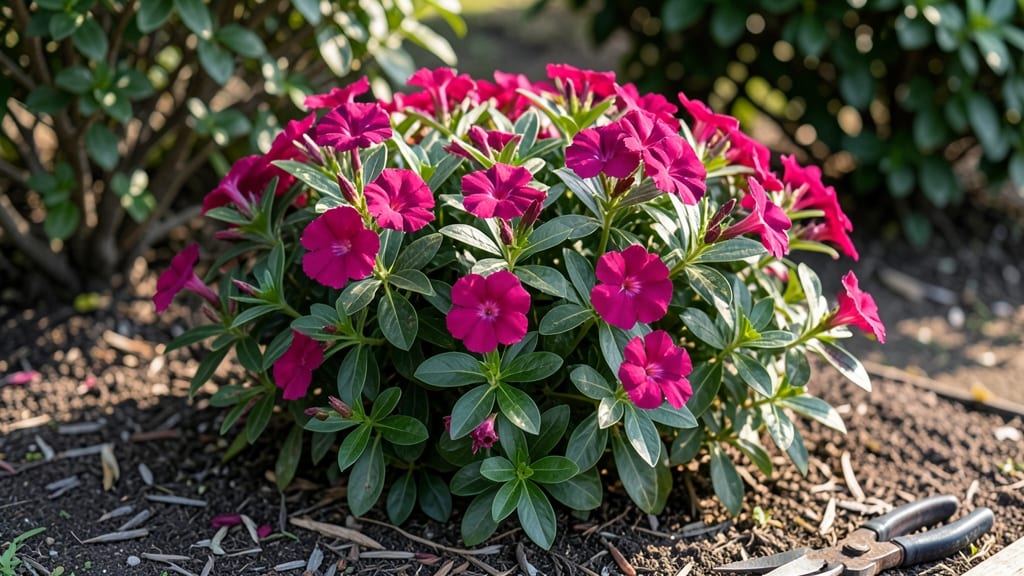
Annual flowering vinca delivers shockingly lush color from spring until frost—with care so simple you’ll wonder why you didn’t try it sooner. 🌿 I’ve grown vinca in everything from sunny borders to container gardens, and it thrives where other annuals flop.
The secret lies in its heat tolerance and drought-resistant nature, making it the perfect no-stress plant for busy gardeners.
You’ll need well-draining soil (even sandy spots work), 6+ hours of sun daily, and occasional watering—never soggy soil. A light feeding with balanced fertilizer every 4-6 weeks keeps blooms coming, but don’t overdo it.
Vinca handles neglect better than most annuals, which is why it’s my go-to for filling gaps or adding instant color to tired beds.
By midsummer, you’ll have a nonstop floral display in shades of pink, white, red, or lavender that lasts until frost. The small, glossy leaves stay neat, and the flowers attract pollinators without needing deadheading.
It’s the kind of plant that makes gardening feel effortless—just plant, water occasionally, and enjoy the show.
Works in containers, garden beds, or hanging baskets, and even tolerates light shade if you’re in a hotter climate. Once you try vinca, you’ll never reach for petunias again—they’re just too high-maintenance. Let’s get those seeds or transplants in the ground!
📚 In This Guide
- What you need
- Instructions
- Tips and common mistakes
- Wrapping up and next steps
What you need
- ● Flowering vinca annual seeds or plants: Choose from varieties like Vinca major or Vinca minor (or hybrid annuals like Catharanthus roseus for tropical blooms). Pro tip: Buy 5–10 seeds or 2–3 young plants per pot or garden section for full coverage! 🌸
- ● Well-draining potting mix: 5–10 gallons (depending on container size) of a light, airy blend (e.g., 60% peat/coir, 30% perlite, 10% compost). Avoid heavy clay soil!
- ● Containers or garden beds: Containers: 6–12" pots (1 plant per 6" pot) or hanging baskets (2–3 plants per 12" basket). Ensure drainage holes! 🚿
- ● Garden beds: Full sun to partial shade spots (6+ hours of light). Amend soil with compost if native soil is dense.
- ● Hand trowel or transplanting spade (for digging small holes or moving seedlings).
- ○ Gloves (optional but recommended for handling soil/seeds).
- ● Watering can or hose with gentle spray nozzle (avoid over-saturating seeds!).
- ○ Mulch (optional): 1–2 inches of shredded bark or straw to retain moisture and suppress weeds.
- ● Warmth: Vinca thrives in USDA Zones 10–11 year-round. For cooler climates, start seeds indoors 8–10 weeks before last frost or buy nursery starts in spring.
- ● Sunlight: Confirm your spot gets at least 4–6 hours of sunlight daily (more = more blooms!).
- ● Watering routine: Keep soil consistently moist but not soggy (especially for seedlings).
Step-by-Step instructions for planting and maintaining flowering vinca annuals
Here’s how to coax vibrant, low-maintenance blooms from vinca—no green thumb required.
🌱 Step 1: Choose the Right Location and Prepare the Soil
Vinca thrives in full sun to partial shade—at least 6 hours of sunlight daily—but tolerates heat and drought once established. I always plant mine where they’ll get morning sun and afternoon shade in hotter climates, as this prevents leaf scorch while keeping blooms prolific. The soil should drain well but retain moisture; vinca roots despise soggy conditions.
Amend heavy or clay soil with 2-3 inches of compost or organic matter to improve drainage. Vinca’s native habitat is sandy, so if your soil is dense, mix in 1 part perlite or coarse sand per 3 parts native soil. This ensures roots stay aerated and water flows freely. Test the soil’s moisture by squeezing a handful—it should hold together but not drip when pressed.
🪴 Step 2: Plant Vinca at the Correct Depth and Spacing
Dig holes twice as wide as the vinca’s root ball but only as deep as the container it came in. Pressing the plant too deep suffocates the stem and stunts growth. Gently loosen the roots if they’re circling the pot—this encourages outward expansion. Place each plant 12-18 inches apart for a full, bushy look; vinca spreads slowly but fills in beautifully over time.
Backfill with native soil mixed with a slow-release granular fertilizer (like 10-10-10) to give roots a nutrient boost without burning tender foliage. Water deeply right after planting to settle the soil and eliminate air pockets. You’ll know it’s done correctly when the soil surface looks slightly firm but not compacted.
☀️ Step 3: Water Consistently Until Established
Keep the soil evenly moist but not soggy for the first 4-6 weeks after planting. Vinca’s deep roots mean it’s drought-tolerant once established, but young plants need steady hydration. Water 1-2 inches per week, adjusting for rain—stick your finger 2 inches into the soil; if it’s dry, it’s time to water. Overhead watering can cause fungal issues, so use a soaker hose or drip irrigation at the base instead.
Once the plants are 6-8 inches tall, reduce watering to once a week unless your area experiences extreme heat (then increase to every 3-4 days). Vinca’s glossy leaves signal it’s thriving—wilted or yellowing foliage means it’s either underwatered or sitting in poor drainage. Mulch around the base with 2-3 inches of shredded bark to retain moisture and suppress weeds.
✂️ Step 4: Prune for Bushier Growth and Continuous Blooms
Deadhead spent blooms weekly to encourage nonstop flowering—vinca produces new flowers from the base, so removing faded ones redirects energy to fresh buds. Pinch back the tips of new growth in early summer to promote branching; this creates a fuller, more compact plant. Use clean, sharp pruners and cut just above a leaf node to avoid leaving stubs that invite disease.
If vinca starts looking leggy by mid-season, give it a light trim—cut back one-third of the tallest stems to the nearest leaf joint. This rejuvenates growth and often triggers a second flush of blooms. Avoid heavy pruning in late summer, as new growth won’t harden off before frost. You’ll notice new leaves emerging within 7-10 days of pruning, signaling the plant is responding well.
🌿 Step 5: Overwinter or Reset for Next Season
If growing vinca as an annual, simply let it finish blooming and pull when foliage yellows. For a perennial effect, cut back stems to 3-4 inches tall in fall, leaving the basal rosette intact. Mulch heavily (4-6 inches) with straw or leaves to protect roots from freeze-thaw cycles. Vinca often regrows from the crown in spring, but if it doesn’t, treat it as a fresh annual—it’s that resilient.
In spring, remove old mulch and apply a balanced fertilizer (like 10-10-10) to jumpstart growth. You’ll see new shoots within 2-3 weeks if temperatures stay above 50°F. Vinca’s adaptability means it forgives mistakes—whether you forget to deadhead or skip a watering, it bounces back with vibrant blooms season after season.
Tips & tricks for perfect flowering vinca annuals
Here's what I've learned after growing vinca for years—these tricks will help you avoid common pitfalls and maximize those vibrant blooms.
Sunlight Strategy: In Step 1, when choosing your location, remember that vinca needs at least 6 hours of sunlight daily—but not necessarily all at once. I've found that morning sun with afternoon shade in hot climates prevents leaf scorch while maintaining prolific blooms. If your area gets intense afternoon sun, consider planting near a structure that provides light shade during peak heat hours.
Soil Preparation Secret: The 2-3 inches of compost recommendation in Step 1 is non-negotiable for heavy clay soils. I've seen vinca plants struggle in unamended clay because water pools around the roots. For sandy soils, you can reduce the compost to 1-2 inches since they already drain well. Always test soil moisture by squeezing a handful—it should hold together but not drip when pressed.
Pruning Precision: When deadheading weekly in Step 4, look for the small leaf node just below the spent bloom—this is where new growth emerges. Cut just above this node to encourage branching. For leggy plants, focus on removing only one-third of the tallest stems rather than hacking everything back. You'll notice new leaves emerging within 7-10 days of pruning, signaling the plant is responding well.
Overwintering Hack: For that perennial effect mentioned in Step 5, I've had success with an extra layer of protection: after cutting back to 3-4 inches and adding 4-6 inches of mulch, I cover the crown with a small mound of soil (about 1 inch thick). This creates an insulating barrier against freeze-thaw cycles that can heave roots out of the ground. In spring, simply remove the soil mound when new growth appears.
Pro Tips for Flowering Vinca Annual
- Here's what I've learned after growing vinca for years—these tricks will help you avoid common pitfalls and maximize those vibrant blooms.
- Sunlight Strategy: In Step 1, when choosing your location, remember that vinca needs at least 6 hours of sunlight daily—but not necessarily all at once.
- Soil Preparation Secret: The 2-3 inches of compost recommendation in Step 1 is non-negotiable for heavy clay soils.
Frequently asked questions
Got questions about growing flowering vinca annuals?
You’re not alone! Here are some of the most common concerns—and their simple solutions—to help you keep your vinca thriving with minimal effort.
Is flowering vinca annual really low-maintenance?
This plant earns its "zero fuss" reputation by thriving in any soil, surviving drought once established, and resisting pests. Just plant it in full sun, water occasionally, and enjoy its vibrant blooms year-round. Pro tip: Deadhead spent flowers to encourage even more blossoms!
How fast does flowering vinca grow, and when will it bloom?
Flowering vinca annuals grow fast—expect 6–12 inches of height in just a few weeks! With proper care, you’ll see non-stop blooms starting 6–8 weeks after planting (or earlier if started indoors). For instant color, opt for pre-blooming nursery plants.
Can flowering vinca handle heat or cold?
This tough plant is a heat lover but not frost-tolerant. It thrives in zones 9–11 year-round and can handle summer temps up to 95°F. In cooler climates, treat it as an annual or overwinter it indoors. Warning: Frost will kill it, so move potted plants to shelter before temps drop below 30°F.
What if my vinca stops blooming?
Don’t panic! Overcrowding, poor light, or lack of nutrients often cause blooming to slow. Fix it by:
- Pruning leggy stems to encourage bushier growth.
- Fertilizing lightly with a balanced 10-10-10 formula every 4–6 weeks.
- Ensuring it gets 6+ hours of direct sun daily.
Are there any toxic alternatives to vinca?
If you’re concerned about toxicity (vinca is mildly toxic to pets), try these safe, equally low-maintenance alternatives:
- Petunias – Bright, pet-safe blooms in many colors.
- Zinnias – Drought-tolerant and super easy to grow.
- Marigolds – Pest-repelling and cheerful!
Wrapping up and next steps
Ready to transform your garden into a vibrant, low-maintenance paradise? Flowering vinca annuals deliver year-round color with minimal effort, making them the perfect choice for busy gardeners or beginners. Their drought tolerance, pest resistance, and cheerful blooms ensure a stress-free gardening experience—so go ahead and plant with confidence!
🌸 Next step: Grab your seeds or seedlings, pick a sunny spot, and let nature do the rest! Whether you’re filling containers, borders, or hanging baskets, vinca will reward you with months of effortless beauty. Happy planting! 🌿