
Shrubs
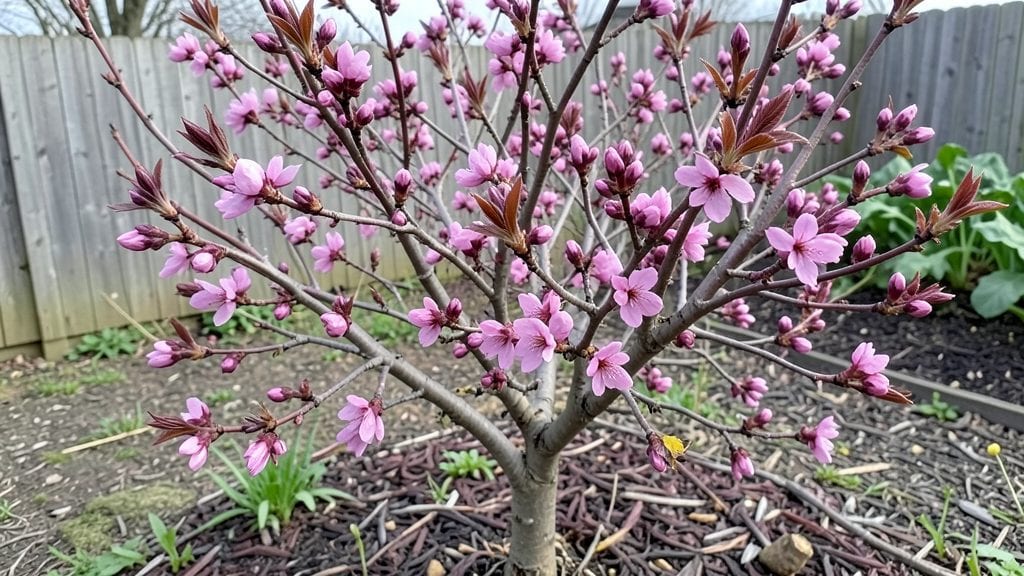
The flowering plum Newport transforms any garden into a fragrant masterpiece with its vibrant purple foliage and showstopping spring blooms. 🌸 I fell in love with this shrub the first time I saw its delicate pink flowers cascading like confetti against deep purple leaves—it’s the kind of plant that makes neighbors stop and stare.
Unlike many flowering trees, this variety offers year-round interest, from early spring blossoms to its striking foliage that holds color well into winter.
Perfect for small gardens, hedges, or as a bold accent plant, the Newport thrives in tight spaces without losing its impact. Pair it with lavender for a Mediterranean vibe or contrast it with white hydrangeas for a soft, romantic look.
Its compact size—typically 6 to 8 feet tall and wide—makes it ideal for urban yards, foundation plantings, or even large containers on patios.
What truly sets this shrub apart is its fragrant elegance—the flowers release a light, sweet scent that lingers in the breeze, turning your garden into a sensory experience. Even in winter, its glossy purple leaves add drama to bare branches, ensuring your landscape stays stunning no matter the season.
The best part? It’s low-maintenance once established, so you get all this beauty with minimal effort.
Whether you’re designing a cottage garden, a modern minimalist space, or a pollinator-friendly haven, the flowering plum Newport delivers effortless elegance that works in any style. Here’s how to make the most of its versatility in your design plan.
📚 In This Guide
- What you need
- Instructions
- Tips and common mistakes
- Wrapping up and next steps
What you need
- ● Flowering Plum Tree (Prunus mume): 1 mature tree (3–5 years old) for instant blooms, or
- ● 1–2 bare-root or container-grown saplings (1–2 ft tall) for long-term growth.
- ● Well-draining soil mix: 50% native soil, 30% compost, 20% perlite or sand (for aeration).
- ○ Optional: 1 lb of slow-release fertilizer (10-10-10 ratio) mixed into planting hole.
- ● Mulch: 2–3 inches of organic mulch (wood chips, pine straw, or shredded bark) to retain moisture.
- ● Hand trowel or spade (for digging planting holes).
- ● Garden gloves (to protect hands from thorns and soil).
- ● Watering can or hose with nozzle (gentle spray setting for young trees).
- ● Pruning shears (sterilized, for shaping and deadheading).
- ● Measuring tape (to ensure proper spacing—15–20 ft apart for mature trees).
- ○ Optional: Soil pH test kit (ideal range: 5.5–6.5).
- ● Tree stake + soft tie (if planting in windy Newport areas).
- ● Drip irrigation system (for low-maintenance watering).
- ● Sunlight: Full sun (6+ hours/day) for optimal blooms.
- ● Location: Plant in a spot with airflow (avoid tight corners or against walls).
- ● Season: Best planted in late fall or early spring (dormant season).
- ● Water source: Ready access to water for the first 2–3 weeks post-planting.
Step-by-Step guide to planting and caring for flowering plum Newport
Here’s how to cultivate this stunning cultivar for vibrant, fragrant blooms that transform any landscape.
🌱 Step 1: Choose the Perfect Planting Site
Flowering plum Newport thrives in full sun to partial shade, with at least 6 hours of direct sunlight daily for optimal blooming. I always select a spot with well-draining soil—this tree despises soggy roots, which can lead to root rot and stunt growth. Test your soil’s drainage by digging a hole, filling it with water, and timing how long it takes to drain. If it holds water for more than 2 hours, amend the soil with 2-3 inches of compost or sand to improve drainage.
This cultivar also appreciates shelter from harsh winds, which can damage delicate blossoms. A location near a fence or building offers natural protection while still allowing sunlight. If your yard has heavy clay soil, mix in organic matter like leaf mold or aged manure to loosen the texture and improve aeration. The goal is soil that feels slightly crumbly when moist—not sticky or compacted.
🪴 Step 2: Plant with Proper Spacing and Technique
Dig a hole twice as wide as the root ball but no deeper—this encourages roots to spread horizontally rather than settling too low, which can suffocate them. Gently remove the tree from its container and loosen any circling roots with your fingers. Place the tree in the hole so the top of the root ball sits level with the surrounding soil—burying the graft union too deep can weaken the tree’s structure.
Backfill the hole with native soil mixed with a handful of balanced fertilizer (10-10-10 ratio) to provide a gentle nutrient boost. Water deeply to settle the soil around the roots, then add 2-3 inches of mulch (like wood chips or pine straw) to retain moisture and regulate soil temperature. Keep mulch 3-4 inches away from the trunk to prevent rot. After planting, water once a week for the first month to help roots establish.
☀️ Step 3: Prune for Shape and Health
Prune your flowering plum Newport immediately after blooming to avoid removing next year’s flower buds, which form on old wood. Start by removing any dead, diseased, or crossing branches—these compete for resources and can block sunlight from reaching the center of the tree. Use clean, sharp pruners to make cuts at a 45-degree angle, just outside the branch collar (the swollen area where the branch meets the trunk).
For shaping, focus on opening the canopy to improve airflow and sunlight penetration. Thin out 10-20% of the branches to reduce density, and avoid cutting back more than 25% of the tree’s height in one season. This cultivar blooms on both old and new wood, so light pruning encourages robust growth without sacrificing flowers. After pruning, apply a fungicide spray to protect fresh cuts from infections, especially in humid climates.
💧 Step 4: Water and Fertilize for Year-Round Blooms
Established flowering plum Newport trees are drought-tolerant once mature, but young trees need deep watering every 7-10 days during dry spells. Water at the base of the tree, not the foliage, to prevent fungal diseases like powdery mildew. A good soak should moisten the soil 12-18 inches deep—use a soil probe or trowel to check moisture levels. If the soil feels dry at this depth, water again.
Fertilize twice a year: once in early spring (just as buds swell) and again in late summer (after the main blooming season). Use a slow-release granular fertilizer with a low nitrogen ratio (like 5-10-10) to encourage flowering over leafy growth. Spread the fertilizer 6 inches away from the trunk and water it in thoroughly. Avoid high-nitrogen fertilizers, which can reduce bloom production and make the tree more susceptible to pests.
✂️ Step 5: Maintain Year-Round for Fragrant Elegance
Remove spent blossoms promptly to encourage continuous flowering—this cultivar can produce multiple bloom cycles in a season if given the right care. Deadhead by cutting back to the first set of healthy leaves or buds below the faded flowers. This also keeps the tree looking tidy and redirects energy into new growth rather than seed production.
Watch for aphids or scale insects, which can cluster on new shoots and suck sap, weakening the tree. Treat infestations early with neem oil or horticultural oil, applied in the early evening to avoid harming beneficial insects. In late winter, apply a dormant oil spray to smother overwintering pests. With consistent care, your flowering plum Newport will reward you with stunning, fragrant blooms that brighten the landscape year after year.
Tips & tricks for perfect flowering plum Newport cultivation
Real talk: The difference between a flowering plum Newport that bursts with vibrant blooms and one that underperforms often comes down to these strategic details.
Sunlight Strategy: While the instructions mention full sun to partial shade, I've found that positioning your tree where it gets morning sun and afternoon shade in hot climates actually preserves more blooms. The intense afternoon sun can scorch delicate petals, so if you're in a Zone 8 or higher, consider a spot with dappled shade during peak heat hours. The 6 hours of sunlight should be spread throughout the day rather than concentrated in just a few hours.
Root Establishment Secret: That first month of weekly watering is non-negotiable, but here's what nobody tells you—the roots need time to establish a network before they can access deep moisture. I like to water deeply every 5-7 days during the first season, using a soil probe to check moisture at 12 inches deep. If it's dry at that depth, water again. This creates a stronger root system that can handle drought better once mature.
Pruning Precision: When you're pruning in Step 3, focus on removing branches that are growing inward or upward—these are the ones that block sunlight and create dense, disease-prone centers. I use a 3-cut method for larger branches: first make an undercut, then a top cut, and finally sever the branch just outside the collar. This prevents tearing and promotes faster healing. The 10-20% thinning recommendation is perfect for maintaining that open canopy that lets light penetrate to the center where buds form.
Fertilizer Timing: The twice-yearly fertilization schedule works beautifully, but here's my upgrade: I apply half the recommended amount of the 5-10-10 fertilizer in early spring, then the full amount in late summer. This gradual approach prevents fertilizer burn while still providing the phosphorus boost needed for flowering. Always water it in thoroughly to move nutrients into the root zone.
Pro Tips for Flowering Plum Newport
- Real talk: The difference between a flowering plum Newport that bursts with vibrant blooms and one that underperforms often comes down to these strategic details.
- Sunlight Strategy: While the instructions mention full sun to partial shade, I've found that positioning your tree where it gets morning sun and afternoon shade in hot climates actually preserves more blooms.
- Root Establishment Secret: That first month of weekly watering is non-negotiable, but here's what nobody tells you—the roots need time to establish a network before they can access deep moisture.
Frequently asked questions
When is the best time to plant a Flowering Plum Newport in Newport, RI?
The ideal time to plant is in early spring (March–April) or fall (September–October). This gives roots time to establish before extreme temperatures. Newport’s coastal climate benefits from spring planting, as summer humidity helps root growth. Avoid planting in winter—frost can stress young shrubs!
How long does it take for a Flowering Plum Newport to bloom after planting?
Patience pays off! With proper care, your shrub may produce sparse blooms in the first 2–3 years, but full, vibrant flowers typically appear by year 4–5. Prune lightly in late winter to encourage stronger growth. In Newport’s mild climate, expect late winter to early spring blooms (February–March)—a stunning pre-spring show!
Can Flowering Plum Newport handle Newport’s coastal wind and salt spray?
This variety is highly salt-tolerant and thrives in coastal areas like Newport. To maximize resilience:
- Plant in well-draining soil (sandy loam works best).
- Mulch annually to protect roots from salt spray.
- Avoid planting too close to shorelines where salt accumulation is heavy.
What should I do if my Flowering Plum Newport isn’t blooming?
Don’t panic! Common reasons include:
- Over-fertilizing with nitrogen (focus on balanced 10-10-10 fertilizer in early spring).
- Poor sunlight—ensure it gets 6+ hours of sun daily.
- Over-pruning—only trim after blooming to avoid cutting flower buds.
- Age—young shrubs (under 3 years) may need time to mature.
Are there dwarf or smaller varieties of Flowering Plum for small gardens?
Yes! If space is limited, consider:
- ‘Okame’ (compact, 8–10 ft tall, early bloomer).
- ‘Shirotae’ (white flowers, 12–15 ft tall but narrower).
- ‘Accolade’ (disease-resistant, 10–12 ft tall).
How do I protect my Flowering Plum from Newport’s pests (like aphids or borers)?strong>
Prevention is key! Monitor for:
- Aphids: Spray with neem oil or introduce ladybugs.
- Borers: Keep shrubs healthy with proper watering and mulch.
- Powdery mildew: Space plants for airflow and avoid overhead watering.
Wrapping up and next steps
The flowering plum in Newport isn’t just a shrub—it’s a year-round masterpiece that brings color, fragrance, and life to your garden. Whether you’re drawn to its stunning blooms, low-maintenance charm, or ability to thrive in coastal climates, this beauty is a game-changer for any outdoor space. 🌸
Ready to transform your landscape? Start small: research local nurseries, pick the perfect variety, and plant with confidence. Your future self—and your neighbors—will thank you!