Pruning
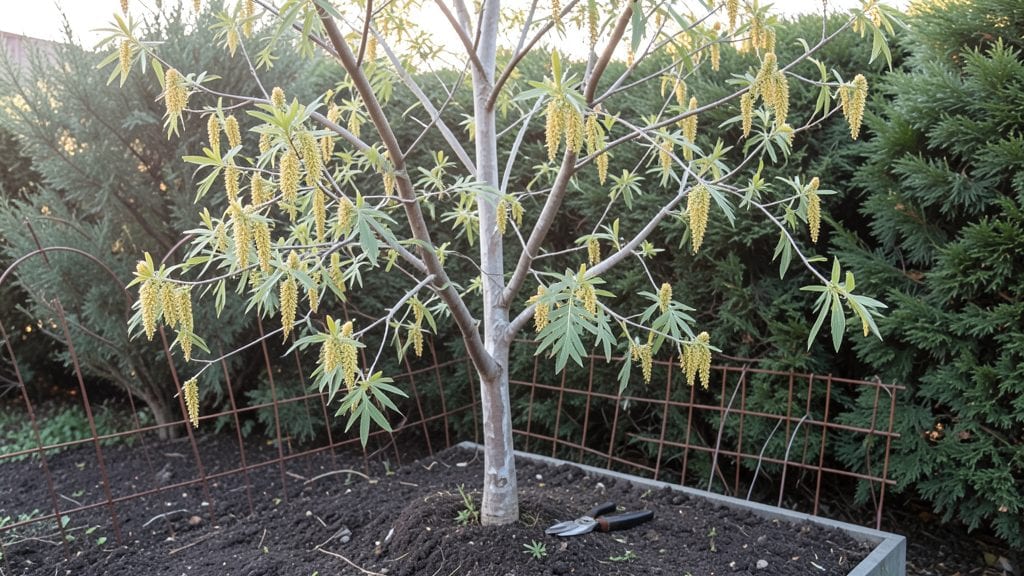
Pruning a flowering pistachio tree isn’t just about shaping branches—it’s about unlocking those fragrant, lace-like blooms that make your yard smell like spring all year. 🌿 I’ve spent years watching my Pistacia chinensis go from scraggly to showstopping, and the secret lies in timing, technique, and a little patience.
Most gardeners rush pruning, but this tree rewards the ones who slow down and listen to its natural rhythm.
The right approach starts with the right tools: sharp bypass pruners for clean cuts, a sturdy ladder for higher branches, and a notebook to track when you prune.
You’ll need to work in three key seasons—late winter before buds swell, mid-summer after flowering, and a light touch in fall—to keep the tree healthy and blooming.
The goal isn’t just to trim back growth but to encourage new, vibrant shoots where those delicate flowers will appear next season.
By the time spring rolls around, you’ll see the payoff: clusters of tiny, fragrant blooms that attract bees and fill the air with a sweet, citrusy scent. The tree stays compact, resists disease, and produces those signature red berries that birds adore.
Even if you’ve struggled with pistachios before, this method works—I’ve revived multiple trees that others had given up on.
Works for both ornamental varieties and nut-bearing types, though nut producers need slightly different timing. Whether you’re in a warm climate like mine or a cooler zone, the principles stay the same. Let’s get those branches in shape for next year’s blooms!
📚 In This Guide
- What you need
- Instructions
- Tips and common mistakes
- Wrapping up and next steps
What you need
- ● Pruning shears: Bypass pruners (sharp, clean, and sterilized with rubbing alcohol) – 1 pair
- ● Loppers: For thicker branches (1.5"–2" diameter) – 1 pair
- ● Pruning saw: For stubborn, larger branches (3"+ diameter) – 1 saw
- ● Gloves: Heavy-duty, cut-resistant (to protect from thorns) – 1 pair
- ● Disinfectant: 70% isopropyl alcohol or bleach solution (1 part bleach to 9 parts water) – small spray bottle
- ○ Sealing wax: Pruning sealant (optional, for large cuts) – small tube
- ● Ladder or step stool: Sturdy and tall enough to reach branches safely – 1 unit
- ● Trash bags: For collecting pruned debris – 2–3 bags
- ● Sharpie or marker: For labeling cuts (if grafting or training branches) – 1
- ● Hand pruners: For precision trimming of small branches – 1 pair
- ● Extension pole: For high-reaching branches (avoids ladder use) – 1 pole
- ● Pruning rope: For supporting heavy branches post-pruning – 1 roll
- ● Fertilizer: Balanced, slow-release (10-10-10 NPK ratio) – small bag
- ● Mulch: Organic (wood chips or straw) to retain moisture – 2–3 cubic feet
- ● Timing: Prune during dormant season (late winter/early spring) or right after flowering (avoid summer heat).
- ● Weather: Choose a dry, overcast day to prevent stress on the tree.
- ● Research: Sketch a branch map of your tree’s structure beforehand (helps visualize cuts!).
- ● Safety: Wear long sleeves and closed-toe shoes to avoid scratches or falls.
Instructions for pruning a flowering pistachio tree
Here's the precise approach I use to keep pistachio trees blooming beautifully while maintaining their health.
☀️ Step 1: Prune in Late Winter Before New Growth Begins
Start your pruning in late winter (around February) when the tree is still dormant but just before buds begin to swell. This timing ensures you're not cutting off next year's blooms while the tree is still recovering from winter. Look for dormant branches—they'll appear brown and leafless, with no visible buds or signs of growth.
Use clean, sharp pruning shears to make cuts just outside the branch collar—the swollen area where the branch meets the trunk. Avoid leaving stubs, as they can invite disease. I always make cuts at a 45-degree angle to help water run off and prevent rot. For larger branches over ½ inch thick, use a pruning saw for clean cuts.
✂️ Step 2: Remove Dead, Diseased, or Crossing Branches
Scan the tree for dead branches (they'll be brittle and snap easily when bent) or diseased wood (discolored, oozing sap, or fungal growth). These should be removed immediately to prevent the spread of disease. Cut back to the branch collar or a healthy lateral branch, depending on which is closer to the trunk.
Next, identify crossing or rubbing branches—these create wounds that weaken the tree and reduce bloom quality. Remove one of the two branches where they intersect, always choosing the one that's growing more upright or is healthier. This opens up the canopy and allows sunlight to reach the center of the tree, which encourages more blooms.
🌿 Step 3: Thin Out Overcrowded Areas for Airflow
Pistachio trees bloom best when they have good airflow, so focus on thinning out the interior branches to reduce congestion. Aim to remove about 20-25% of the total foliage during this step. Look for branches that are growing inward or upward—these compete with others for sunlight and resources, reducing bloom potential.
When thinning, prioritize branches that are smaller than ¼ inch in diameter. These are easier to remove and won’t leave large wounds. Step back frequently to assess the tree’s shape—you want an open, vase-like structure that allows sunlight to penetrate to the center. This ensures even blooming across the entire tree.
🌱 Step 4: Shape the Tree for Balanced Growth
After removing dead, diseased, and overcrowded branches, focus on shaping the tree to encourage balanced growth. Start by identifying the main scaffold branches—these are the larger branches that form the tree’s structure. They should be spaced 8-12 inches apart along the trunk and angled outward at about 45 degrees. If any scaffold branches are growing too close together or at sharp angles, prune one to improve airflow and light exposure.
For younger trees, you can also prune to encourage a central leader—a single dominant trunk with smaller branches emerging from it. This creates a strong, stable structure. Avoid heavy pruning on mature trees, as pistachios bloom on both old and new wood, and aggressive cuts can reduce next year’s flowers.
⏰ Step 5: Light Summer Pruning to Encourage Bloom
After the initial winter pruning, perform a light summer pruning in June or July to remove any suckers (fast-growing, weak shoots at the base of the tree) or water sprouts (vertical shoots growing from the trunk or branches). These compete with the main structure for nutrients and can reduce bloom quality.
During this pruning, also remove any deadheading—spent flowers or seed pods that have formed. While pistachio trees aren’t typically deadheaded like annuals, removing these spent parts can redirect the tree’s energy toward producing more blooms for the following season. Keep cuts small and precise to minimize stress on the tree.
Tips & tricks for pruning a flowering pistachio tree
These pro tips will help you prune your pistachio tree like a seasoned arborist—keeping it healthy and blooming beautifully year after year.
The Timing Factor: February is your perfect window for winter pruning, but don't wait until buds swell! If you miss the late winter timing, you risk cutting off next year's flower buds. I check for dormant branches—those that look completely brown and leafless with no visible buds. This visual cue is your green light to start pruning.
Tool Precision: Your pruning shears should be as sharp as a chef's knife. Dull tools crush branches instead of making clean cuts, which can damage the tree's vascular system. I always sterilize my tools with rubbing alcohol between cuts to prevent spreading disease. For branches over ½ inch thick, a pruning saw is a game-changer—it gives you that clean cut right outside the branch collar.
Airflow Architecture: Pistachio trees need that open, vase-like structure to bloom their best. When thinning, focus on removing branches smaller than ¼ inch in diameter first—they're easier to remove and won't leave large wounds. Step back every few cuts to visualize the tree's shape. You're aiming for sunlight to reach all the way to the center, not just the outer branches. This ensures even blooming across the entire tree.
Seasonal Strategy: That light summer pruning in June or July is your secret weapon for next year's blooms. I make it a habit to remove those fast-growing suckers and water sprouts—they're like weeds stealing nutrients from your tree's main structure. Even though pistachios aren't like annuals, removing spent flowers and seed pods helps redirect the tree's energy toward producing more blooms for the following season.
Pro Tips for Flowering Pistachio Tree
- These pro tips will help you prune your pistachio tree like a seasoned arborist—keeping it healthy and blooming beautifully year after year.
- The Timing Factor: February is your perfect window for winter pruning, but don't wait until buds swell!
- Tool Precision: Your pruning shears should be as sharp as a chef's knife.
Frequently asked questions
Got questions about keeping your flowering pistachio tree in peak bloom? Here are answers to the most common concerns—from timing to troubleshooting—so you can prune like a pro!
When is the best time to prune a flowering pistachio tree for maximum blooms?
The ideal time is late winter or early spring (before buds swell) to avoid disrupting flowering. For light shaping, prune after blooming in early summer. Avoid heavy cuts in fall or winter—the tree needs energy to flower next season!
Why isn’t my flowering pistachio tree blooming this year?
Common causes include over-pruning (removing too many branches), nutrient deficiencies (low nitrogen/phosphorus), or stress (drought, pests, or extreme temps). Check soil pH (6.5–7.5 is ideal) and fertilize with a balanced 10-10-10 mix in early spring. Pro tip: Young trees may take 3–5 years to bloom—patience is key!
Can I prune a flowering pistachio tree in winter?
Yes, but only for structural cuts (removing dead/diseased wood). Heavy pruning in winter can stress the tree, reducing next year’s blooms. If you must prune, do it on a mild, dry day and avoid frost. For best results, wait until late winter (just before buds break).
What’s the difference between pruning a flowering pistachio vs. a food-bearing one?
Flowering varieties focus on aesthetic shape and bloom density, so prune to open the canopy for sunlight. Food-bearing trees require selective thinning to prioritize nut production. For flowering types, aim for 1/3 of the tree’s height in open space to encourage air flow and blooms.
How do I fix over-pruned branches on my flowering pistachio?
If you’ve trimmed too much, don’t panic! Focus on rejuvenation pruning: cut back 1/3 of the oldest wood to stimulate new growth. Water deeply, fertilize with potassium-rich compost, and avoid pruning for a year. Young shoots will sprout faster with proper care. Pro tip: Use a sharp, sterilized saw to prevent disease!
Does pruning affect next year’s flowers?
Yes! Heavy pruning right before flowering can reduce blooms, but strategic cuts (like removing crossing branches) improve long-term health. For maximum flowers, prune after blooming and avoid cutting more than 25% of the canopy in one season. Balance is key!
Wrapping up and next steps
Caring for your flowering pistachio tree is all about patience, precision, and a little seasonal know-how! 🌸 By mastering the art of year-round pruning—whether shaping in late winter, thinning in early spring, or light maintenance during bloom—you’ll unlock lush foliage, vibrant flowers, and bountiful harvests.
Remember, consistency is key, and even small adjustments can make a big difference over time.
Ready to take your tree to the next level? Start small: pick one pruning technique from this guide and practice it this season. Before you know it, your pistachio tree will be the star of your garden—and your neighbors will be asking for your secrets! 🌿✨