Pruning
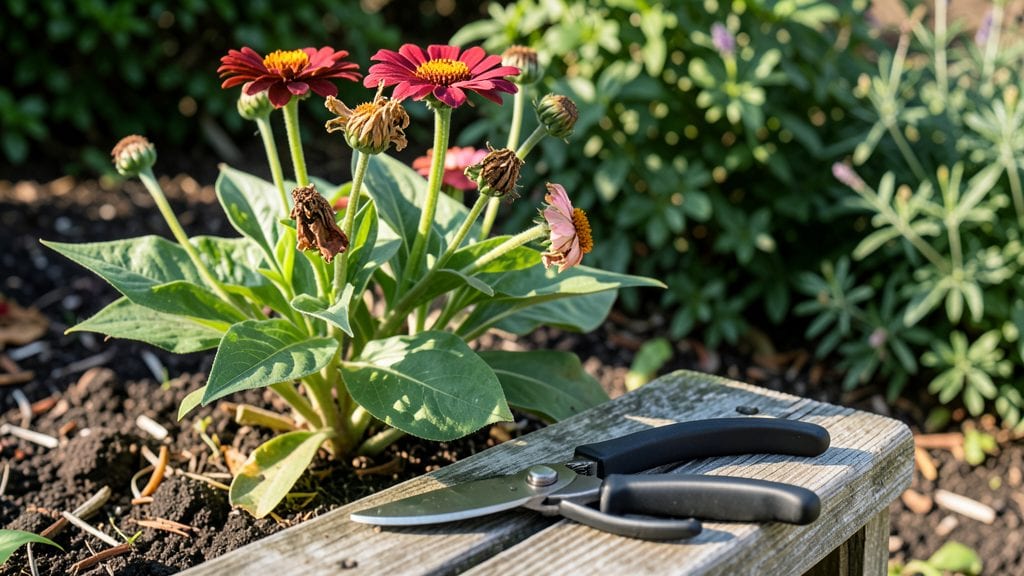
Deadheading zinnia flowers isn’t just about tidying up—it’s the secret to nonstop blooms from spring until frost. 🌻 I’ve watched zinnia plants go from a single burst of color to weeks of continuous flowers just by spending five minutes every few days with a pair of pruners.
The key is timing: you want to snip off faded blooms before they form seed heads, which signals the plant to produce more flowers instead of seeds.
The tools you’ll need are simpler than you’d think: sharp pruning shears, a pair of gloves (zinnia stems can be prickly), and a small bucket for trimmings.
Regular deadheading keeps your zinnias looking fresh and encourages bushier growth—my plants now produce three times as many flowers as they did when I ignored this step. The best part? You’ll extend your blooming season by 4-6 weeks compared to plants left unattended.
Here’s the magic: after removing the faded bloom, look for the next set of buds waiting below. Those are your future flowers, and by keeping the plant focused on growth, you’ll see new blooms opening within 7-10 days.
The more you deadhead, the more your zinnias will reward you with vibrant, healthy stems and a showstopping display that turns heads at the garden center.
This method works for all zinnia varieties—dwarf, tall, or trailing—and adapts easily to containers or in-ground plantings. Once you get the rhythm, it becomes second nature, and your neighbors will wonder how you keep your zinnias looking so effortlessly perfect. Let’s get those blooms going!
📚 In This Guide
- What you need
- Instructions
- Tips and common mistakes
- Wrapping up and next steps
What you need
- ● Zinnia plants – Healthy, mature zinnias (annual varieties work best for deadheading)
- ● Pruning shears or sharp scissors – Clean, sterilized tools (alcohol wipe recommended)
- ○ Gloves (optional but recommended) – Protects hands from thorns or dirt
- ● Watering can or hose – For post-deadheading hydration
- ○ Compost or mulch (optional) – Helps replenish soil nutrients
- ● Garden tweezers – For delicate or small blooms
- ● Pruning saw (for large plants) – If zinnias grow thick stems
- ● Plant food or fertilizer – Boosts regrowth after deadheading
- ● Bucket or bag for spent blooms – Keeps workspace tidy
- ● Sunny, well-drained location – Zinnias thrive in full sun (6+ hours/day)
How to deadhead zinnia flowers for long-lasting blooms
Keep your zinnias flowering like crazy—here's my no-fuss method that works in any season.
✂️ Step 1: Identify the Right Time to Deadhead
Wait until a flower head starts wilting or its petals drop naturally—this signals it's spent its energy. I usually spot these by looking for blooms with drooping petals or brown centers that look crispy. Deadheading too early removes flowers that could still attract pollinators, while waiting too long lets seeds form and weakens the plant.
Check your zinnias every 2-3 days during peak bloom. Morning is the best time because dew can make stems slippery, and you'll see which flowers opened overnight. Grab a pair of clean, sharp pruners or just your fingers—no fancy tools needed.
✂️ Step 2: Make the Perfect Cut
Pinch or snip just above the first set of healthy leaves below the dead bloom. This ensures you're not leaving a stub that can rot. I aim for a clean cut at a 45-degree angle about ½ inch above the leaf node—this prevents water from pooling on the stem. Never cut into the main stem where new growth emerges.
If you're using your fingers, just pinch cleanly at the base of the flower head. You'll feel the slight resistance where the stem meets the leaf—stop there. This small detail keeps your zinnias bushier and encourages more side shoots. I promise you'll see new buds forming within 3-5 days if you do this right.
✂️ Step 3: Encourage Bushier Growth
After deadheading, give your zinnias a little extra love by checking for any side shoots or new buds forming. These hidden gems often grow where you least expect them—look for tiny green bumps along the stems. Gently brush away any fallen petals or debris that might harbor disease, and avoid touching the leaves too much to prevent damage.
Here's the thing—zinnias naturally grow in clusters. By deadheading consistently, you'll train the plant to put energy into producing more side shoots instead of just one tall stem. I like to rotate my deadheading direction slightly each time I prune to encourage even growth all around the plant.
🌿 Step 4: Maintain Season-Long Blooms
Deadhead every 2-3 days during peak bloom season to keep flowers coming. In cooler months or if your zinnias slow down, you can stretch this to once a week—just watch for wilting blooms. I always set a reminder on my phone because even the best gardeners can get distracted.
Watch for new growth at the base of the plant—this is your signal that your deadheading is working. If you notice leaves yellowing or stems getting leggy, your plant might need more sunlight or water. Zinnias are tough, but they'll reward you with nonstop color if you stay on top of deadheading and give them basic care.
Tips & tricks for perfect zinnia deadheading
A few simple tricks will help you keep your zinnias blooming nonstop all season long.
Timing Secret: The 2-3 day deadheading schedule in Step 1 is your secret weapon. I've found that morning is the absolute best time because the dew makes stems slippery and you can see which flowers opened overnight. If you're busy, just focus on the most obvious spent blooms—you don't need to deadhead every single flower at once. Consistency matters more than perfection.
Cutting Technique: That 45-degree angle in Step 2 isn't just for looks—it's about water drainage. When you cut at this angle about ½ inch above the leaf node, you prevent water from pooling on the stem, which could lead to rot. I like to make this cut while holding the stem with my other hand to stabilize it. This small detail makes a huge difference in plant health.
Growth Encouragement: After deadheading, take a quick look for those tiny green bumps along the stems—these are your future blooms! I've noticed that rotating my deadheading direction slightly each time encourages more even growth all around the plant. This simple habit helps prevent leggy stems and creates a fuller, bushier plant. Think of it like giving your zinnias a little massage to stimulate new growth.
Seasonal Adjustments: In cooler months or if your zinnias start slowing down, you can extend the 2-3 day schedule to once a week. The key is to watch for wilting blooms rather than sticking to a rigid schedule. I set phone reminders during peak bloom season because even the most dedicated gardeners can get distracted. The plant will tell you when it needs attention!
Pro Tips for Deadhead Zinnia Flowers
- A few simple tricks will help you keep your zinnias blooming nonstop all season long.
- Timing Secret: The 2-3 day deadheading schedule in Step 1 is your secret weapon.
- Cutting Technique: That 45-degree angle in Step 2 isn't just for looks—it's about water drainage.
Frequently asked questions
What does "deadheading" mean, and why is it important for zinnias?
Deadheading is simply removing spent or fading flowers from your zinnia plants. It’s crucial because it encourages more blooms by redirecting the plant’s energy toward new growth instead of seed production. Without deadheading, zinnias can become leggy or stop flowering entirely—especially in hot climates! Think of it as giving your plants a little "haircut" to keep them looking fresh and productive.
How often should I deadhead my zinnias?
For continuous blooms, aim to deadhead zinnias every 2–3 days during peak flowering (spring to fall). If you’re busy, even weekly deadheading will help. Pro tip: Morning is the best time—flowers are crisp, and you’ll spot faded blooms more easily. In cooler months or dormancy, reduce frequency to avoid stressing the plant.
Can I deadhead zinnias too much? What if I cut too far down?
No, you can’t over-deadhead—just avoid cutting into the woody stems or leaves. Trim just above a set of healthy leaves or a lateral bud (the small bump where new growth emerges). Over-trimming can stress the plant, but zinnias are forgiving! If you accidentally cut too much, don’t worry—they’ll bounce back with proper care.
What if my zinnias keep producing seed heads instead of flowers?
Seed heads form when zinnias aren’t deadheaded regularly or when days get shorter (fall). To revive flowering, prune back 1/3 of the plant to encourage new growth. If it’s late in the season, focus on deadheading the remaining blooms to prolong color. For next year, start deadheading early and fertilize lightly to boost vigor.
Are there alternatives to deadheading for busy gardeners?
Yes! If deadheading feels tedious, try these shortcuts:
- Shear lightly: Use hedge clippers to trim the whole plant back by 1/4, encouraging bushier growth.
- Let some seeds set: Allow a few flowers to go to seed—they’ll self-sow for next year’s blooms!
- Use slow-release fertilizer: Promotes steady growth and more flowers with less maintenance.
Wrapping up and next steps
Deadheading zinnia flowers isn’t just about tidying up—it’s your secret weapon for bold, long-lasting blooms all season long! 🌸 By mastering this simple technique, you’ll unlock vibrant gardens that keep giving, even as the seasons shift.
Ready to put your new skills to work? Grab those shears and give your zinnias the love they deserve—your future floral displays will thank you!
🌱 Next Steps:
- Start small: Pick 1-2 zinnias today and practice deadheading them.
- Observe & adjust: Track which methods work best for your climate and variety.
- Share the joy: Snap photos of your thriving zinnias and tag #ZinniaLove!