
Flowers
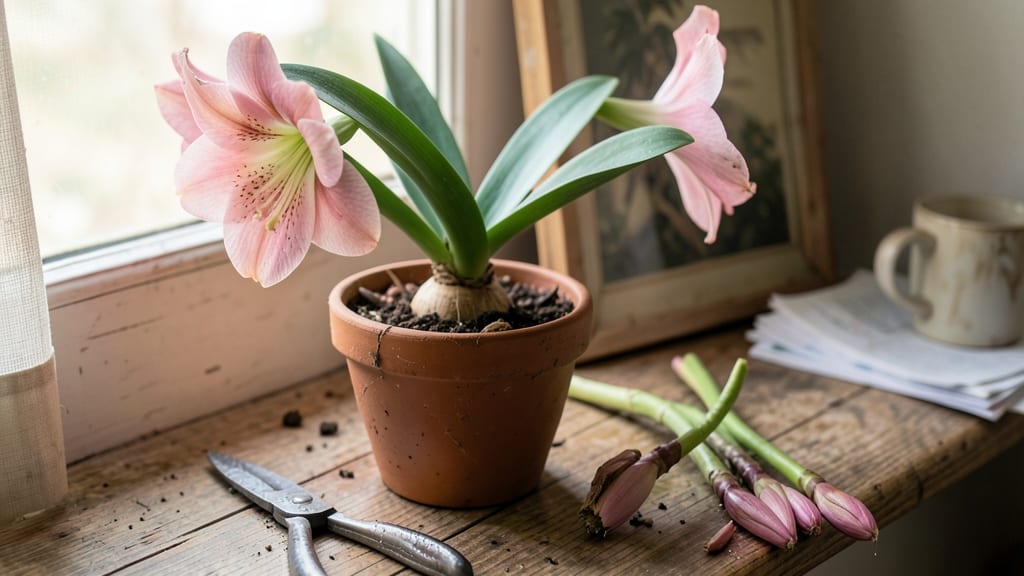
Cutting amaryllis flowers at the right time keeps your plant strong for next year’s blooms. ✨ I’ve learned the hard way that snipping too early or too late can weaken the bulb—so timing is everything.
The key is waiting until the flower is fully open but still firm, not wilted. This simple step prevents stress on the plant and sets it up for a second round of blooms.
You’ll only need two things: sharp scissors or pruners and a clean cutting surface. Most people overlook the importance of clean cuts—ragged edges invite disease. Cut the stem about an inch above the bulb where it meets the foliage, leaving enough strength for the plant to recover.
This small detail makes all the difference in how well your amaryllis rebounds.
After cutting, give the plant a break—no extra water or fertilizer for a few weeks. Let the leaves stay green as long as possible, because they’re the powerhouse feeding the bulb for next season.
By early summer, you’ll see new growth, and with proper care, your amaryllis will reward you with another stunning display of blooms.
This method works for both indoor and greenhouse amaryllis, but outdoor plants need extra protection from frost. The secret to reblooming lies in patience and precision—skip the shortcuts, and your amaryllis will keep surprising you year after year.
📚 In This Guide
- What you need
- Instructions
- Tips and common mistakes
- Wrapping up and next steps
What you need
- ● Sharp pruning shears or floral scissors – Clean, sterilized, and sharp (avoid dull tools that crush stems).
- ● Rubbing alcohol (70% or higher) or hydrogen peroxide – For disinfecting tools between cuts.
- ● Glass or vase – At least 6–8 inches tall to support the flower stalk (or a bucket for bulk pruning).
- ● Water – Room-temperature, filtered if possible (chlorine can harm cut flowers).
- ○ Floral preservative (optional but recommended) – Extends vase life by 3–5 days (e.g., Floralife or homemade sugar + bleach mix).
- ● Newspaper or paper towels – To absorb excess moisture and protect surfaces.
- ● Healthy amaryllis bulb – No mold, soft spots, or pests (discard if compromised).
- ● Dormant or post-bloom phase – Best time to prune is after flowering (when stalks yellow/brown).
- ● Bright, indirect light – Place the bulb in a sunny spot (e.g., east or west window) for recovery.
- ● Patience (4–8 weeks) – Reblooming takes time—keep the bulb hydrated but not soggy.
- ● Wear gloves – Amaryllis sap can irritate skin (especially if you’re sensitive).
- ● Label your tools – Use masking tape to mark scissors for amaryllis-only use.
- ● Check bulb roots – Gently inspect for rot before repotting (if needed).
Instructions for cutting amaryllis flowers to encourage reblooming
Here's how to trim and care for your amaryllis blooms so the plant stays healthy and produces even more stunning flowers next season.
✂️ Step 1: Wait for the Right Time to Cut
Don't rush to cut those gorgeous blooms—wait until half the flowers on each stem are fully open. This ensures the plant has absorbed enough energy from the blooms to fuel future growth. I usually wait until about 3-4 days after the first flower opens on each stem.
Use clean, sharp pruners or scissors to make your cut. Avoid tearing the stem—this can introduce disease. Cut the stem about 1 inch above the bulb, at a slight angle. This prevents water from pooling on the bulb when you place the cut flowers in a vase.
💧 Step 2: Prepare the Cut Stems for a Long-Lasting Vase Arrangement
Once you've made your cut, immediately place the stems in a bucket of lukewarm water for 15-30 minutes. This hydrates the stems and helps them absorb water quickly. Trim ½ inch off the bottom of each stem at a 45-degree angle to open up the vascular system for better water uptake.
Change the water in your vase every 2-3 days to keep the flowers fresh. Add a drop of bleach or a commercial flower food to the water to prevent bacterial growth, which can cause the stems to rot. You'll see the blooms last 2-3 weeks with proper care—longer than you'd expect!
🌱 Step 3: Care for the Plant After Cutting
After removing the flowers, leave the empty stems attached to the bulb for 4-6 weeks. This gives the plant time to redirect energy from the blooms back into the bulb. Place the plant in a spot with bright, indirect light—direct sun can scorch the leaves, while too little light weakens the bulb.
Water the plant sparingly during this time. Let the top 1-2 inches of soil dry out completely between waterings. Overwatering now can cause the bulb to rot before it has a chance to store energy for next year's blooms. You'll notice new leaf growth within 2-3 weeks—this is a good sign the plant is recovering.
☀️ Step 4: Encourage Reblooming with Proper Light and Rest
Once the leaves start to yellow and die back naturally, it's time to give your amaryllis a 6-8 week rest period with minimal water and no fertilizer. Place the bulb in a cool, dark spot with temperatures around 55-65°F. Water just enough to keep the soil slightly moist—don't let it dry out completely, but don't soak it either.
After the rest period, repot the bulb in fresh well-draining potting mix and resume regular care. Place it in a spot with bright, indirect light and water when the top 1-2 inches of soil feel dry. Fertilize lightly every 4-6 weeks with a balanced houseplant fertilizer. With patience, you'll see new flower spikes emerge in 8-12 weeks.
Tips & tricks for perfect amaryllis flower pruning
Amaryllis care isn't rocket science, but these small details make all the difference between a plant that blooms again next year and one that fizzles out. Here's what I've learned after watching my own amaryllis go from one-time bloomer to reliable rebloomer.
The Timing Secret: That 3-4 day wait after the first flower opens is crucial. I learned this the hard way—cutting too early means the plant hasn't absorbed enough energy to store for next season. Watch for the first flower to open fully, then count those days. You'll know you're ready when you see the second or third flowers starting to unfurl on the same stem.
Cutting Technique Matters: The 1-inch cut above the bulb at a slight angle isn't just for looks—it's about health. That angle prevents water from pooling on the bulb, which could lead to rot. Use clean pruners every time (I keep a pair dedicated just for my amaryllis), and make sure to disinfect them with rubbing alcohol between cuts to prevent disease spread.
Hydration Hack: That 15-30 minute lukewarm water soak in Step 2 is your secret weapon for longer-lasting cut flowers. The warm water opens the stem's vascular system, helping it absorb vase water more efficiently. Pro tip: Add a pinch of sugar to the vase water—it feeds the flowers and helps them stay fresh longer. I've seen blooms last nearly 3 weeks with this simple trick!
Light Balance: Bright, indirect light is non-negotiable after pruning. I place my amaryllis near an east-facing window where it gets morning sun but is shielded from harsh afternoon rays. Too much direct sun can scorch the leaves, while too little light means the bulb won't store enough energy for next year's blooms. Think of it as the plant's recovery phase—give it the right conditions and it'll reward you with new growth.
Pro Tips for Cut Amaryllis Flowers
- Amaryllis care isn't rocket science, but these small details make all the difference between a plant that blooms again next year and one that fizzles out.
- The Timing Secret: That 3-4 day wait after the first flower opens is crucial.
- Cutting Technique Matters: The 1-inch cut above the bulb at a slight angle isn't just for looks—it's about health.
Frequently asked questions
Got questions about cutting and caring for your amaryllis blooms? Here are some of the most common queries—and their answers—to help you keep your plant thriving and stunning!
How do I cut amaryllis flowers without harming the plant?
Always use clean, sharp scissors or pruners to make a diagonal cut just above a leaf node (where leaves grow). Avoid cutting too close to the bulb—leave about 1-2 inches of stem above the bulb to prevent rot. This encourages future blooms while keeping your plant healthy!
When is the best time to cut amaryllis flowers?
Trim spent blooms as soon as they wilt to redirect the plant’s energy toward new growth. For cut flowers, harvest them in the morning when stems are hydrated. If you’re pruning for reblooming, wait until the flower stalk turns yellow and dies back naturally before cutting it at the base.
Can I propagate my amaryllis from cuttings?
Unfortunately, amaryllis bulbs don’t root from stem cuttings like some other plants. However, you can divide offsets (baby bulbs) that form around the base after a few years. Gently separate them in spring, plant in fresh soil, and give them time to establish—new blooms may take 1-2 seasons!
Why are my cut amaryllis flowers wilting quickly?
Wilting cut flowers often signal dehydration or bacterial growth. Use room-temperature water in a clean vase, and change it every 2-3 days. Add a drop of bleach or a flower preservative to extend vase life. Also, avoid placing cut stems near drafts, direct sunlight, or ethylene-producing fruits (like apples).
Do I need to fertilize after cutting amaryllis flowers?
Yes! After pruning, feed your amaryllis with a balanced, water-soluble fertilizer (like 10-10-10) diluted to half-strength. Do this every 4-6 weeks during the growing season (spring/summer). Avoid fertilizing in fall/winter when the plant is dormant—this helps prevent bulb rot and encourages stronger reblooms next year.
Wrapping up and next steps
Cutting your amaryllis flowers might seem intimidating, but with the right tools and techniques, you’ll revive your plant and encourage breathtaking reblooms! Remember to use clean, sharp shears, support stems properly, and give your plant the care it deserves after pruning.
The key is patience—your amaryllis will thank you with vibrant, healthy blooms next season.
Ready to transform your space? Start by monitoring your plant’s progress and adjusting care as needed. Before you know it, you’ll be the proud gardener of a thriving, reblooming amaryllis—one cut at a time! 🌸✨