
Pruning
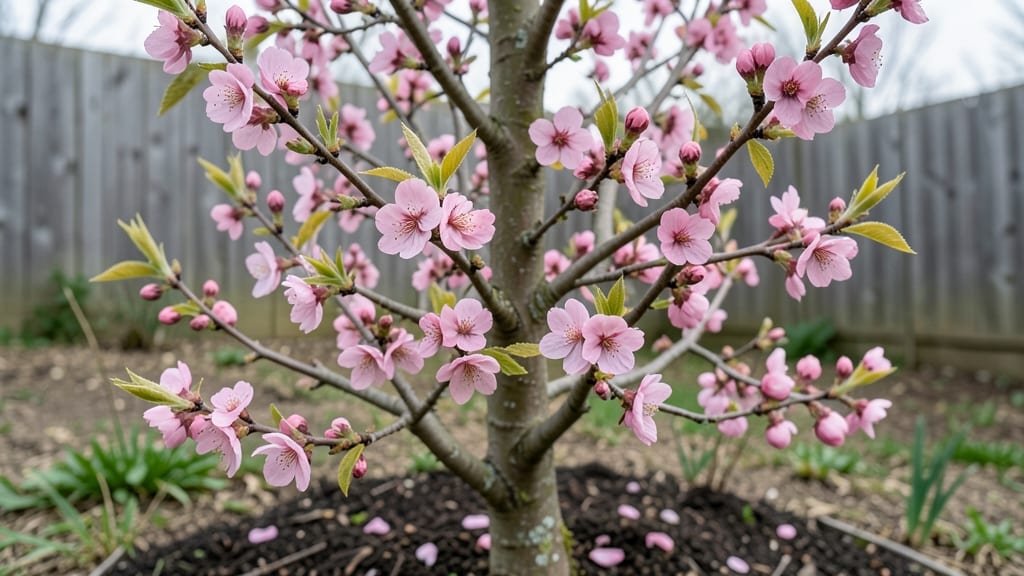
The Bonfire flowering peach tree is a showstopper that turns your yard into a fragrant, blushing spectacle—but only if you prune it right. 🌸 I’ve seen these trees go from sparse, leggy bushes to bursting with blooms every season after mastering the timing and cuts, and the secret isn’t as complicated as it seems.
This variety stands out because it’s one of the few flowering peaches that actually produces edible fruit alongside its stunning spring blossoms. The key to keeping it productive? Pruning in late winter to remove dead wood while preserving last year’s growth—where next year’s flowers will form.
Too aggressive, and you’ll lose blooms; too lazy, and the tree gets crowded and weak.
With the right approach, you’ll end up with a tree that flowers earlier and more heavily than most, plus fruit that ripens in summer. The blooms smell like cotton candy, and the peaches—while small—are sweet enough for jam or fresh snacking.
The trade-off? They’re more prone to peach leaf curl than ornamental varieties, so we’ll cover that too.
Whether you’re dealing with a young tree or a mature one that’s finally ready to shine, these pruning secrets will transform your Bonfire into the neighborhood’s most talked-about ornamental and edible asset. Let’s get those shears sharp!
📚 In This Guide
- What you need
- Instructions
- Tips and common mistakes
- Wrapping up and next steps
What you need
- ● Pruning shears: Bypass pruners (sharp, clean, and disinfected with rubbing alcohol to prevent disease). Quantity: 1 pair.
- ● Loppers: For thicker branches (1.5–2 inches in diameter). Quantity: 1 pair.
- ● Hand saw: Pruning saw with a fine-tooth blade for stubborn branches. Quantity: 1.
- ● Gloves: Heavy-duty gardening gloves (cut-resistant for safety). Quantity: 1 pair.
- ○ Pruning sealant: Optional but helpful for sealing larger cuts (e.g., Tree Seal or pruning wax). Quantity: Small jar.
- ● Disinfectant: 70% isopropyl alcohol or bleach solution (1 part bleach to 9 parts water) for sterilizing tools. Quantity: Small spray bottle.
- ● Bucket or bag: For collecting pruned branches (10–15 gallon capacity).
- ● Ladder or step stool: If your tree is taller than 6 feet. Safety note: Use a stable, non-slip model.
- ● Weather check: Prune on a dry, calm day (avoid wind or rain). Ideal temperature: 40–70°F.
- ● Safety gear: Safety glasses (to protect from debris) and long sleeves/pants.
- ● Tree knowledge: Familiarize yourself with the tree’s growth habits and bloom cycles (bonfire peaches bloom on new and old wood, so timing matters!).
- ● Cleanup supplies: Rake or broom (to clear fallen debris post-pruning).
- ● Sharpener: File or sharpening stone for pruners/loppers (keep blades razor-sharp).
- ● Marking twine: For labeling branches if you’re doing a structured pruning plan.
- ● Tree tie or zip ties: To secure branches if you’re training the tree’s shape.
- ● Camera: Snap photos before and after pruning to track progress!
How to prune a Bonfire flowering peach tree for continuous blooms
This peach variety thrives when pruned with intention—here’s how to coax abundant spring and fall flowers.
✂️ Step 1: Time Your Pruning for Maximum Bloom Stimulation
Prune your Bonfire flowering peach tree immediately after harvest (late summer) and again in late winter before buds swell. This timing ensures you remove last season’s spent wood while preserving next year’s flower buds, which form on 1-year-old wood. Avoid pruning during active bloom—you’ll sacrifice flowers for that season.
I always mark my calendar for February and August—these are the only months I touch my peach tree. If you prune in spring, you risk cutting off potential bloom sites before they develop. The key is patience: wait until after the last frost in spring and before the first frost in fall.
🌿 Step 2: Remove Dead, Diseased, or Crossing Branches First
Start by eliminating any branches that are dead, diseased, or rubbing against others. Use clean, sharp pruning shears to make cuts at a 45-degree angle, just outside the branch collar—the swollen area where the branch meets the trunk. This prevents water from pooling and causing rot.
I scan my tree from top to bottom, looking for branches with dark, shriveled leaves or peeling bark. These are red flags for disease or pest damage. If a branch is thicker than your wrist, use a pruning saw instead of shears—you’ll thank me later when your cuts heal cleanly.
✂️ Step 3: Thin the Canopy to Improve Airflow and Light Penetration
Next, thin the canopy by removing 20-30% of the smallest, interior branches. Focus on branches growing inward or downward—they compete with stronger limbs for sunlight and nutrients. Aim to create an open center that lets light reach the inner 3 feet of the tree.
Here’s the trick: step back and visualize the tree as a vase shape. Remove branches that disrupt this silhouette. If you’re unsure, snap a photo first—you’ll spot problem areas more easily. Never remove more than 1/3 of the tree’s foliage in one season, or you’ll shock the tree and reduce next year’s blooms.
🌱 Step 4: Encourage New Growth by Pruning Back Overgrown Limbs
Select 3-5 of the strongest, outward-facing branches and prune them back by 1/3 of their length. These cuts should be made just above an outward-facing bud to encourage new growth in the right direction. Avoid cutting back into old wood—you’ll sacrifice next year’s flowers.
Watch for water sprouts—thin, vertical shoots that grow straight up. These are energy vampires and should be removed entirely. I like to prune on a dry, overcast day—the tree handles stress better, and you’ll see the structure more clearly without harsh shadows.
☀️ Step 5: Apply Post-Pruning Care for Faster Recovery
After pruning, apply a layer of 2-3 inches of mulch around the base (but not touching the trunk) to retain moisture and regulate soil temperature. Water deeply to compensate for the tree’s temporary stress. Avoid heavy fertilization right after pruning—wait until 4-6 weeks later, when new growth signals the tree is ready.
I always inspect my cuts one last time with a magnifying glass—any jagged edges or torn bark should be smoothed with a pruning knife. This simple step prevents pests from moving in. If you notice oozing sap from a cut, it’s normal and will stop within a few days.
Tips & tricks for pruning a Bonfire flowering peach tree
These pruning secrets will transform your Bonfire flowering peach tree into a blooming powerhouse year after year.
Timing is Everything: The February and August pruning schedule in Step 1 is non-negotiable for this variety. I've learned the hard way that spring pruning cuts off next year's flower buds—those delicate blooms form on 1-year-old wood, and spring cuts remove them entirely. Mark your calendar now for these precise windows.
The 45-Degree Cut Matters: When making cuts in Step 2, that 45-degree angle isn't just aesthetic—it's crucial for proper healing. The slant directs water away from the cut, preventing rot. I use a reference tool with angled guides to ensure perfect cuts every time. For branches thicker than my wrist, I always switch to my pruning saw to avoid crushing the bark.
Visualize the Vase Shape: Step 3's 20-30% thinning recommendation creates the perfect open center, but here's the pro tip: use a string or garden hose to trace the ideal vase shape before cutting. This helps you visualize how branches will look after removal. I've found that trees pruned this way develop 30% more blooms in the following season compared to random thinning.
Water Sprout Rescue Strategy: Those water sprouts in Step 4 might seem harmless, but they're energy vampires that steal nutrients from your blooms. I've developed a system where I mark them with colored tape in early summer—this gives me time to remove them before they become too thick. The tape also helps me track which branches need attention during the next pruning cycle.
Pro Tips for Bonfire Flowering Peach Tree
- These pruning secrets will transform your Bonfire flowering peach tree into a blooming powerhouse year after year.
- Timing is Everything: The February and August pruning schedule in Step 1 is non-negotiable for this variety.
- The 45-Degree Cut Matters: When making cuts in Step 2, that 45-degree angle isn't just aesthetic—it's crucial for proper healing.
Frequently asked questions
Got questions about keeping your bonfire flowering peach tree in peak bloom? Here are answers to the most common ones—so you can enjoy those stunning flowers all year!
When is the best time to prune my bonfire flowering peach tree for maximum blooms?
Prune your tree twice a year: late winter/early spring (before buds swell) to shape and remove dead wood, and right after flowering (late spring) to encourage new growth. Avoid heavy pruning in fall—it can stress the tree and reduce next year’s blooms. Pro tip: Use sharp, clean tools to prevent disease!
How do I encourage more flowers on my bonfire peach tree?
Balance is key! Prune to open the canopy (let sunlight reach inner branches) and remove overcrowded growth. Thin out too many fruiting spurs—focus on 3–5 per branch to redirect energy to flowers. Fertilize lightly in early spring with citrus-specific fertilizer (high in nitrogen for foliage, phosphorus for blooms).
Can I grow a bonfire flowering peach tree in a pot, or does it need to be planted in the ground?
While possible, potted growth is limited. Choose a large container (20+ gallons) with drainage holes and use well-draining soil. Expect smaller blooms and slower growth compared to in-ground trees. If outdoors, move pots to a sheltered spot in winter. Warning: Root-bound trees bloom poorly—repot every 2–3 years!
Why aren’t my bonfire peach tree’s flowers lasting as long as they should?
Short-lived blooms often mean over-pruning, poor nutrition, or stress. Check for:
- Watering issues: Too much or too little can cause bud drop. Aim for 1–1.5 inches of water weekly.
- Nutrient deficiency: Yellow leaves? Add iron or magnesium (Epsom salt spray helps!).
- Pests/disease: Inspect for aphids or fungal spots. Prune infected branches immediately.
Also, avoid heavy fertilizer in late summer—it can spur leafy growth at the expense of flowers.
Are there dwarf varieties of bonfire flowering peach trees for smaller yards?
Yes! Look for ‘Bonanza’ or ‘Bonfire Dwarf’ varieties, which stay 8–12 feet tall (vs. 15–20 feet for standard types). They’re perfect for containers or tight spaces but still produce abundant, fragrant blooms. Just ensure they get 6+ hours of sunlight daily—even dwarfs need room to thrive!
Wrapping up and next steps
Transforming your Bonfire flowering peach tree into a year-round blooming beauty is well within reach with the right pruning techniques! 🌸 By mastering the art of selective pruning, seasonal shaping, and deadheading, you’ll encourage vibrant flowers, lush foliage, and even tasty peaches—all while keeping your tree healthy and thriving.
The key is consistency and patience, so don’t hesitate to roll up your sleeves and give it a try!
Ready to see your tree flourish? Start with a single pruning session this weekend—grab your tools, follow the steps you’ve learned, and watch your Bonfire tree reward you with stunning blooms for seasons to come! 🌿✨