Plants
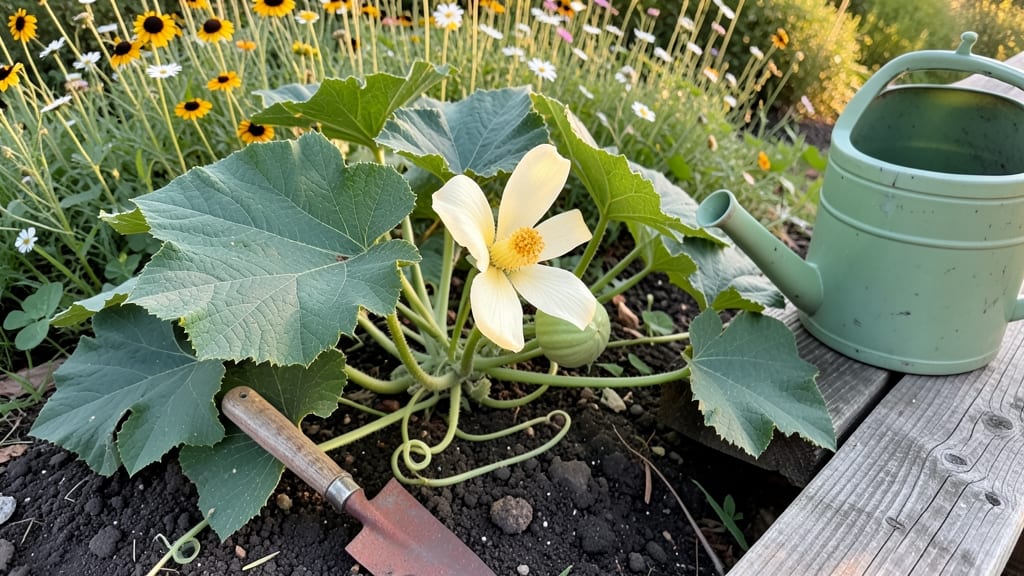
A female pumpkin flower looks like a male flower but has a small, round swelling at its base called the ovary, where fruit develops if pollinated. Its petals are slightly larger, and the flower sits upright on a short stem compared to the dangling male blooms.
A female pumpkin flower’s defining feature is that ovary bump at the base, which is essentially the future pumpkin waiting to grow. 🌱 Unlike male flowers that hang loosely from vines, female blooms stand taller on sturdier stems—this upright posture helps bees locate them more easily for pollination.
The slightly larger petals also create a more pronounced cup shape, making the ovary more visible. I’ve noticed that these flowers often appear later in the season than their male counterparts, giving gardeners a natural clue about when to expect fruit development.
What’s fascinating is how this tiny swelling transforms after successful pollination. Within days, that round bump will swell into a miniature pumpkin, while the petals wilt and fall away.
This visual progression is one of the most rewarding parts of growing pumpkins—watching the vine go from flower to fruit right before your eyes!
💡 In This Article
- Key Botanical Features of Female Pumpkin Flowers
- How to Identify Female Pumpkin Flowers in Your Garden
Key botanical features of female pumpkin flowers
The ovary at the base of a female pumpkin flower is actually the plant's reproductive powerhouse. This small, round swelling contains the ovules—where fertilization occurs to create seeds and trigger fruit development.
The ovary's position at the flower's base makes it uniquely vulnerable to damage from wind or pests, which is why pumpkin vines often produce protective structures like thick stems or leaf canopies around these flowers. 🌱
Female flowers also have a specialized stigma that's more receptive to pollen than male counterparts. While male flowers produce pollen in abundance (often visible as yellow dust on their anthers), female stigmas must wait patiently for compatible pollen to land.
The stigma's surface area is typically larger—about 1.5-2 times that of male flowers—to maximize pollen capture. This structural difference explains why female flowers often appear "stickier" when ready for pollination.
Pumpkin vines are monoecious, meaning they produce separate male and female flowers on the same plant. This dual-flower system creates a fascinating dynamic: male flowers appear first in the season (typically 3-5 weeks before females), ensuring pollen is available when female flowers bloom.
The vine's hormonal balance shifts over time, with female flowers emerging as the plant matures and focuses energy on fruit production rather than just pollen production.
Here's what happens after pollination: the ovary's cells begin rapid division, transforming that tiny bump into a fruit within 7-10 days. The petals wilt and fall away, while the ovary's walls thicken to become the pumpkin's rind.
This process requires precise coordination between plant hormones like auxin (which promotes cell elongation) and gibberellins (which stimulate fruit growth). 🌿
Temperature plays a crucial role in female flower development. Ideal conditions for female flower production are 70-85°F during the day with cooler nights (60-65°F). Below 60°F, the plant may produce more male flowers, while extreme heat above 90°F can cause flower drop.
This temperature sensitivity explains why gardeners in cooler climates often see fewer female flowers early in the season.
The slightly larger petals of female flowers serve a dual purpose: they create a more visible target for pollinators while also providing better protection for the developing ovary. These petals typically measure 3-5 inches in diameter—about 10-15% larger than male flower petals—which gives female blooms their distinctive, more open appearance.
The increased petal size also helps channel pollen directly to the stigma during pollination.
What most gardeners don't realize is that the ovary's initial size correlates with the potential fruit size. A pea-sized ovary (about 0.5 inches) often develops into a small pumpkin, while a marble-sized ovary (about 1 inch) suggests a larger fruit.
This early indicator can help experienced growers predict their harvest potential by simply examining the female flowers. 💡