
Planting
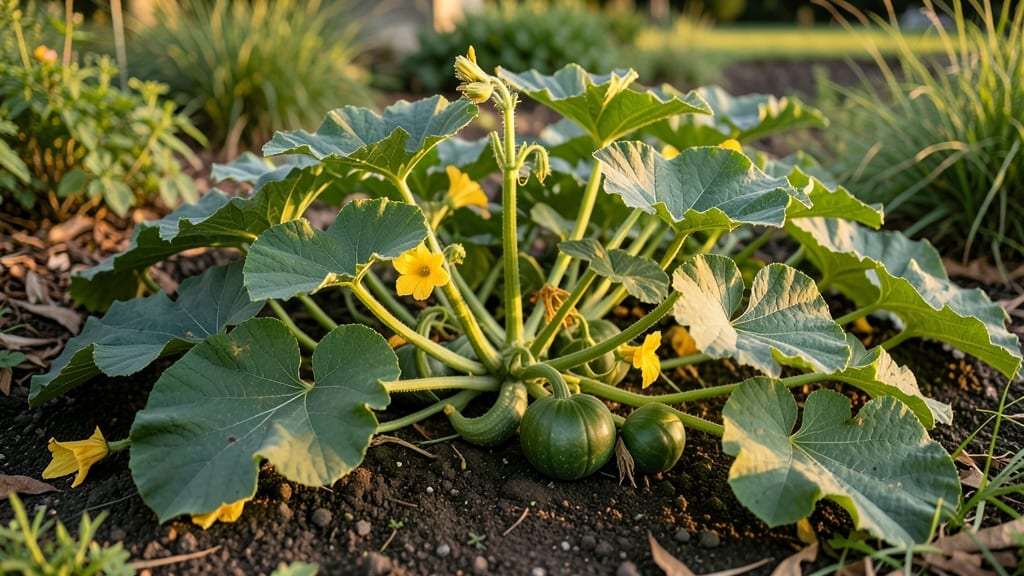
Pumpkin plant yellow flowers signal the start of blooming, appearing 4-6 weeks after germination as male blossoms before female flowers form. These flowers attract pollinators and indicate healthy growth before fruit development begins.
Those vibrant yellow blooms are nature's way of kickstarting your pumpkin harvest. 🌻 Male flowers appear first because they're less resource-intensive—think of them as the plant's "scouts" testing the environment before committing to fruit production.
Female flowers, with their tiny fruit buds at the base, come later and require more energy, which is why you'll often see fewer of them. The timing of these blooms also depends on your growing conditions, with warmer climates speeding up the process.
What's fascinating is how these flowers work together: male flowers release pollen that female flowers need to develop fruit. Without proper pollination—whether by bees, wind, or even a gardener's gentle hand—those female buds will simply wilt away.
This is why healthy blooms mean better yields, but it's also why gardeners need to pay attention to environmental factors like sunlight exposure and consistent watering.
💡 In This Article
- Pumpkin Flower Development Stages Explained
- Encouraging Healthy Pumpkin Blooms for Better Yields
Pumpkin flower development stages explained
The pumpkin plant's yellow blooms follow a precise biological sequence where male flowers emerge first, typically 4-6 weeks after germination. This isn't random—it's an energy conservation strategy. Male flowers require less nutritional investment (about 30% less than female flowers) and act as the plant's initial pollination scouts.
Their slender stems and lack of fruit buds make them lighter and faster to produce, allowing the plant to maximize bloom quantity early in the season when pollinators are most active.
Here's where the science gets interesting: female flowers appear later because they demand more resources. Each female flower contains a tiny fruit bud at its base that will eventually become your pumpkin. This bud requires phosphorus and potassium to develop, nutrients that male flowers don't need.
The plant prioritizes male flowers first because they're less metabolically expensive—like ordering appetizers before the main course. 🌟 What's fascinating is the flower anatomy: male flowers have a single, long stem with a bulbous blossom, while female flowers have a small fruit bump at the base of their blossom, making them instantly recognizable to gardeners.
Environmental triggers play a crucial role in this timing. Pumpkins use photoperiodism—their flowering is triggered by daylight length. Shorter days (like those in late summer) signal the plant to shift energy from leaf growth to reproduction. Temperature matters too: ideal blooming occurs between 70-85°F.
Below 60°F, flowers may fail to open properly, while above 90°F, they can wilt quickly. This is why gardeners in hot climates often see male flowers drop off faster—they're more sensitive to heat stress than female flowers.
The pollination process itself is a delicate dance. Male flowers release pollen that must reach female flowers' receptive stigma (the fuzzy part at the blossom's center). Bees are the primary pollinators, but wind can carry pollen too—though less efficiently.
What most gardeners don't realize is that female flowers are only receptive for 24-48 hours after opening. Miss that window, and the bud will abort.
This is why you'll often see more male flowers than female ones—the plant is hedging its bets by producing extra males to ensure some pollen reaches the limited number of females.
Consider this real-world example: In a 10-foot pumpkin vine, you might see 50-100 male flowers before just 10-20 female flowers appear. That 5:1 ratio isn't wasteful—it's strategic. Each male flower produces thousands of pollen grains, while each female flower needs only a few to set fruit.
The plant's reproductive math ensures maximum chances for successful pollination, even if some flowers fail. This biological efficiency is why pumpkins are so productive when given proper growing conditions.
What's particularly striking is how these flowers change throughout the day. Male flowers typically open in the morning and close by afternoon, while female flowers often open later (around midday) and stay open longer.
This staggered timing increases the chances that pollinators will visit both types of flowers during their active periods.
The bright yellow color isn't just for show—it's a UV light signature that guides bees directly to the nectar and pollen, making pumpkin flowers some of the most efficient in the plant kingdom.