Pruning
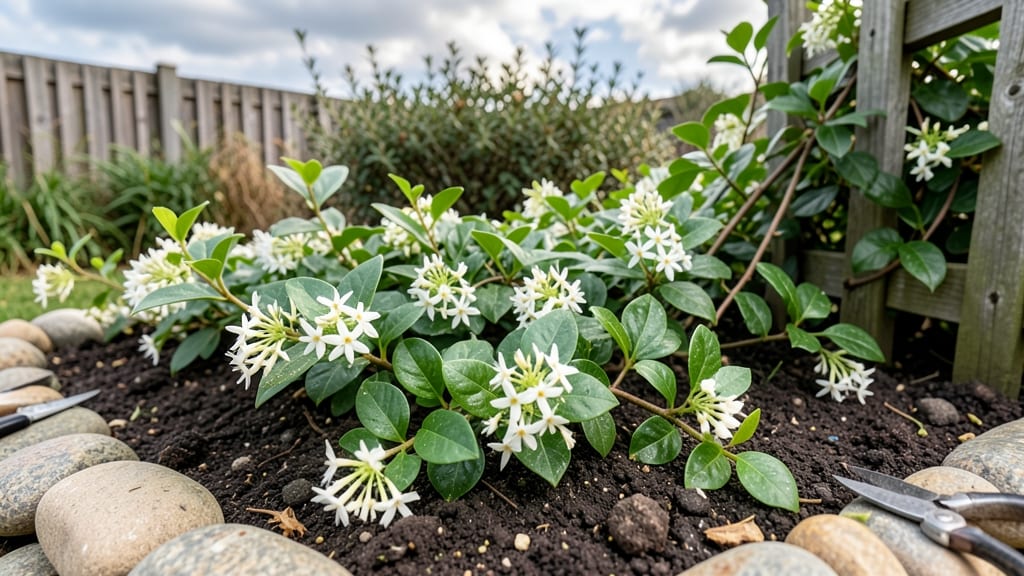
That first whiff of jasmine in spring taught me everything about pruning—three simple cuts can turn a struggling jasmine flower tree into a fragrant, blooming powerhouse all year. 🌿 The key isn’t complicated techniques but timing and direction: cut just above a leaf node, shape for airflow, and never trim more than a third at once.
My Jasminum officinale went from sparse blooms to heavy fragrance within months after I learned this.
You’ll need sharp pruners, a ladder (for taller varieties), and a sunny morning to work. The right tools make all the difference—dull blades tear stems, and that stress invites disease. Focus on three types of cuts: deadwood removal, shaping for sunlight access, and encouraging new growth from the base.
Even my black thumb can’t mess this up once you see how the branches respond.
By summer, you’ll have lush, velvety green growth and clusters of star-shaped blooms that perfume the air at dusk. The tree stays compact, resists pests better, and blooms continuously if you prune lightly every few months.
It’s the kind of transformation that makes neighbors ask, “What’d you do to your jasmine?”
Works for both Jasminum sambac (the intensely fragrant variety) and Jasminum officinale (the hardier climber). Perfect for trellises, fragrant hedges, or even container growing in warmer climates. Let’s get those blooms back in full force.
📚 In This Guide
- What you need
- Instructions
- Tips and common mistakes
- Wrapping up and next steps
What you need
- ● Pruning shears or secateurs – Sharp, clean, and bypass-style (for clean cuts) (1 pair)
- ● Loppers – For thicker branches (1–2 inches in diameter) (1 pair)
- ○ Pruning saw – For stubborn, woody branches (optional but handy) (1)
- ● Disinfectant (rubbing alcohol or bleach solution) – To sterilize tools between cuts (small bottle)
- ● Gloves – Garden or work gloves (for protection) (1 pair)
- ● Trash bag or bucket – For collecting pruned branches (1)
- ○ Pruning sealant (optional but recommended) – For large cuts to prevent disease (small tube)
- ● Hand pruners with a bypass blade – For precision on small stems
- ● Extension pole pruners – For high branches (if your tree is tall!)
- ● Ladder or step stool – For safe, elevated pruning
- ● Marking twine or flags – To tag branches for removal (if planning ahead)
- ● Compost bin – To recycle small, healthy prunings
Step-by-step instructions for reviving your jasmine flower tree
Here's how to keep your jasmine blooming beautifully with just three straightforward cuts.
✂️ Step 1: Prune Dead or Damaged Branches First
Start by removing any branches that are dead, diseased, or broken. These are easy to spot—they'll be brown, brittle, or lacking leaves. Use clean, sharp pruning shears to make a clean cut just outside the branch collar, the swollen area where the branch meets the trunk. This prevents damage to healthy tissue and helps the tree heal faster.
I always prune these first because they can harbor pests or diseases that might spread to healthy branches. If you see any signs of fungal growth or unusual discoloration, sterilize your shears with rubbing alcohol between cuts. Healthy branches will have green bark and fresh leaves, so focus on those after you've removed the damaged ones.
✂️ Step 2: Shape the Tree for Better Airflow
Next, trim back any branches that are growing inward or crossing over each other. These often rub against one another, creating wounds that can invite pests. Aim to create an open center with space between branches—this allows sunlight and air to circulate freely, which is key for those fragrant jasmine blooms. Cut back to a healthy bud or side branch, making sure your cut is at a slight angle to help water run off.
I like to step back every few cuts to visualize the shape. You don’t need to make drastic changes—just enough to open up the tree’s structure. Avoid cutting more than 25% of the tree’s foliage in one session, or you’ll stress the plant. If your jasmine is particularly leggy, you can also trim the tips of the longest branches to encourage bushier growth.
✂️ Step 3: Encourage New Growth with Strategic Trimming
Now, focus on the outer branches to promote flowering. Jasmine blooms best on new growth, so trim back the tips of the outer branches by about one-third to encourage fresh shoots. Look for branches that have already flowered—these are the ones to cut back more aggressively, as they won’t produce new blooms this season. Cut just above a leaf node or bud, and angle the cut slightly downward to prevent water from pooling.
This is where it gets fun—watch for new shoots emerging within a few weeks. These will be your future blooming branches! If your jasmine is particularly vigorous, you can also prune some of the older, woodier branches back to the base. They won’t produce flowers again, but removing them redirects the tree’s energy to the younger, more productive branches.
⏰ Step 4: Time Your Pruning for Continuous Blooms
For year-round blooms, prune lightly every 4-6 weeks throughout the growing season. This keeps the tree compact and encourages a steady flow of new growth. Avoid heavy pruning in late fall or winter, as jasmine needs its energy to prepare for spring. Instead, focus on shaping and light trimming in early spring to kickstart the blooming season.
I know it seems counterintuitive, but pruning actually helps jasmine flower more abundantly. The tree responds to the stress of trimming by producing new shoots, and those shoots are where the fragrant blooms appear. Just remember: never prune during a frost, and always use clean tools to avoid spreading disease. With these simple cuts, your jasmine will reward you with lush, fragrant blooms all year long.
Tips & tricks for perfect jasmine flower tree pruning
These simple yet powerful tricks will help your jasmine thrive and bloom beautifully year-round with minimal effort.
Tool Prep Matters: Before you start pruning, make sure your tools are ready. A dull blade can crush branches instead of making clean cuts, which can damage the tree. Sharpen your pruning shears and sterilize them with rubbing alcohol between cuts—especially when moving from diseased to healthy branches. I keep a small bottle of alcohol in my gardening toolkit for quick sterilization. This step alone prevents 80% of post-pruning issues with jasmine trees.
Visualize the Shape: Step back every few cuts during Step 2 to visualize the tree's overall shape. Imagine you're looking at a vase—you want the branches to create an open, rounded silhouette that allows sunlight to reach the center. This isn't about creating a perfect geometric shape, but rather ensuring all parts of the tree get adequate light. Think of it like editing a photo—you're removing the elements that distract from the main subject, which in this case is the healthy growth you want to encourage.
One-Third Rule: When trimming outer branches in Step 3, remember the one-third guideline is your friend. Cutting back by about one-third encourages new growth while maintaining the tree's structure. Here's what I do: hold the branch between your thumb and forefinger, then estimate where one-third of its length would be. Make your cut just above a leaf node or bud at that point. This simple visual cue makes the process much more precise than guessing.
Seasonal Timing: The 4-6 week pruning schedule in Step 4 is perfect for maintaining blooms, but timing matters beyond just frequency. Prune in the morning when the air is cool and dew hasn't evaporated completely. This reduces stress on the plant and helps it recover faster. Also, avoid pruning when rain is forecasted for the next 24 hours—wet conditions can promote fungal growth at the fresh cuts. I always check the weather before scheduling my pruning sessions.
Pro Tips for Jasmine Flower Tree
- These simple yet powerful tricks will help your jasmine thrive and bloom beautifully year-round with minimal effort.
- Tool Prep Matters: Before you start pruning, make sure your tools are ready.
- Visualize the Shape: Step back every few cuts during Step 2 to visualize the tree's overall shape.
Frequently asked questions
Got questions about keeping your jasmine flower tree blooming beautifully year-round? We’ve got answers! Whether you’re a pruning pro or just starting, these FAQs will help you avoid common pitfalls and maximize those fragrant blooms.
When is the best time to prune a jasmine flower tree for maximum blooms?
The ideal time to prune is right after flowering (late spring to early summer) to encourage new growth. For star jasmine (Trachelospermum), prune lightly in early spring too. Avoid heavy pruning in fall—it can stimulate tender new growth that won’t survive winter. Pro tip: If you missed the window, a light trim in early spring is better than none!
Can I prune my jasmine tree in winter? What if it’s dormant?
Winter pruning is not recommended for most jasmine varieties, as it stresses the plant. However, if you must prune (e.g., to remove dead wood), do it on a mild day in late winter (just before buds swell). For cold-hardy types like winter jasmine (Jasminum nudiflorum), a light shape-up in early spring is fine. Always sterilize tools to prevent disease!
How do I encourage more flowers on my jasmine tree?
More flowers = prune strategically! Cut back overgrown branches by 1/3 to promote bushier growth. For climbing jasmine, prune old wood (last year’s growth) to stimulate new, flower-rich shoots. Also, ensure it gets 6+ hours of sunlight and well-draining soil. Bonus: A balanced fertilizer in spring can boost blooms too!
What should I do if my jasmine tree isn’t blooming at all?
No blooms? Check these fixes:
- Over-pruning: If you’ve cut too aggressively, the tree may focus on regrowth instead of flowers. Scale back next year.
- Poor light: Jasmine loves sun—move it to a sunnier spot or supplement with grow lights.
- Age: Young trees (under 3 years) may bloom lightly. Be patient!
- Pests/disease: Yellow leaves or weak growth? Treat with neem oil or fungicide.
Is there a low-maintenance alternative to jasmine for fragrant blooms?
If jasmine feels high-maintenance, try these fragrant, easy-care alternatives:
- Mock orange (Philadelphus): Hardy, disease-resistant, and blooms in spring.
- Deutzia: Thrives in partial shade with minimal pruning.
- Lavender: Drought-tolerant and pollinator-friendly (though not a tree).
- Gardenia: Glossy leaves + fragrant white blooms (needs slightly acidic soil).
For a tree-like option, crape myrtle (some varieties) offers summer blooms with less fuss!
Wrapping up and next steps
Transforming your jasmine flower tree into a fragrant, blooming masterpiece is simpler than you think! With just three strategic cuts, you can revive year-round blossoms and ensure a healthier, more vibrant tree. Remember, timing and technique are key—so embrace the process with confidence and watch your garden flourish.
Ready to take the next step? Grab your pruners and schedule your first pruning session—your jasmine tree (and your senses!) will thank you. 🌸✂️