
Flowers
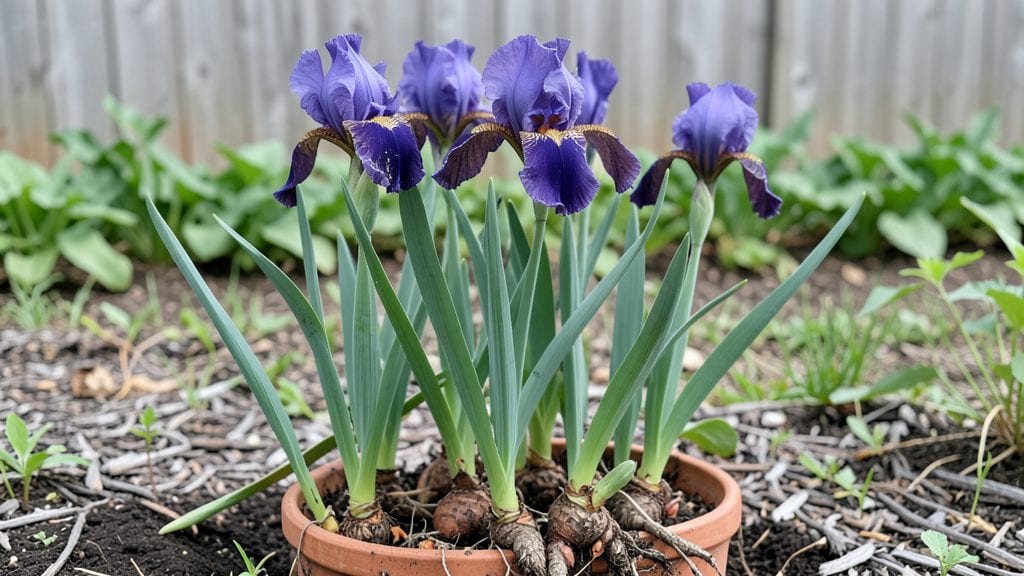
Iris flower names read like a botanical love letter to drama—each variety brings bold colors, striking forms, and meanings that add depth to your garden. 🌿 From the regal bearded irises with their velvety petals to the delicate Siberian irises that thrive in shade, these plants turn ordinary borders into statement pieces.
The right iris can anchor a cottage garden, soften a modern design, or even symbolize hope in a memorial space.
Bearded irises, the showstoppers, come in colors from deep purple to sunny yellow, while Japanese irises offer softer pastels with ruffled edges that feel like lace. Louisiana irises bring tropical vibrancy to wetter spots, and reticulata irises bloom in winter, defying expectations.
Pair tall bearded irises with ornamental grasses for height contrast, or tuck Siberian varieties along shady walkways where their elegant blooms catch the light just right.
These flowers aren’t just pretty—they’re versatile. Use them as focal points in containers on patios, weave them into wildflower meadows for natural beauty, or create a rainbow border by planting irises in a color gradient.
The key is matching their care needs: bearded irises love full sun, while Siberians adapt to partial shade. With the right placement, they’ll steal every show—season after season.
Fair warning: once you start collecting iris flower names, you’ll find it hard to stop. Each variety tells a story, and your garden becomes a living gallery of color, texture, and meaning.
Let’s dive into the ones that’ll make your neighbors stop and stare—because these blooms don’t just grow, they perform.
📚 In This Guide
- What you need
- Instructions
- Tips and common mistakes
- Wrapping up and next steps
What you need
- ● Iris rhizomes or bulbs: Choose from varieties like Bearded Iris, Japanese Iris, or Siberian Iris (3–5 per plant, depending on desired fullness).
- ● Well-draining potting soil or garden soil: Mix in perlite or sand (1 part perlite to 3 parts soil) for optimal drainage.
- ● Organic compost or fertilizer: A balanced 10-10-10 or iris-specific fertilizer (1 tbsp per plant at planting time).
- ● Garden gloves and a trowel: Protect your hands and dig with ease!
- ● Pruners or sharp scissors: For trimming spent blooms or dividing clumps.
- ● Mulch (straw or wood chips): Helps retain moisture and suppress weeds (2–3 inches around plants).
- ● Watering can or hose with a gentle spray nozzle: Irises prefer deep but infrequent watering.
- ○ Stakes or supports (optional): For tall varieties like Louisiana Iris to prevent flopping.
- ● Plant labels or a notebook: Track iris names and care notes—because every bloom deserves a story!
How to identify and cultivate stunning iris flower varieties
These bold blooms come in dazzling colors and names—here’s how to recognize and grow them.
🌿 Step 1: Learn the Key Iris Flower Names by Type
Iris flowers fall into distinct categories, each with showstopping names. Bearded irises (like 'Blue Flag' or 'Germanica') feature fuzzy "beards" on their falls. Siberian irises (such as 'Caesar's Brother') have slender, graceful petals. Japanese irises (like 'Harusame') boast dramatic, ruffled blooms. Louisiana irises (e.g., 'Blue Boy') thrive in swamps and bring bold hues.
Take notes as you shop—some names hint at color ('Purple Haze') or origin ('Queen Elizabeth'). The 'Winnetka' series, for example, offers pastel pinks and purples that steal shows in cottage gardens. I always check the USDA hardiness zone on the tag—most irises need zones 3-9—to avoid disappointment.
☀️ Step 2: Plant for Seasonal Showstoppers
Timing matters. Bearded irises bloom in late spring to early summer (May-June), while Siberian irises shine in mid-to-late summer (July-August). Japanese irises peak in late summer (August-September), and Louisiana irises light up early summer (June-July). Plant rhizomes (thick, fleshy roots) in early fall or late winter for best results.
Dig a hole 2 inches deeper than the rhizome’s height and 3 times wider than its width. Place the rhizome with the top third exposed—this prevents rot. Space them 12-24 inches apart for dramatic clumps. I always mark their locations with popsicle sticks labeled with the variety name (like 'Blue Flag' or 'Harusame') to track which blooms return year after year.
💧 Step 3: Water and Feed for Long-Lasting Blooms
Irises hate soggy soil but need deep watering once a week during their first growing season. After establishment, they’re drought-tolerant—water only during dry spells. Fertilize in early spring with a balanced 10-10-10 formula (use 1/4 cup per plant). Avoid high-nitrogen feeds—it encourages leaves over blooms.
Watch for yellowing leaves—this often means overwatering or poor drainage. If your irises flop (stems lean), they need staking or a sunnier spot. Mulch lightly with 2 inches of compost in fall to protect rhizomes but keep them exposed to sunlight. I’ve seen 'Caesar’s Brother' irises thrive with almost no care once planted—just full sun and well-draining soil.
✂️ Step 4: Prune and Divide for Next-Year Drama
After blooms fade, cut flower stalks at ground level but leave the leaves until they yellow in late summer. This stores energy for next year’s show. Divide clumps every 3-4 years in early fall—dig up rhizomes, separate the fan-shaped roots, and replant the healthiest sections. Discard old, woody centers.
Here’s the trick: Label divisions with the iris name (e.g., 'Blue Boy') before replanting. I use twist ties tied to the leaves for easy ID. Overcrowded clumps produce fewer blooms, so don’t skip this step—your irises will reward you with bigger, bolder flowers the following season.
🌱 Step 5: Protect and Enjoy Year-Round
Irises are deer-resistant, but slugs may nibble young leaves. Set out copper tape or diatomaceous earth if you spot damage. In zones 5-9, mulch heavily in winter to insulate rhizomes. Japanese irises (like 'Harusame') need moist, acidic soil—amend with peat moss if your soil is alkaline.
Watch for borer damage—tiny holes in leaves mean it’s time for neem oil spray. The payoff? Stunning blooms that last 2-3 weeks per variety. I always plant a mix of tall bearded irises (like 'Winnetka') alongside dwarf Siberians (like 'Caesar’s Brother') for layered color. By late summer, your garden will be a nonstop iris show.
Tips & tricks for perfect iris flower cultivation
Here's the thing about irises—those showstopping blooms don't just happen. They need a little extra care to reach their full dramatic potential.
Variety Selection Matters: When choosing your iris varieties, consider both color and height for visual impact. I always pair tall bearded irises like 'Winnetka' with shorter Siberian varieties such as 'Caesar's Brother' to create stunning layered displays. The key is selecting varieties that bloom at different times throughout the season—this ensures your garden never looks bare. For example, plant early summer Louisiana irises alongside late summer Japanese irises for continuous color.
Planting Depth is Critical: In Step 2, when planting your rhizomes, remember that proper depth prevents rot while allowing sunlight to reach the top third. I've learned this the hard way—burying rhizomes too deep leads to mushy, rotting centers that never bloom. Use a ruler to measure your holes: they should be 2 inches deeper than the rhizome's height but never cover the top third. This simple adjustment makes all the difference in establishing healthy plants.
Seasonal Timing for Maximum Impact: The bloom times in Step 2 are non-negotiable for creating a year-round show. Bearded irises in May-June set the stage, while Siberians in July-August keep the drama going. I've found that marking bloom times on my garden calendar helps me plan companion plants that won't compete for attention. For example, pair early-blooming irises with spring bulbs like daffodils, then transition to late-summer annuals when the irises fade.
Labeling System Saves Headaches: Trust me on this—labeling your iris divisions right after planting (as mentioned in Step 4) will save you endless confusion later. I use colorful twist ties tied to the leaves with the variety name written on masking tape. This simple system helps me track which irises return year after year and which ones need replacing. It's especially helpful when dividing clumps, as you can easily identify the healthiest sections of each variety to replant.
Pro Tips for Iris Flower Names
- Here's the thing about irises—those showstopping blooms don't just happen.
- Variety Selection Matters: When choosing your iris varieties, consider both color and height for visual impact.
- Planting Depth is Critical: In Step 2, when planting your rhizomes, remember that proper depth prevents rot while allowing sunlight to reach the top third.
Frequently asked questions
Got questions about naming your irises or choosing the right varieties? Here are some of the most common queries—plus quick answers to help you pick, grow, and enjoy these show-stopping blooms with confidence!
What are the most popular iris flower names?
The Iris genus includes thousands of cultivars, but some stand out for their drama and beauty. Classic names include ‘Blue Flag’ (a wild iris), ‘Purple Sword’ (a striking bearded iris), and ‘Queen of the Night’ (a deep, velvety purple gem). For modern favorites, try ‘Black Gamecock’ (nearly black) or ‘Cadence’ (a soft lavender stunner).
When is the best time to plant irises with unique names?
Plant irises in early fall (6–8 weeks before the first frost) or late winter/early spring (as soon as the soil is workable). This gives roots time to establish before summer heat. Avoid planting in mid-summer—the heat can stress them! Pro tip: Bearded irises (like ‘Blue Moon’) thrive with this timing, while Siberian irises (like ‘Caesars Brother’) can handle cooler springs.
Can I grow irises in containers? What are the best names for potted irises?
Irises adapt well to containers, especially dwarf varieties like ‘Little Princess’ (tiny but mighty) or ‘Ballet Dancer’ (delicate and fragrant). For larger pots, try ‘Florence’ (a bold, ruffled purple) or ‘Café au Lait’ (creamy white with yellow). Use well-draining soil and ensure pots have drainage holes—irises hate soggy roots!
Why aren’t my named irises blooming? Troubleshooting tips!
If your irises skip blooms, check these fixes:
- Not enough sunlight: Irises need 6+ hours of direct sun daily. Move them to a sunnier spot.
- Overcrowded roots: Dig up and divide clumps every 3–4 years (spring is best).
- Poor fertilization: Feed with low-nitrogen, high-phosphorus fertilizer in early spring.
- Dormant after blooming: Let foliage die back naturally—it fuels next year’s flowers!
Still struggling? ‘Professor Blessing’ (a reliable bloomer) or ‘Ice Cream’ (low-maintenance) might be better picks for beginners.
What’s the difference between iris names like ‘Tall Bearded’ vs. ‘Siberian’?
Iris names often hint at their type and traits:
- Tall Bearded Irises (e.g., ‘John Paul II’): Tall stems (2–4 ft), dramatic ruffled petals, and a beard (fuzzy markings). Best for borders.
- Siberian Irises (e.g., ‘Caesars Brother’): Slender, graceful, and fragrant. Thrive in cooler climates (zones 3–8).
- Dwarf Irises (e.g., ‘Little Princess’): Compact (6–12 inches), perfect for rock gardens or pots.
- Japanese Irises (e.g., ‘Marytt Farr’): Unique, water-loving blooms with wavy petals.
Pick based on your climate, space, and style—each type has its own star names!
Wrapping up and next steps
From the regal Germanic to the delicate Japanese, iris flowers bring a world of elegance and meaning to your garden or home. Whether you’re drawn to their striking colors, symbolic depth, or easy care, these blooms are a must-have for any plant lover. 🌸
Ready to add some drama to your space? Start small—pick one variety to grow or gift, and let its beauty inspire your next floral adventure! For deeper inspiration, explore iris care tips or mix-and-match names for a stunning garden theme.