Picking
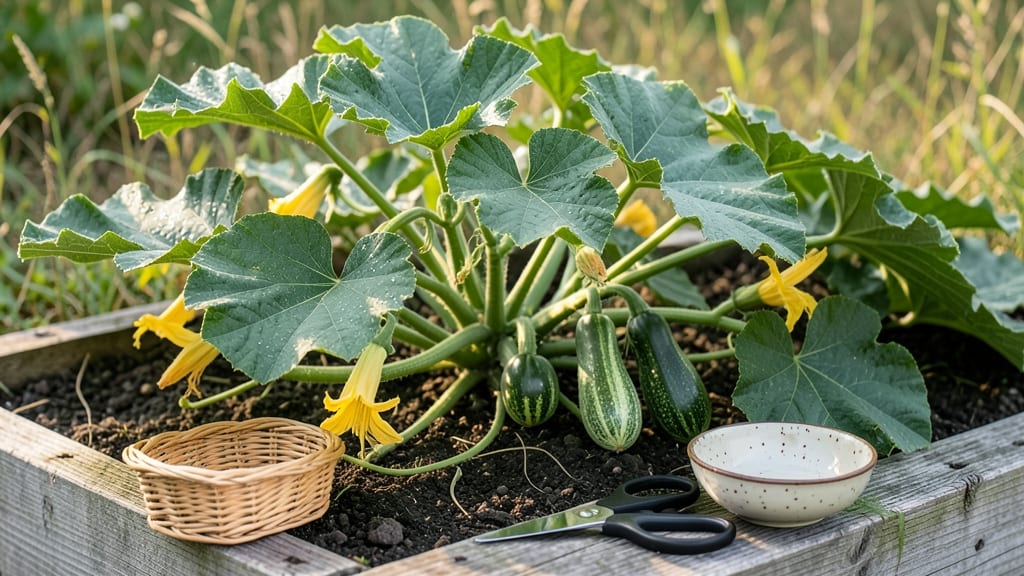
The best time to harvest squash flowers is early morning when petals are fully open but still crisp—this preserves their delicate flavor and texture for cooking or pollination. I learned this the hard way after picking wilted blooms that lost their delicate aroma within hours.
The key is timing: harvest before bees have fully visited, as their nectar is what makes these flowers so prized in recipes.
You’ll need just a few simple tools: sharp scissors or pruning shears to avoid crushing stems, and a small basket lined with paper towels to protect the delicate petals. Always cut the stem about an inch below the flower to encourage new blooms.
Squash plants are surprisingly resilient—proper harvesting actually boosts fruit production by stimulating more flowers to form.
The results are worth the effort: bright yellow petals with a mild, slightly sweet flavor that pairs beautifully in salads, fritters, or as a garnish for summer dishes. These flowers also serve a critical role in pollination—removing too many can reduce your squash yield, so balance is key.
The first harvest will give you enough for a few recipes while keeping your plants productive.
For continued success, water consistently and fertilize lightly after harvesting to support new growth. Avoid over-picking from the same plant—rotate between branches to maintain vigor. With the right technique, you’ll have an endless supply of edible blooms and a bountiful squash harvest all season long.
📚 In This Guide
- What you need
- Instructions
- Tips and common mistakes
- Wrapping up and next steps
What you need
- ● Fresh squash plants: Choose Cucurbita pepo (zucchini, yellow squash) or Cucurbita moschata (butternut) varieties—ensure they’re disease-free and blooming.
- ● Sharp pruning shears or clean kitchen scissors: A pair with sterilized blades (rubbing alcohol wipe) to prevent contamination.
- ● Lightweight basket or breathable container: A small, ventilated basket (e.g., woven or mesh) to hold 10–15 flowers at a time.
- ○ Water spray bottle (optional but handy): For misting flowers if they wilt during transport.
- ● Gloves (recommended): Thin gardening gloves to protect hands from prickly stems or sap.
- ● Floral preservative (e.g., flower food): Extends freshness by 1–2 days if storing before use.
- ● Small cooler or insulated bag: For transporting flowers in hot weather (keeps them crisp for longer).
- ● Labeling tags: If harvesting from multiple varieties, jot down names to avoid mix-ups!
- ● Recipes or cooking guides: Have a batter or stuffing recipe ready—harvested flowers are best used within 24 hours!
Step-by-step instructions for harvesting squash flowers
Here's the best way to pick edible squash blooms without harming your plants.
Identify the Right Flowers to Harvest
Squash flowers are ready for picking when they're fully open in the morning but still closed at night. Look for bright yellow blooms on vining plants like zucchini or yellow squash—they're the most flavorful. Female flowers (the ones that develop into squash) have a tiny squash forming at their base, while male flowers have a long stem and no squash.
Harvest only the male flowers if you want to encourage more female blooms later. Male flowers are easier to spot—they grow on long stems and don't have the little squash bump. Female flowers are essential for fruit production, so leave those unless you're growing squash just for their blossoms.
Pick Flowers at the Perfect Time
Harvest squash flowers in the early morning when they're at their freshest and most tender. This is when the blooms are fully open and their flavor is strongest. Use clean, sharp pruning shears or scissors to cut the stem about 1 inch below the flower. Avoid pulling flowers by hand—this can damage the plant.
If you miss morning harvesting, pick flowers in the late afternoon when they're still open but before they start to wilt. Never harvest flowers that are already wilting or have closed for the day—they'll be tough and less flavorful. A good rule of thumb: if the petals are fully unfurled and the flower is bright and vibrant, it's ready to pick.
Prepare Flowers for Cooking
Once harvested, gently remove any green sepals (the leafy part at the base of the flower) and trim the stems to about ½ inch. Rinse the flowers under cool water to remove any dirt or insects, then pat them dry with a clean towel. Store them in a paper towel-lined container in the refrigerator for up to 2 days—they're best used fresh.
For immediate use, you can dip the flowers in lightly beaten egg and coat them with seasoned breadcrumbs or flour. This helps keep them crisp when fried. If you're not using them right away, you can also freeze the flowers by spreading them on a tray and freezing until solid, then transferring them to a freezer bag for up to 1 month.
Encourage More Blooms After Harvesting
After harvesting, give your squash plants a boost to produce more flowers. Water the base of the plant deeply if the soil feels dry to the touch, but avoid overwatering—squash plants prefer well-drained soil. A light application of balanced fertilizer (like a 10-10-10) can also help encourage new growth and flowering.
Prune any yellowing or damaged leaves to redirect the plant's energy toward producing more flowers. If your squash plants are struggling to produce blooms, check for pests like squash bugs or cucumber beetles and treat them promptly with neem oil or insecticidal soap. Healthy plants will reward you with a steady supply of edible flowers.
Tips & tricks for perfect squash flower harvesting
Harvesting squash flowers at their peak takes practice—here's what I've learned to make every bloom count.
Timing is Everything: The morning hours after sunrise are absolutely critical for harvesting. Flowers open fully in the morning, which is when they're most tender and flavorful. I've found that harvesting between 7 and 9 AM consistently gives me the best results. If you miss morning harvesting, aim for late afternoon when flowers are still open but haven't started wilting. The key visual cue is fully unfurled petals that are bright and vibrant—not yet showing any signs of drooping.
Identification Made Easy: When distinguishing between male and female flowers, focus on the stem and base. Male flowers have long stems and no visible squash at the base, while female flowers have that telltale little squash forming. I always harvest male flowers first to encourage more female blooms later in the season. Pro tip: Use a small magnifying glass if you're having trouble distinguishing them—it makes the tiny details much clearer.
Handling with Care: Never pull flowers by hand—this can damage the delicate stems and harm the plant. Instead, use clean, sharp pruning shears to cut about 1 inch below the flower. This clean cut prevents tearing and helps the plant heal faster. I keep a small pair of shears dedicated just to flower harvesting and clean them with rubbing alcohol between uses to prevent spreading any plant diseases.
Preservation Secrets: For the freshest results, use harvested flowers within 2 days, but you can extend their shelf life with proper preparation. After trimming stems to ½ inch and rinsing, pat them completely dry before storing. I've found that laying them on a paper towel in the fridge works best—it prevents moisture buildup that can cause spoilage. For longer storage, freeze them on a tray first to prevent clumping, then transfer to a freezer bag for up to 1 month.
Pro Tips for Harvesting Squash Flowers
- Harvesting squash flowers at their peak takes practice—here's what I've learned to make every bloom count.
- Timing is Everything: The morning hours after sunrise are absolutely critical for harvesting. Flowers open fully in t...
- Identification Made Easy: When distinguishing between male and female flowers, focus on the stem and base. Male flowe...
Frequently asked questions
Got questions about harvesting squash flowers?
You’re not alone! Here are answers to the most common queries to help you pick, prep, and enjoy your edible blooms like a pro.
When is the best time to harvest squash flowers?
Harvest squash flowers in the morning after the dew has dried but before the heat of the day. This ensures the blooms are fresh, vibrant, and at their peak flavor. Look for fully open flowers with no signs of wilting—typically between 7:00 AM and 9:00 AM works best for most climates.
How often should I harvest squash flowers?
Harvest flowers every 1–2 days to encourage continuous blooming. Overcrowding can stress the plant, so aim to pick 3–5 flowers per vine daily (depending on plant size). This also prevents the flowers from turning into squash, keeping your harvest focused on edible blooms.
What if my squash flowers are already wilting or damaged?
Wilting or damaged flowers aren’t safe to eat—discard them immediately. Check for pests (like squash vine borers) or mold on the stems or petals. If your plant is struggling, improve airflow, water consistently at the base, and consider organic pest control (like neem oil) to protect future blooms.
Can I use any squash flower, or are some better for harvesting?
Most edible squash varieties (like zucchini, yellow squash, or pumpkin) produce safe flowers. Avoid ornamental or hybrid squash labeled as inedible—stick to heirloom or culinary types. Pro tip: Female flowers (with tiny squash forming at the base) are often more flavorful for cooking!
What if I miss harvesting flowers and they turn into squash?
No worries! Let a few flowers pollinate and grow into squash—they’ll still be delicious. To encourage more flowers, hand-pollinate by transferring pollen from male (long-stemmed) to female (swollen base) flowers with a paintbrush. This balances your harvest between blooms and fruit.
Still curious? Drop your questions in the comments—we’re happy to help you master squash flower harvesting!
Wrapping up and next steps
Harvesting squash flowers is a rewarding way to elevate your cooking—whether you're making fritters, tempura, or garnishes! 🌸 With the right timing (early morning or late afternoon) and gentle technique, you’ll enjoy fresh, flavorful blooms straight from your garden. Now that you’re equipped with the know-how, why not try your hand at a squash blossom recipe today? Start small, experiment with flavors, and soon you’ll be a pro at turning these delicate flowers into a culinary delight!