Pruning
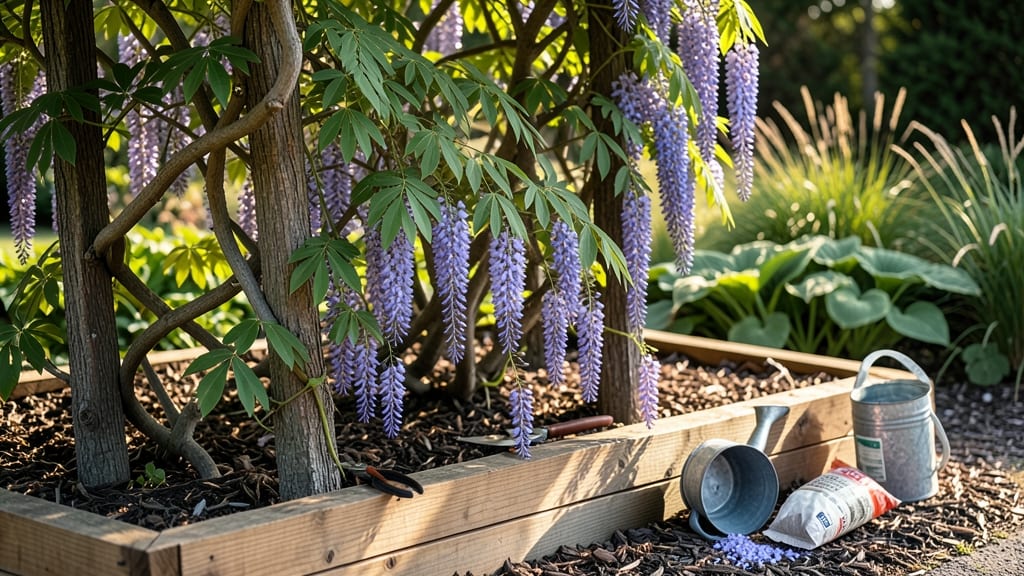
Growing a flowering wisteria tree means waking up to cascades of purple, white, or blue blossoms that smell like spring in every season. 🌿 I’ve battled its aggressive vines and learned the exact timing for pruning that turns a wild tangle into a showstopper garden feature—without sacrificing next year’s blooms.
The key is patience and precision: wisteria thrives in full sun and well-draining soil but demands strong support—think sturdy trellises or arbors to handle its weight.
Most gardeners fail by pruning at the wrong time; I’ll show you how to shape it in late winter when it’s still dormant, so you encourage those fragrant clusters to form.
By summer, you’ll have lush green vines with clusters of blooms that last weeks, even in partial shade. The secret? Pruning after flowering to redirect energy into next year’s growth. It’s not a quick fix—wisteria takes years to mature—but the payoff is worth every season of careful maintenance.
Works best in zones 5-9, though cold-hardy varieties push those limits. If you’ve ever dreamed of a romantic garden feature that keeps giving, this is how you make it happen without losing control of those relentless vines.
📚 In This Guide
- What you need
- Instructions
- Tips and common mistakes
- Wrapping up and next steps
What you need
- ● Pruning shears or loppers – Sharp, bypass-style (for clean cuts; avoid dull tools that tear bark).
- ● Hand pruners – For smaller branches (¼-inch thick).
- ● Gloves – Heavy-duty, garden-grade (wisteria thorns are no joke!).
- ● Disinfectant (70% isopropyl alcohol or bleach solution) – To sterilize tools between cuts and prevent disease.
- ● Rope or twine – For tying down young vines (if training on a trellis or arbor).
- ○ Pruning sealant (optional but helpful) – For large cuts (>½-inch diameter) to prevent sap loss.
- ● Safety glasses – Protects eyes from debris (especially when sawing thicker branches).
- ● Pole pruner – For high-up branches (if your tree is mature and tall!).
- ● Hose or spray bottle – To clean tools and rinse off sap after pruning.
- ● Notebook & pen – To sketch a pruning plan or track growth stages.
- ● Know your wisteria’s variety and age – Some bloom on old wood (like Japanese wisteria), while others (e.g., Chinese) bloom on new growth. Timing matters!
- ● Check local frost dates – Avoid heavy pruning too late in the season if frost is expected.
- ● Have a clear pruning goal – Are you shaping it, encouraging blooms, or removing deadwood?
How to time wisteria blooms year-round for maximum beauty
This isn't just about planting—it's about understanding wisteria's natural rhythm.
🌱 Step 1: Plant at the Right Time for Spring Growth
Wisteria thrives when planted in early spring, after the last frost date in your zone. This gives roots time to establish before summer heat arrives. I always dig the hole twice as wide as the root ball but only as deep as the container it came in—wisteria hates being buried too deep.
Soak the roots in a bucket of water for 30 minutes before planting to revive them. Place the tree in the hole, backfill with native soil, and water deeply to eliminate air pockets. The first year is all about root development—you won't see much above-ground growth, but that's normal. Focus on keeping the soil consistently moist but never soggy.
☀️ Step 2: Prune Strategically in Late Winter for Spring Flowers
Here's where it gets interesting: prune your wisteria in late winter, just as buds begin to swell but before new growth starts. This is the critical window—wait too long and you'll cut off next year's blooms. I always prune on a dry day when temperatures are above 40°F to reduce stress on the plant.
Remove dead or crossing branches first, then cut back last year's growth to 2-3 buds from the base. This encourages new, vigorous shoots that will produce more flowers. Never remove more than one-third of the plant in a single pruning session—wisteria is resilient but not indestructible. You'll see fat, plump buds forming by early spring—that's your sign you did it right.
🌿 Step 3: Feed and Water Through Summer for Fall Color
Once blooms fade in spring, switch to a balanced fertilizer every 6-8 weeks through summer. I use a 10-10-10 formula because wisteria responds well to equal parts nitrogen, phosphorus, and potassium. Water deeply twice weekly during dry spells, aiming for 1-2 inches of moisture per week. The soil should feel damp 2 inches below the surface—if it's bone dry, you're not watering enough.
This is when wisteria's foliage magic happens. Healthy summer growth means vibrant green leaves that turn golden-yellow in fall, creating a stunning contrast with the dried flower clusters. If leaves start yellowing prematurely, it's usually a sign of overwatering or poor drainage. Wisteria roots need oxygen—amend heavy clay soil with compost to improve aeration.
✂️ Step 4: Light Prune in Late Fall to Prepare for Winter
In late fall, after leaves have dropped but before hard frosts, do a light maintenance prune. Remove any dead, diseased, or weak wood—this keeps the plant healthy and prevents pests from overwintering. I never cut back more than 10% of the plant this late in the season, as new growth won't harden off before winter.
Mulch the base with 2-3 inches of organic mulch to insulate roots. This helps protect against temperature swings that can damage wisteria's delicate root system. In colder climates, consider wrapping the trunk with burlap if you expect below 0°F temperatures. You'll know your wisteria is winter-ready when the buds remain firm and the bark looks smooth and unblemished.
⏰ Step 5: Watch for Spring Bud Swelling and Adjust Care
The real magic happens when you see buds swelling in early spring. This is your cue to reduce watering slightly—too much moisture now can cause buds to rot before they open. I increase fertilizer slightly at this stage, switching to a higher-phosphorus formula to encourage blooming. The buds should feel plump and firm, not mushy.
If you planted multiple wisteria trees, space them 15-20 feet apart—they'll eventually grow that wide. You'll notice flowers appearing first on older wood, so avoid heavy pruning near bloom time. Once flowers fade, resume regular summer care. The cycle begins anew, and with each year, your wisteria will reward you with more abundant, fragrant blooms.
Tips & tricks for perfect wisteria bloom timing
Mastering wisteria's bloom cycle is all about reading its natural cues—and avoiding these common pitfalls. Here's what I've learned from years of growing these stunning climbers.
Root Revival Matters: That 30-minute root soak before planting in Step 1 is non-negotiable. I've seen wisteria roots dry out and fail to establish when skipped. Use lukewarm water (around 70°F) and make sure the entire root ball is submerged. This jumpstarts growth and prevents transplant shock. The roots should feel plump and firm after soaking—not limp or mushy.
Bud Swelling is Your Cue: In Step 2, when you see those fat, plump buds swelling in late winter, that's your exact window for pruning. I always check for buds that feel firm but still slightly soft to the touch—like a ripe peach. If buds feel hard and woody, you've waited too long. The 40°F minimum temperature ensures the plant isn't stressed by cold while you're working.
Watering Wisdom: The twice-weekly watering in Step 3 creates that perfect 1-2 inches of moisture, but here's the trick: water deeply at the base rather than sprinkling leaves. I use a rain gauge to track moisture—when it reads 2 inches, I hold off. Overwatering causes those sad yellow leaves we all hate. For the first year, I check soil moisture every 3 days by sticking my finger 2 inches down—if it's dry, water; if damp, wait.
Winter Protection Secrets: When temperatures drop below 0°F in Step 4, that burlap wrap makes all the difference. I've seen wisteria trunks split from freeze-thaw cycles without protection. Wrap loosely—tight wrapping can cause bark damage. The 2-3 inches of mulch acts like a blanket, keeping roots at a steady 40°F even when air temps plummet. In extreme climates, I add a layer of straw over the mulch for extra insulation.
Pro Tips for Flowering Wisteria Tree
- Mastering wisteria's bloom cycle is all about reading its natural cues—and avoiding these common pitfalls.
- Root Revival Matters: That 30-minute root soak before planting in Step 1 is non-negotiable.
- Bud Swelling is Your Cue: In Step 2, when you see those fat, plump buds swelling in late winter, that's your exact window for pruning.
Frequently asked questions
about flowering wisteria trees—because every gardener deserves a little clarity!When is the best time to plant a wisteria tree for maximum blooms?
Plant wisteria in early spring or fall when temperatures are mild (50–70°F). This gives roots time to establish before extreme heat or cold. Avoid planting in summer—heat stress can stunt growth. Choose a location with full sun (6+ hours/day) and well-draining soil for best results.
How often should I prune my wisteria to encourage more flowers?
Prune wisteria annually in late winter or early spring (before new growth starts). Focus on removing dead, weak, or crossing branches first, then thin out overgrowth to improve airflow. Never prune after flowering—this cuts off next year’s blooms! Aim for a balanced shape to support heavy flowers.
Why isn’t my wisteria blooming, even though it’s healthy-looking?
Wisteria skips blooms often due to over-pruning (cutting back too late) or lack of sunlight. Ensure it gets 6+ hours of sun daily and prune before buds form. Young trees (under 3 years) may also need patience—some varieties bloom best after 5+ years. Fertilize lightly in spring with phosphorus for flower growth.
Are there low-maintenance wisteria alternatives for small gardens?
Yes! If wisteria’s vigorous growth is overwhelming, try Clematis (vining but less aggressive) or Japanese honeysuckle for fragrant blooms. For trees, crape myrtle or ornamental cherry offer stunning flowers with easier pruning. Just ensure your space matches the plant’s mature size—wisteria can reach 20–30 feet!
How do I control wisteria’s aggressive spread in my yard?
Wisteria spreads via long, woody runners—contain it with deep root barriers (bury 2–3 feet) or regular pruning to remove suckers. Plant in containers or raised beds if space is limited, but expect annual maintenance. Never let it climb structures—its weight can damage roofs or fences over time.
Can wisteria survive in hot climates like the Southwest U.S.?
Wisteria thrives in USDA Zones 5–9, but hot, dry climates (like Arizona or Nevada) may stress it without extra care. Plant in partial shade (afternoon relief), mulch heavily, and water deeply 2–3x/week in summer. Drought-tolerant varieties like Wisteria sinensis adapt better than W. floribunda.
Wrapping up and next steps
Growing a flowering wisteria tree is a rewarding journey that brings bursts of color and fragrance to your landscape—when done right!
By understanding its seasonal growth stages and pruning needs, you’ll ensure vibrant blooms year after year. 🌸 Whether you’re a beginner or a seasoned gardener, consistency and patience are key to nurturing this stunning vine.
Ready to take the next step? Start small:
- Pick a sunny spot with sturdy support (like a trellis or arbor).
- Grab your pruners and mark your calendar for seasonal trims!
- Join gardening forums or local clubs to swap tips with fellow wisteria lovers.