Pruning
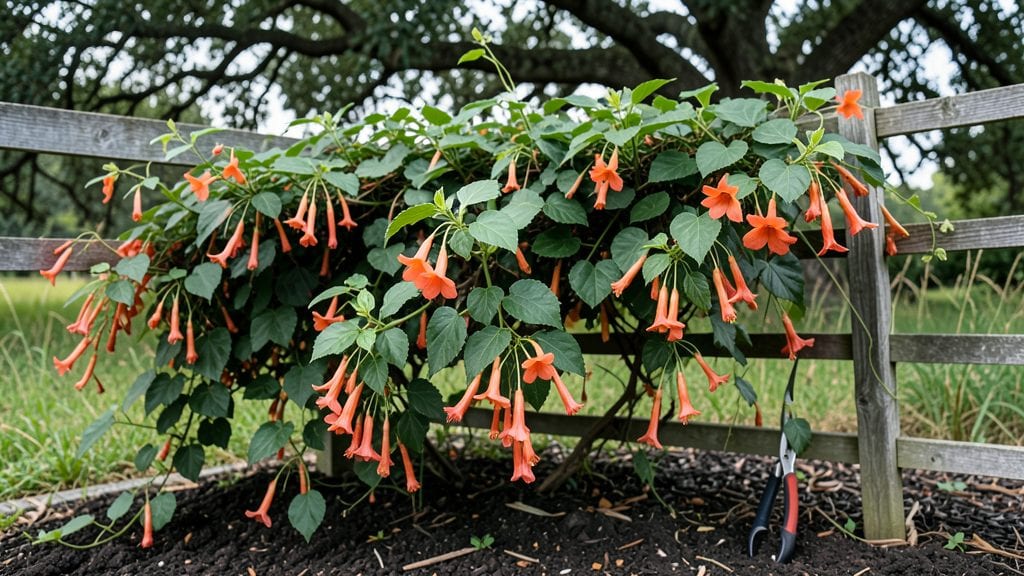
Growing a flowering trumpet tree means waking up to trumpet-shaped blooms that last from summer through fall—and sometimes even winter in warm climates. 🌿 I’ve learned the hard way that these vines reward patience with their bold orange-red flowers, but they demand smart pruning to keep them productive.
The key isn’t just cutting back; it’s understanding when and how to shape them for maximum blooms.
These trees thrive in hardiness zones 4-9, where they’ll climb trellises, fences, or even sturdy branches with ease. You’ll need well-draining soil and full sun to keep them happy, but the real magic happens in late winter when you prune back the previous year’s growth.
This isn’t just maintenance—it’s how you unlock those vibrant blooms all season long.
By the time summer rolls around, your trumpet tree will be covered in flowers that hummingbirds can’t resist. The secret is pruning at the right time—just as new buds start to swell—and removing dead or crossing branches.
It’s not complicated, but it does take a little practice to get the timing right.
Whether you’re dealing with a young vine or an established climber, these techniques work for any size. The payoff? A showstopper of a plant that keeps giving year after year. Let’s get those pruners ready!
📚 In This Guide
- What you need
- Instructions
- Tips and common mistakes
- Wrapping up and next steps
What you need
- ● Flowering Trumpet Tree (Tabebuia spp.) – Choose a healthy sapling or mature tree (ensure it’s disease-free!).
- ● Well-draining soil mix – A blend of topsoil, compost, and perlite (ratio: 60% topsoil, 30% compost, 10% perlite).
- ● Organic mulch – Wood chips or pine straw (2–3 inches thick) to retain moisture and suppress weeds.
- ● Slow-release fertilizer – Balanced 10-10-10 or citrus-specific fertilizer (apply sparingly, ~2 tbsp per foot of tree height).
- ● Watering can or hose with a gentle spray nozzle – For deep, infrequent watering (avoid soggy roots!).
- ● Pruning shears – Bypass pruners (for small branches, ¼"–½" thick).
- ● Loppers – Bypass or anvil type (for branches ½"–2" thick).
- ● Pruning saw – Curved-tooth saw (for thick branches >2" in diameter).
- ● Gloves – Heavy-duty, cut-resistant gloves (to protect from thorns and sap).
- ● Safety goggles – ANSI-rated (to shield eyes from debris).
- ● Disinfectant (70% isopropyl alcohol) – For sterilizing tools between cuts (prevents disease!).
- ○ Tree wound dressing (optional) – Pruning sealant (only for large cuts >2" in diameter).
- ● Sunlight – Full sun (6+ hours daily) for optimal blooming.
- ● Climate zone – USDA zones 9–11 (or container-grown in cooler zones).
- ● Water access – Drought-tolerant once established, but deep water 1–2x weekly for new plants.
- ● Pruning timing – Best done in late winter/early spring (before new growth) or summer after blooming.
Step-by-Step pruning guide for year-round blooms on your flowering trumpet tree
Here’s how I keep my trumpet trees blooming nonstop—just follow these pruning cues and timing.
✂️ Step 1: Prune After Initial Spring Flush
Once your trumpet tree finishes its first spring bloom cycle, grab your pruners and cut back 1/3 of the oldest stems at the base. These are the thickest, woody branches that have already bloomed—they’re done for the year. I target stems over 1/2 inch thick, as thinner growth will produce more flowers next season.
Make clean cuts at a 45-degree angle just above a leaf node or outward-facing bud. This ensures new growth emerges in the right direction. Avoid cutting into the center of the tree—you want an open, airy shape that lets sunlight reach all blooms.
✂️ Step 2: Light Summer Trimming for Shape and Airflow
Every 4-6 weeks during summer, remove any dead, crossing, or overcrowded branches. Dead stems snap easily—if a branch breaks when bent, it’s time to prune. Crossing branches rub against each other, creating wounds that invite disease, so cut one of the two at the base.
For shape, I trim back any branches growing inward toward the center. Aim for a vase-like silhouette—this encourages outward growth where sunlight can hit more blooms. Never remove more than 10% of the tree’s foliage in a single session, or you’ll shock the plant.
✂️ Step 3: Fall Pruning to Stimulate Winter Blooms
In late fall, after the last flush of blooms, prune again—but this time focus on stems that haven’t bloomed yet. These are your future flower producers. Cut back 1/2 of the remaining stems to encourage fresh, vigorous growth from the base in winter.
I also remove any suckers (shoots growing from the base or trunk) unless they’re producing flowers. These divert energy from the main structure. After pruning, apply a balanced fertilizer (10-10-10) to support new growth. Water deeply but avoid soggy soil—root rot is the last thing you want.
✂️ Step 4: Minimal Winter Maintenance
Winter is for observation, not heavy pruning. Only remove frozen or damaged branches—you’ll know them by their blackened or brittle appearance. If your tree blooms in winter, avoid pruning at all until early spring, as you’ll cut off potential flowers.
Here’s the thing—trumpet trees bloom on new wood, so the more you prune in winter, the fewer flowers you’ll see in spring. I just do a quick cleanup of dead growth and wait for the first signs of new buds in early March before any major cuts.
⏰ Step 5: Spring Rejuvenation Pruning
Right before the first buds swell in early spring, do a final pruning session. Remove any weak, thin, or spindly growth—these won’t produce strong blooms. I also thin out clusters of stems growing too close together, leaving 6-8 inches of space between them for airflow.
This is the most critical pruning of the year. Afterward, your tree should look open and airy, with strong, thick stems ready to burst into flowers. Mulch around the base with 2-3 inches of organic mulch to protect roots and retain moisture as new growth starts.
Tips & tricks for perfect year-round trumpet tree blooms
Here's what I learned after years of pruning my trumpet trees—these small details make all the difference in keeping them blooming continuously.
Timing is Everything: In Step 1, when you're cutting back those oldest stems, look for the first sign of new buds forming on the remaining branches. This tells you exactly when to stop pruning—don't cut any stems that already show bud activity, as these will produce your next flush of blooms.
Tool Tip: Use sharp, clean pruners for every cut. Dull blades crush stems instead of making clean cuts, which invites disease. I sterilize my pruners with rubbing alcohol between trees to prevent spreading any potential infections. Also, keep a small pair of hand pruners handy for those hard-to-reach spots during summer trimming.
Visual Pruning Cues: During your summer maintenance (Step 2), pay attention to the leaf color. Healthy leaves should be vibrant green, while yellowing or brown leaves indicate branches that need removal. Another trick: hold a branch between your fingers and bend it gently—if it snaps easily, it's dead wood ready for cutting.
Fertilizer Strategy: After your fall pruning (Step 3), I recommend applying that balanced fertilizer (10-10-10) in early winter rather than late fall. This gives your tree a head start on nutrient absorption before the growing season kicks in. Water thoroughly after applying to help distribute the fertilizer into the soil.
Pro Tips for Flowering Trumpet Tree
- Here's what I learned after years of pruning my trumpet trees—these small details make all the difference in keeping them blooming continuously.
- Timing is Everything: In Step 1, when you're cutting back those oldest stems, look for the first sign of new buds forming on the remaining branches.
- Tool Tip: Use sharp, clean pruners for every cut.
Frequently asked questions
Got questions about nurturing your flowering trumpet tree (Tabebuia impetiginosa) for stunning, year-round blooms? You’re in the right place! Here are answers to the most common queries—from pruning tips to troubleshooting—so you can keep your tree thriving with confidence.
How often should I prune my flowering trumpet tree for continuous blooms?
Prune your flowering trumpet tree once or twice a year, ideally in late winter or early spring (before new growth starts) and again after flowering to shape it. Avoid heavy pruning during peak bloom—focus on removing dead wood, crossing branches, and thinning to improve airflow. Pro tip: Light, regular trims encourage more flowers!
Why isn’t my flowering trumpet tree blooming as much as it used to?
Several factors could be at play: over-pruning (especially in fall/winter), nutrient deficiencies (try a balanced fertilizer), or poor sunlight (they thrive in full sun). Check for pests like aphids or scale, which stress the tree. If it’s mature but still sparse, it might need a rejuvenation prune—cut back 1/3 of old growth to stimulate new blooms.
Can I prune a flowering trumpet tree in fall or winter?
Light pruning (removing dead/diseased branches) is fine in late fall or winter, but avoid heavy cuts—this can shock the tree and delay spring blooms. If you must prune in winter, do it before the first hard freeze. For best results, save major shaping for early spring when the tree is waking up.
What’s a good alternative if my flowering trumpet tree isn’t hardy in my climate?
If your zone is too cold (below USDA Zone 9), consider these similar, cold-hardy alternatives:
- Catalpa (Zone 4–9): Dramatic white/purple blooms, fast-growing.
- Royal Poinciana (Zone 9–11): Vibrant orange-red flowers, drought-tolerant.
- Crape Myrtle (Zone 7–10): Long summer blooms, low-maintenance.
How do I encourage thicker, bushier growth after pruning?
To promote denser foliage and blooms, prune just above a leaf node or bud (never at a stub). After trimming, apply a balanced fertilizer (10-10-10) and water deeply. Pro tip: Pinch back new growth in spring to encourage branching. Mulch around the base to retain moisture—your tree will reward you with lush, fuller growth!
Wrapping up and next steps
The flowering trumpet tree is a stunning addition to any garden, offering vibrant blooms and year-round beauty with the right care—especially when it comes to pruning! 🌸 By mastering the timing, techniques, and tools outlined here, you’ll encourage lush foliage, abundant flowers, and a healthier tree for seasons to come.
Ready to transform your outdoor space? Start small: pick one pruning session this month to practice the steps you’ve learned. Over time, your trumpet tree will reward you with breathtaking blossoms and a thriving presence in your landscape. Happy pruning! ✂️🌿