Pruning
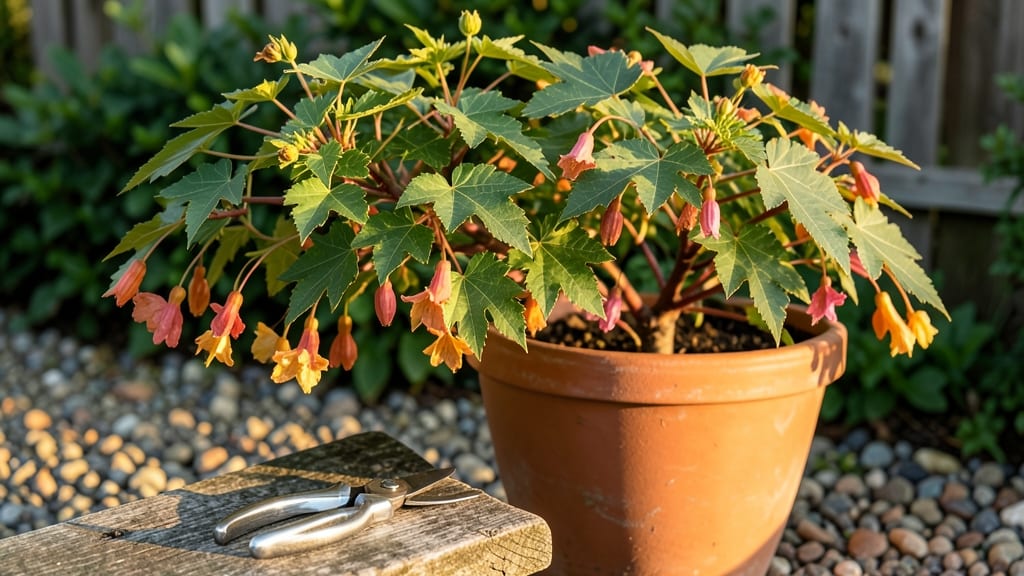
Strategic trimming keeps your flowering maple covered in vibrant blooms year after year. ✨ I’ve watched my own tree go from sparse spring flowers to a canopy of pink and white blossoms by pruning at the right time—and avoiding the mistakes that kill blooms.
The key isn’t just when you cut, but how you shape the branches to encourage new growth where it matters most.
You’ll need sharp pruning shears, a ladder (for higher branches), and a clear day to work—cloudy mornings prevent shock to the tree. Most flowering maples bloom on old wood, so late winter or early spring is ideal, but summer pruning can shape growth without sacrificing next year’s flowers.
The tools matter just as much as the timing, and skipping this step leads to jagged cuts that invite disease.
After pruning, you’ll notice fresh green shoots within weeks, and by next spring, those branches will burst with more flowers than ever. The tree stays balanced, sunlight reaches all the way to the ground, and you avoid the common mistake of over-pruning—something that turns your maple into a bare skeleton.
It’s a small investment of time that pays off in spectacular spring displays.
Works for Japanese maples, amur maples, or any flowering variety, whether you’re trimming a young sapling or an established shade tree. Here’s exactly how to do it without sacrificing those stunning blooms you love.
📚 In This Guide
- What you need
- Instructions
- Tips and common mistakes
- Wrapping up and next steps
What you need
- ● Bypass pruners – Sharp, clean, and rated for 2–3" branch cuts (e.g., Felco F-2 or Corona)
- ● Loppers – For thicker branches (½"–1½") (e.g., Fiskars X27)
- ● Pruning saw – For branches >1½" (e.g., Felco F-1P)
- ● Disinfectant (70% isopropyl alcohol or pruning sealant) – 1 small bottle
- ● Gloves – Heavy-duty, cut-resistant (e.g., Mechanix)
- ● Safety glasses – ANSI-rated
- ● Ladder or extension pole – Sturdy, 12–20 ft, with non-slip feet
- ● Heavy-duty trash bags – For debris (2–3 large bags)
- ● Marking twine or tape – For tagging branches to remove
- ● Pruning shears (for fine-tuning) – For small, delicate cuts
- ● Tree wound dressing (controversial but useful for large cuts) – e.g., Tanglefoot Tree Wound Pruning Seal
- ● Work boots with ankle support – For stability on uneven ground
- ● Sunscreen & hat – If pruning on a sunny day
- ● Camera or sketchpad – To plan cuts before starting
Step-by-step guide to pruning flowering maples for long-lasting blooms
Here's my foolproof approach to pruning these stunning trees—timing and technique make all the difference.
✂️ Step 1: Prune Immediately After Flowering
Right after the blooms fade—usually in late spring—is your first pruning window. This ensures you don't cut off next year's flower buds, which form on old wood. I always wait until all petals have fallen before touching the branches. Use sharp bypass pruners to make clean cuts just above a leaf node or bud.
Remove any dead, diseased, or crossing branches first. These are easy to spot—they're brown, brittle, or rubbing against other branches. Cut back to a healthy branch or outward-growing bud. This early pruning opens the canopy for better airflow and sunlight penetration, which both encourage more abundant blooms.
✂️ Step 2: Light Structural Pruning in Early Summer
About 6-8 weeks after flowering, do a second, lighter pruning to shape the tree and remove any suckers or water sprouts that may have appeared. These fast-growing vertical shoots steal energy from the main branches. Look for stems growing straight up from the base or between branches—they're easy to miss but critical to remove.
Keep cuts small and precise. Never remove more than 25% of the tree's foliage in one season. I like to step back and visualize the tree's natural shape—flowering maples have a beautiful, layered look. Focus on thinning out crowded areas rather than shearing branches evenly. This preserves the tree's natural form while keeping it healthy.
✂️ Step 3: Minimal Winter Pruning (If Needed)
Dormant season is the only time I prune for major structural changes. If your tree needs rebalancing or has large dead branches, do it in late winter or early spring before buds swell. This is the safest time because the tree isn't actively growing, and you won't accidentally cut off flower buds.
For larger branches, use a 3-step pruning cut to prevent tearing. First, make an undercut about 12-18 inches out from the branch collar. Then cut from the top, leaving a small stub. Finally, remove the stub by cutting just outside the branch collar. Avoid leaving large stubs—they invite disease and rot.
🌿 Step 4: Post-Pruning Care for Recovery
After pruning, give your tree a boost with a balanced fertilizer in early spring. I use a 10-10-10 formula to encourage strong new growth without favoring leaves over flowers. Water deeply at the base to help the tree recover, especially if you've removed large branches. The root system needs to support the remaining canopy.
Monitor the tree for 3-4 weeks after pruning. If you notice excessive weeping from cut surfaces or yellowing leaves, you may have over-pruned. Flowering maples are resilient, but they do best with gentle, strategic cuts. Avoid pruning during hot, dry spells—the tree will struggle to heal and may become stressed.
⏰ Step 5: Year-Round Maintenance Between Prunings
Keep an eye out for pests like aphids or scale insects, which love new growth. A strong blast of water from the hose can often dislodge them before they cause damage. Mulch around the base with 2-3 inches of organic mulch to retain moisture and protect roots from temperature swings.
Every few years, take a closer look at the tree's structure. Flowering maples grow slowly, so they don't need frequent pruning, but removing a few problematic branches annually keeps them looking their best. The key is patience—these trees reward careful, thoughtful pruning with decades of stunning blooms.
Tips & tricks for perfect flowering maple pruning
Strategic timing and precise technique are everything when pruning flowering maples—here's how to avoid common pitfalls and maximize those stunning blooms.
Timing is Everything: In Step 1, wait until all petals have completely fallen before pruning. I can't stress this enough—flower buds form on last year's wood, so cutting too early means fewer blooms next spring. Mark your calendar for late spring when petals have turned brown and crumbled away. This precise timing ensures you don't accidentally remove next year's flower clusters while still giving your tree room to breathe.
Tool Selection Matters: The instructions mention bypass pruners, but here's what I've learned: sharpness is non-negotiable. Dull pruners crush branches instead of making clean cuts, which creates entry points for disease. I keep a small file in my tool kit to sharpen blades between uses. For larger branches in Step 3, a pruning saw becomes essential—never force a pruner through thick wood. The 3-step cutting method prevents tearing, but only if your tools are sharp enough to make clean incisions.
Visualize the Tree's Natural Shape: When doing the light structural pruning in Step 2, step back frequently to visualize the tree's natural form. Flowering maples have a beautiful, layered look that should guide your cuts. I like to imagine removing branches like editing a photograph—you want to enhance the tree's natural beauty, not create a geometric shape. Focus on thinning out crowded areas rather than shearing evenly. This approach preserves the tree's character while improving airflow and sunlight penetration for better blooms.
Post-Pruning Recovery Strategy: After any pruning, especially when removing large branches in Step 3, the tree needs time to recover. I always apply a 2-3 inch layer of organic mulch around the base immediately after pruning to retain moisture and protect roots. For major pruning sessions, I schedule a deep watering every 3-4 days during the first month of recovery. This helps the root system compensate for the reduced canopy, ensuring your tree stays healthy for next year's spectacular display.
Pro Tips for Flowering Maple Pruning
- Strategic timing and precise technique are everything when pruning flowering maples—here's how to avoid common pitfalls and maximize those stunning blooms.
- Timing is Everything: In Step 1, wait until all petals have completely fallen before pruning.
- Tool Selection Matters: The instructions mention bypass pruners, but here's what I've learned: sharpness is non-negotiable.
Frequently asked questions
Got questions about keeping your flowering maple healthy and vibrant? Here are some of the most common concerns—and their answers—to help you prune with confidence!
When is the best time to prune a flowering maple?
The ideal window is late winter or early spring, just before buds swell (February–March in most regions). This minimizes stress and encourages strong blooms. Avoid pruning in fall or during flowering season—it can reduce next year’s blossoms! For minor shaping, summer pruning is fine, but keep it light.
How much can I trim without harming the tree?
Never remove more than 25% of the canopy in one year—this prevents shock and weakens growth. For flowering maples, focus on dead, diseased, or crossing branches first. If you’re revamping an overgrown tree, spread pruning over 2–3 years to avoid stress. Pro tip: Thin out dense areas to improve airflow and sunlight.
Will pruning reduce my flowering maple’s blooms?
Pruning correctly won’t hurt blooms—over-pruning might! Heavy cuts in late spring/summer can reduce next year’s flowers, but strategic trimming (like removing spent blooms in early spring) actually encourages more vibrant flowers. Avoid "topping" (cutting back to a stub)—it harms the tree’s structure and bloom production.
What should I do if my tree has pests or disease after pruning?
Pruning opens wounds, so sterilize tools with rubbing alcohol and seal larger cuts with pruning sealant (optional for small branches). Watch for signs like yellow leaves, holes, or sap. Treat pests (e.g., aphids) with neem oil or insecticidal soap. For fungal issues (like powdery mildew), improve airflow and apply fungicide. Act fast!
Can I shape my flowering maple like a bonsai?
Yes, but with caution! Flowering maples can be trained into bonsai styles, but they’re not as forgiving as some species. Use wire shaping in early spring and prune roots gently. Focus on light trimming to maintain small size—heavy pruning can stress the tree and reduce blooms. Patience is key!
Wrapping up and next steps
Pruning your flowering maple isn’t just about shaping—it’s about unlocking vibrant, year-round blooms and keeping your tree healthy. By understanding the when, how, and why behind each cut, you’re well on your way to a stunning, thriving tree.
Remember, patience and precision pay off, so don’t rush the process!
Ready to take the next step? Grab your tools, mark your calendar, and start planning your pruning schedule today. Your flowering maple will thank you with show-stopping color for seasons to come! 🌸✂️