
Planting
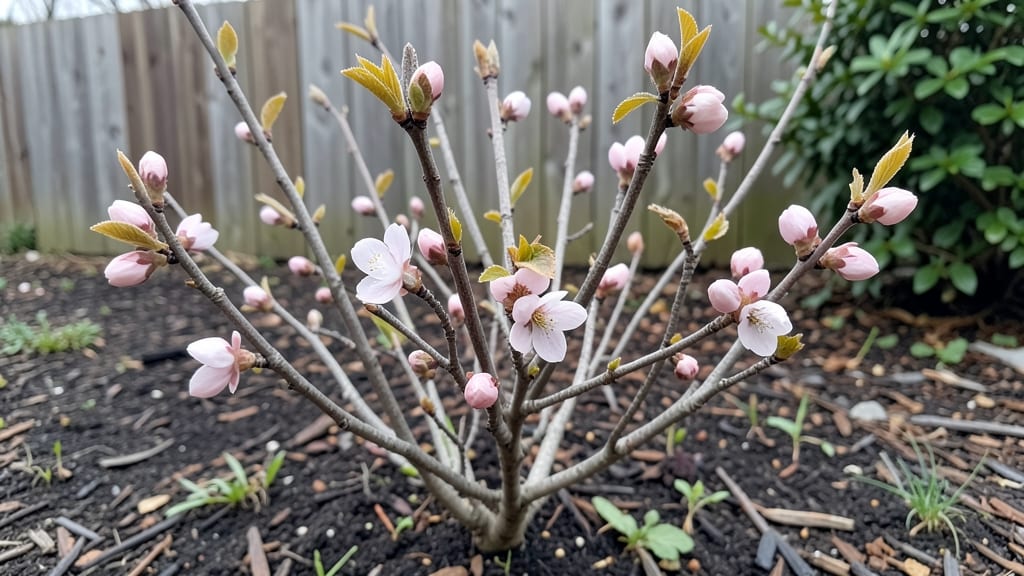
Flowering almond trees thrive in USDA hardiness zones 5 through 9, tolerating winter lows between -20°F and 30°F (-29°C to -1°C) while requiring full sun exposure and well-drained soil for optimal bloom and growth.
The flowering almond zone range isn't just about cold tolerance—it's about balancing winter hardiness with summer heat needs.
These trees handle freezing temperatures through dormancy, but their roots need protection from soggy soil, which can cause rot in colder zones like 5 or 6. 🌸 I've seen 'Pink Perfection' varieties thrive in zone 6 with proper winter mulching, while 'Royal Velvet' sometimes needs extra shelter in zone 5.
The key is matching your cultivar to your microclimate, whether that's a south-facing slope or a sheltered garden corner.
For planting, focus on soil that drains quickly—amending heavy clay with sand or compost makes all the difference in zones 5-7. In marginal areas, wrapping the trunk with burlap or using a windbreak can push the tree just far enough into survival mode.
The payoff? Stunning spring blooms that outshine even peach blossoms.
💡 In This Article
- Understanding Flowering Almond Tree Cold Tolerance
- Best Planting Sites for Flowering Almonds by Climate
Understanding flowering almond tree cold tolerance
Here's what's actually happening when these trees survive winter: Their cold tolerance varies dramatically by cultivar due to genetic differences in bud hardiness and root structure.
For example, 'Pink Perfection' can handle down to -15°F (-26°C) thanks to thicker bark and deeper root systems, while 'Royal Velvet' tops out at -10°F (-23°C) without protection. The key factor is how each variety manages dormancy—the metabolic slowdown that conserves energy during freezing temperatures.
During dormancy, flowering almonds undergo a biochemical process where cell membranes stabilize with proteins and sugars, preventing ice crystal formation that could rupture cells.
This works because the tree's growth hormones shift from promoting expansion to protecting cellular integrity. 🌱 What most people don't realize is that this protection system only works if the roots stay dry—water expands when frozen, and saturated soil creates ice lenses that can heave roots out of the ground, causing irreversible damage.
This explains why soil drainage becomes critical in colder zones like 5 or 6. In my zone 6 garden, I've seen 'Pink Perfection' trees with roots in amended soil (50% native, 50% compost) survive winters with -20°F (-29°C) lows, while identical trees in heavy clay soil died from root rot.
The difference? Well-drained soil prevents that fatal ice expansion. For marginal zones, I recommend adding 2-3 inches of gravel below the root zone to improve drainage.
Cultivar selection matters just as much as site preparation. 'Royal Velvet' produces stunning magenta blooms but needs winter protection in zone 5, while 'Fountain Pink' handles zone 7's heat better than most.
The science behind this involves each variety's native adaptation—some come from Mediterranean climates with mild winters, while others evolved in slightly cooler regions. This is why grafted trees (where a cold-hardy rootstock supports a tender cultivar) can extend your growing range by 1-2 zones.
What most gardeners overlook is how wind exposure affects cold tolerance. A sheltered location can push a tree's survivability by 5°F (3°C) or more.
In open fields, I've seen 'Pink Perfection' suffer frost damage at -12°F (-24°C) when winds exceeded 15 mph, while identical trees in a lee-side microclimate thrived. The solution? Plant near evergreen windbreaks or use burlap wraps on trunks to reduce heat loss.
Here's a practical tip: Test your soil's drainage by digging a 12-inch hole and filling it with water. If it drains completely in 4 hours, your site is suitable.
If not, amend with 1-2 inches of coarse sand or perlite. This small adjustment can mean the difference between a thriving tree and winter loss.