Shrubs
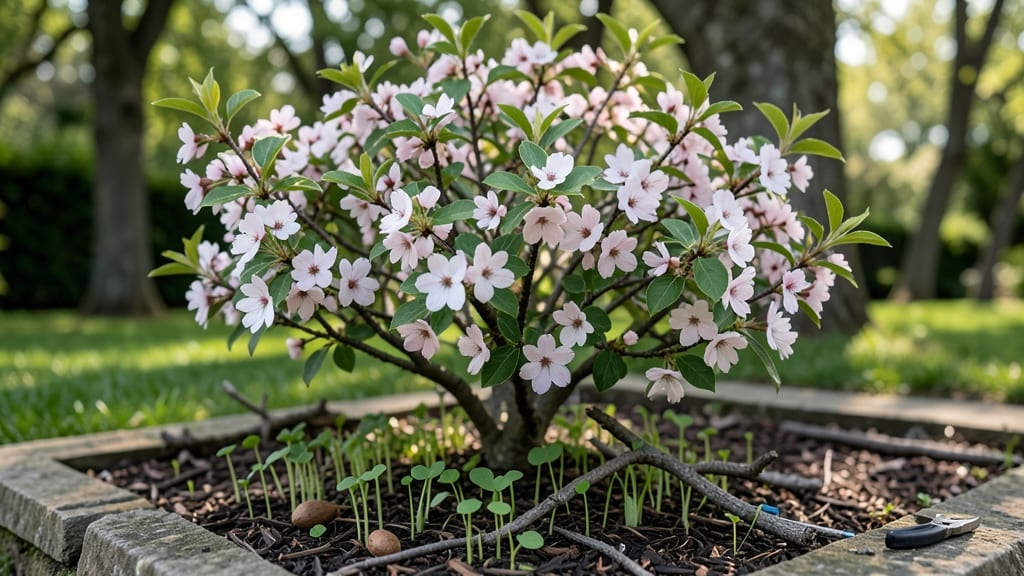
Flowering almond is invasive in many regions because its deep root system and prolific seed production allow it to spread uncontrollably in gardens, roadsides, and natural habitats. Eradicating it demands persistent pruning, root barrier installation, and swapping it out for hardy, non-spreading options like Japanese snowbell or fringe tree.
This shrub's rapid takeover happens because it lacks natural predators in non-native climates and thrives in disturbed soils, making it a nightmare for gardeners. 🌱 Once established, its roots can extend 15-20 feet underground, while a single plant can produce thousands of seeds annually—each capable of sprouting within weeks.
The problem worsens in urban areas where landscapers often plant it for its fragrant blooms, unaware of its ecological damage potential.
If you're dealing with existing flowering almond, start by cutting back stems to ground level every few weeks during its growing season. Installing 3-foot-deep root barriers around your property creates a physical block, but expect to monitor and maintain these for years.
For a long-term fix, native alternatives like serviceberry or eastern redbud offer similar seasonal interest without the ecological risks.
💡 In This Article
- Why Flowering Almond Spreads So Aggressively
- Non-Invasive Flowering Alternatives for Landscaping
Why flowering almond spreads so aggressively
This shrub's dominance stems from its biological superpowers—specifically, its pneumatophores, specialized aerial roots that extend up to 20 feet deep while absorbing oxygen and water. These roots create a dense underground network that outcompetes native plants for nutrients, while also making mechanical removal nearly impossible.
The plant's ability to sprout from even tiny root fragments (just 1/4 inch long) means every pruning session risks creating new plants rather than controlling the existing one. 🌿
Seed production is another weapon in its arsenal. A single mature flowering almond can release 50,000-100,000 seeds annually, each coated with a waxy layer that delays germination until conditions are perfect—often after wildfires or soil disturbances.
Unlike many plants that require specific pollinators, flowering almonds are self-fertile and produce flowers before leaves emerge, maximizing their reproductive window. The seeds also remain viable in the soil for 5-10 years, creating a hidden seed bank that ensures future generations.
Climate adaptability turns this shrub into a global menace. Native to China but naturalized worldwide, it thrives in USDA zones 7-10 with minimal water requirements, making it perfect for drought-prone regions where native plants struggle.
Its tolerance for poor soils, salt spray, and urban pollution gives it an edge over more delicate landscaping options. Compare this to native serviceberry, which requires well-drained soil and regular watering—hardly the resilient survivor flowering almond becomes. 🌎
The real kicker? Flowering almond lacks natural predators in introduced regions. In its native habitat, insects and fungi keep populations in check, but North America's ecosystems have no evolutionary history with this plant. Without these controls, populations explode unchecked.
This biological mismatch explains why it's classified as invasive in 27 U.S. states and continues spreading through bird dispersal of its seeds (which they eat and later deposit).
What makes this particularly frustrating is how its growth habits differ from native alternatives. While flowering almond forms dense thickets that block sunlight from reaching the forest floor, native fringe tree (Chionanthus virginicus) grows as a single-stemmed tree with minimal suckering.
The fringe tree's roots stay contained, and its seeds require stratification (cold treatment) to germinate—making it far less aggressive. This stark contrast highlights why choosing native plants isn't just about aesthetics but ecological responsibility. ✨
Here's the botanical irony: flowering almond's most attractive features—its fragrant spring blooms and drought tolerance—are exactly what make it so dangerous. These same traits that win it awards in landscaping competitions are what allow it to outcompete native flora in natural areas.
The lesson? Beautiful doesn't always mean benign, especially when biology stacks the deck so heavily in one species' favor. 🌱