
Tools
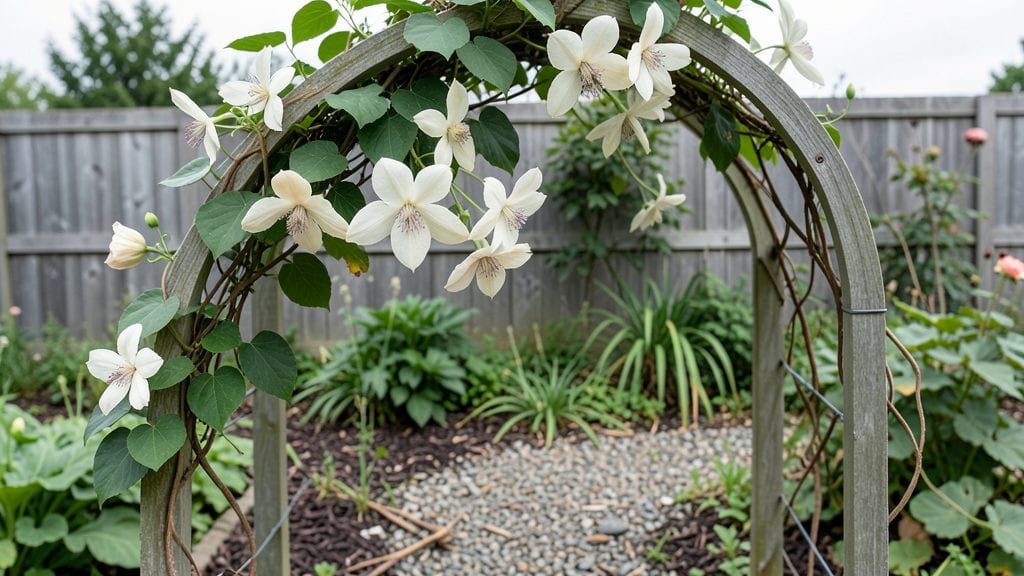
A flower archway garden transforms any yard into a romantic, ever-changing entrance that feels like a secret garden. 🌸 I designed mine after seeing how a simple wooden arch instantly became the focal point of my backyard, covered in blooms from spring through fall.
The key is choosing plants that overlap in bloom times and provide seasonal interest—even when flowers fade, the structure and foliage keep it stunning.
You’ll need an arch frame (wood, metal, or PVC work well), sturdy trellis netting, and a mix of climbers like roses for summer drama, clematis for spring height, and ivy for winter structure.
Most arches fit in 3-4 feet of space, and you can start small with just two plants if you’re working with limited room. The best part? Once established, these arches need minimal upkeep beyond occasional pruning and watering.
Imagine stepping through your arch in June when peonies spill over the top, or in October when jasmine’s fragrance lingers in the evening air. The magic happens when you layer plants so something’s always blooming—think early spring bulbs, summer roses, and fall asters.
With the right design, your archway will look like it belongs in a storybook, not just your backyard.
Wooden arches add rustic charm, metal ones last decades, and PVC offers budget-friendly flexibility. Choose based on your yard’s style and how much maintenance you’re willing to handle.
The payoff? A garden feature that’s as functional as it is beautiful—perfect for framing pathways, marking entrances, or simply adding vertical drama to small spaces.
📚 In This Guide
- What you need
- Instructions
- Tips and common mistakes
- Wrapping up and next steps
What you need
- ● Wooden or metal arch frames (2-4 arches, depending on size; 4-6 ft wide, 6-8 ft tall for standard pathways).
- ● Floral wire or twine (100+ ft, 18-22 gauge for flexibility).
- ● Seasonal flowers (mix of perennials and annuals for year-round color): Spring: Tulips, daffodils, pansies (10-15 per arch).
- ● Summer: Roses, petunias, geraniums (20-30 per arch).
- ● Fall: Mums, asters, ornamental grasses (15-20 per arch).
- ● Winter: Evergreens (eucalyptus, pine), dried flowers (10-12 per arch).
- ● Potting soil (10-15 gallons, well-draining mix).
- ● Planters or hanging baskets (2-4 per arch, 10-12" diameter).
- ● Garden shears or pruners (for trimming stems).
- ● Measuring tape & level (to ensure arches are straight).
- ● Staple gun or floral tape (for securing flowers to the frame).
- ● Watering can or hose with nozzle (for post-planting care).
- ○ Mulch or landscape fabric (optional, to retain moisture).
- ○ Solar-powered lights (optional, for evening ambiance).
How to create a flower archway garden that blooms year-round
Here’s my go-to approach for crafting an archway that bursts with color from spring through fall.
🌱 Step 1: Choose the Right Arch Structure and Location
Start with a sturdy, weather-resistant archway—metal or wood works best. Position it where it gets at least 6 hours of sunlight daily for most blooming plants. I like placing mine near a patio or walkway so the fragrance and color draw people in naturally.
Check the space between the arch supports to determine plant spacing. For a 4-foot-wide arch, you’ll need plants spaced 12-18 inches apart along the top curve to create a lush, continuous canopy. If your arch is wider, add more plants or use trailing vines to fill gaps.
🪴 Step 2: Select Seasonal Flowers for Continuous Color
Layer plants to ensure blooms from early spring through late fall. Start with spring bulbs like daffodils or tulips at the base—plant them in October so they bloom first. Add perennials like clematis or roses for mid-season drama, and top with annuals like petunias or nasturtiums for summer-fall color.
I mix climbing plants (like morning glories) with sprawling shrubs (like hydrangeas) to create texture. For height, place taller plants toward the center of the arch and shorter ones along the edges. This ensures no gaps and maximizes visual impact.
☀️ Step 3: Prepare the Soil and Plant for Longevity
Loosen the soil to a depth of 12 inches and mix in 2-3 inches of compost to improve drainage and fertility. If your soil is heavy clay, add sand or perlite to prevent waterlogging. I always test the pH—most flowers thrive in 6.0-7.0, so adjust with lime or sulfur if needed.
Dig holes twice as wide as the root ball and plant each flower at the same depth it was in its container. Water deeply right after planting to settle the soil and eliminate air pockets. Mulch with 2 inches of shredded bark to retain moisture and suppress weeds.
💧 Step 4: Water and Fertilize for Year-Round Blooms
Water deeply 2-3 times per week for the first month, then taper to once a week once established. Check the soil—if the top 2 inches feel dry, it’s time to water. Overwatering is the fastest way to kill roots, so always let the soil dry slightly between sessions.
Feed plants with a balanced, slow-release fertilizer (10-10-10) in early spring and again in mid-summer. For extra blooms, add a phosphorus-heavy fertilizer (like 5-10-5) when flowers start to fade. Deadhead spent blooms regularly to encourage new growth.
✂️ Step 5: Prune and Maintain for Seasonal Transitions
In early spring, prune back any dead or overgrown branches to shape the arch and encourage new growth. For climbing plants, train vines along the arch’s structure with soft ties—never pull them tight, or you’ll damage the stems.
As seasons change, swap out annuals for new varieties. For example, replace spring tulips with summer geraniums and then fall mums for a seamless transition. In late fall, cut back perennials but leave 3-4 inches of stem to protect the crown from frost.
Tips & tricks for perfect flower archway gardens
Here's what I learned after designing multiple archways that thrive year-round.
Sunlight Strategy: The 6 hours of sunlight mentioned in Step 1 is non-negotiable for most blooming plants. If your location gets less, opt for shade-tolerant varieties like impatiens or ferns in the lower layers while still placing sun-lovers at the top. I've seen archways fail spectacularly when planted in partial shade—trust me, the difference is night and day.
Plant Spacing Secrets: For that 4-foot-wide arch with 12-18 inch spacing in Step 1, I recommend using a string line to mark your planting spots before digging. This ensures perfect symmetry and prevents overcrowding as plants mature. Pro tip: Leave extra space for sprawling shrubs like hydrangeas—they'll fill in beautifully over time.
Soil Prep Game-Changer: When mixing in 2-3 inches of compost as directed in Step 3, don't skimp on the quality. I use a blend of well-rotted manure and coconut coir for moisture retention. For clay-heavy soils, add sand or perlite in equal parts to the compost—this creates a sponge-like texture that prevents waterlogging while still holding moisture for roots.
Watering Wisdom: The 2-3 times per week guideline in Step 4 works perfectly, but timing matters just as much. Water in the early morning so foliage dries completely before evening. This prevents fungal diseases that can devastate your archway. I also recommend using drip irrigation or soaker hoses to deliver water directly to the roots without wetting leaves.
Pro Tips for Flower Archway Garden
- Here's what I learned after designing multiple archways that thrive year-round.
- Sunlight Strategy: The 6 hours of sunlight mentioned in Step 1 is non-negotiable for most blooming plants.
- Plant Spacing Secrets: For that 4-foot-wide arch with 12-18 inch spacing in Step 1, I recommend using a string line to mark your planting spots before digging.
Frequently asked questions
Got questions about creating your dream flower archway garden? You’re not alone! Here are answers to the most common queries to help you plan with confidence.
What’s the best time of year to plant a flower archway?
For most climates, spring (after the last frost) is ideal—plants establish roots before summer heat. In warmer zones, fall (6–8 weeks before frost) works too. Perennials like clematis or roses thrive when planted in early spring, while annuals (e.g., sweet peas) can go in late spring for instant color. Pro tip: Check your USDA zone for local timing!
How much does a flower archway cost to build and maintain?
Costs vary! A DIY archway with basic materials (e.g., bamboo stakes + vines) runs $50–$150. Pre-made metal/wood arches with plants cost $200–$600+. Maintenance adds $50–$200/year for pruning, fertilizing, and replacing annuals. Save money: Start small with climbers (e.g., jasmine or honeysuckle) instead of pricey roses.
Can I use non-flowering plants (like ivy or ferns) for an archway?
Ivy, ferns, or even ornamental grasses create lush, low-maintenance arches—perfect for shade or woodland gardens. For year-round interest, mix evergreens (e.g., boxwood) with seasonal bloomers. Just ensure your plants thrive in your light conditions (e.g., hostas for shade, lavender for sun).
Why aren’t my flowers growing well under the archway?
Common culprits: poor soil drainage, overcrowding, or lack of sunlight. Test soil pH (most flowers prefer 6.0–7.0) and amend with compost. Prune leggy growth to encourage bushiness, and water deeply 2–3x/week (morning is best). If pests (e.g., aphids) appear, spray with neem oil or introduce ladybugs!
How do I choose flowers for year-round color?
Layer plants with different bloom times:
- Spring: Tulips, daffodils, sweet peas
- Summer: Roses, clematis, sunflowers
- Fall: Chrysanthemums, asters, ornamental kale
- Winter: Hellebores, winter jasmine, evergreen shrubs
Wrapping up and next steps
A flower archway garden isn’t just a decorative masterpiece—it’s a living, evolving work of art that brings joy and color to your outdoor space year-round.
Whether you’re crafting a grand entrance or a cozy garden nook, the key lies in planning for layers and seasonal swaps to keep the magic alive. 🌸
Ready to transform your garden? Start small—pick one archway or a section—and let your creativity bloom! Then, share your progress with fellow gardeners or tag us in your photos for inspiration. Happy gardening!