
Trees
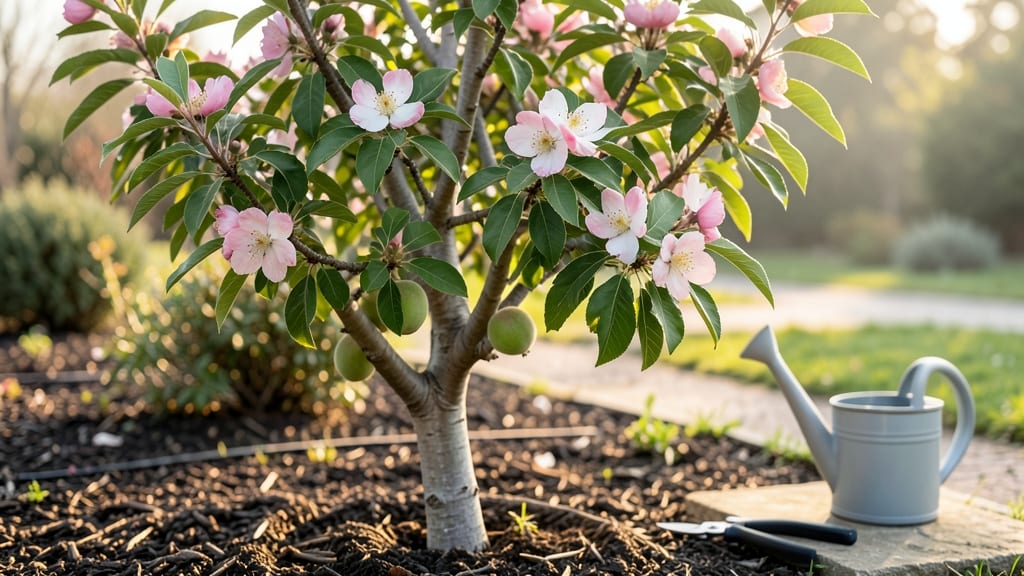
Yes, peach trees have flowers as part of their fruiting process, blooming in early spring before leaves emerge, with delicate white or pink blossoms that later develop into fruit. These flowers are essential for pollination and fruit production.
Peach trees are famous for their stunning spring blooms, which appear weeks before the leaves do. 🌸 These blossoms aren't just pretty—they're the foundation of every peach you'll ever eat!
The flowers require precise conditions to thrive, including 50-70°F temperatures and 10-15 hours of daylight, which is why late frosts can devastate entire crops.
What's fascinating is how these blossoms transform: after pollination, the petals drop, and tiny peaches begin forming within 4-6 weeks, growing from the flower's ovary.
Most peach varieties need cross-pollination from another tree to produce fruit, though some self-pollinating types exist. This is why orchards often plant multiple varieties together. The blooming window is also critical—too much rain can wash away pollen, while dry conditions may reduce fruit set.
Understanding these stages helps gardeners protect their trees and maximize harvests.
💡 In This Article
- Peach Tree Flowering Stages and Pollination Science
- Best Practices for Encouraging Healthy Peach Blossoms
Peach tree flowering stages and pollination science
Peach trees undergo a remarkable biological process where flowers emerge from dormant buds in late winter or early spring, often before leaves appear. This phenomenon, called vernalization, requires exposure to cold temperatures (30-50°F for 400-800 hours) to break dormancy.
Once triggered, the tree's hormonal balance shifts, prompting flower buds to swell and open within 2-4 weeks. The blossoms typically last 7-14 days, during which they must be pollinated to develop fruit.
The flowers themselves are stunning clusters of 5-7 delicate petals (usually white or pink) surrounding reproductive organs. Each blossom contains both male (stamens) and female (pistil) parts, but most peach varieties are self-unfruitful, meaning they need pollen from another tree to set fruit.
The ideal pollination window occurs when daytime temperatures hover around 60-75°F with calm winds—perfect conditions for bees and other pollinators to transfer pollen efficiently.
Here's what happens after pollination: Fertilized ovules in the flower's ovary begin dividing rapidly, forming the peach pit (endocarp) and surrounding fruit flesh. Within 4-6 weeks, the petals fall, and tiny green peaches emerge, growing from 0.5 inches to full size over summer.
The transformation relies on consistent 70-85°F temperatures and 1-2 inches of water per week—too much rain or heat stress can cause fruit drop.
What most gardeners don't realize is that peach trees are alternate-bearing, meaning they produce heavy crops one year followed by lighter yields the next. This cycle is tied to the tree's energy reserves, which get depleted after a big harvest.
The flowering stage itself is also vulnerable to late frosts (below 28°F), which can kill blossoms and reduce fruit set by up to 90% in severe cases.
Cross-pollination works because peach varieties often have different bloom times. For example, 'Elberta' blooms early, while 'Redhaven' peaks 10-14 days later, extending the pollination window. This staggered timing is why commercial orchards plant multiple varieties—it maximizes fruit set and ensures a more reliable harvest.
The science behind this involves genetic compatibility between pollen and pistil, which determines whether fertilization occurs successfully.
One fascinating detail is how peach flowers use scent and color to attract pollinators. The blossoms emit a sweet, honey-like fragrance (detectable up to 50 feet away) that peaks during daylight hours when bees are most active.
Their bright colors also contain UV patterns invisible to humans but visible to bees, guiding them directly to the nectar and pollen. This co-evolution between peach trees and pollinators is a perfect example of nature's precision engineering.
The entire process from bloom to fruit maturity takes about 120-150 days, depending on the variety and climate. During this time, the tree's energy shifts from flower production to fruit development, which is why proper nutrition (especially potassium and phosphorus) is critical.
Understanding these stages helps gardeners protect their trees during vulnerable periods and optimize conditions for both beautiful blossoms and bountiful harvests. 🌟