Shrubs
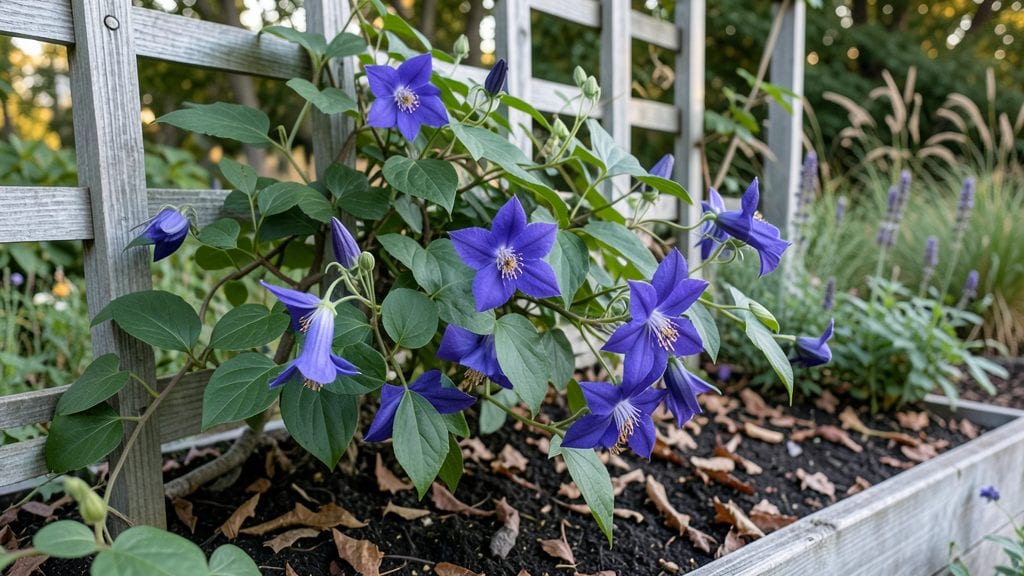
Blue flowering clematis transforms any garden into a painter’s canvas with its sky-blue blooms that dance along trellises and archways. 🌿 I still remember the first time I saw one climb a rustic wooden arbor—it felt like summer had arrived early, even in late spring.
The way those delicate petals catch the light and spill over vertical spaces creates an instant focal point that no flat garden bed ever could.
These climbers aren’t just pretty—they’re the stars of the show. Pair them with deep-green hostas at their base to contrast the blue, or let them twine through a pergola where they’ll spill cascades of color overhead.
In my own garden, the clematis and a purple clematis cousin create a stunning blue-purple gradient that lasts from early summer through fall. The key to keeping them looking their best? A sturdy support structure and a little pruning to encourage those long, dramatic stems.
Imagine sitting beneath your pergola in August, surrounded by blue blooms that shimmer in the afternoon light while your garden hums with bees and butterflies. The fragrance is subtle but intoxicating—like a summer breeze carrying hints of honey and rain.
This isn’t just a plant; it’s a statement piece that turns ordinary spaces into breathtaking backdrops for your garden’s entire season.
Whether you’re wrapping a porch, dressing up a fence, or adding height to a border, blue clematis delivers effortless elegance. The best part? They’re just as happy in a cottage garden as they are in a modern landscape.
Let’s make your garden the envy of the neighborhood with this climbing drama.
📚 In This Guide
- What you need
- Instructions
- Tips and common mistakes
- Wrapping up and next steps
What you need
- ● Blue flowering clematis plant: Choose a Clematis variety like Clematis ‘Jackmanii’ (deep purple-blue) or Clematis ‘Perle d’Azur’ (soft blue). Purchase a healthy, well-rooted specimen from a reputable nursery.
- ● Well-draining potting mix or garden soil: Aim for a mix rich in organic matter (e.g., compost or peat). For containers, use a blend specifically formulated for clematis or climbing plants.
- ● Support structure: For trellises: A sturdy metal or wooden trellis (4-6 feet tall). Avoid plastic, as it can degrade in sunlight.
- ● For arbors: A vine-training arch made of wood or metal, at least 5 feet wide.
- ● For walls/fences: Twine or soft garden ties (1/4-inch wide) to secure vines gently.
- ● Mulch: Organic mulch (e.g., shredded bark or straw) to retain moisture and regulate soil temperature.
- ● Garden trowel or spade: For planting and soil amendments.
- ● Pruning shears: Sharp, bypass-pruning shears (disinfect with rubbing alcohol between cuts).
- ● Gloves: Heavy-duty gardening gloves to protect against thorns.
- ● Watering can or hose with a gentle spray nozzle: Clematis prefers consistent moisture but hates soggy roots.
- ● Fertilizer: Balanced fertilizer (10-10-10): Apply at planting and again in early spring.
- ○ Bone meal or phosphorus-rich fertilizer: Optional, for vibrant blooms (follow package instructions).
- ● Sunlight assessment: A spot with at least 6 hours of sunlight daily. Partial shade (especially afternoon shade) is ideal in hot climates.
- ● Slow-release fertilizer tablets: For container-grown clematis.
- ● Epsom salt: A teaspoon dissolved in water monthly can boost magnesium for healthier foliage.
- ● Drip irrigation system: Automates watering for consistent moisture.
- ● Plant markers: To label your clematis variety and pruning group.
Step-by-Step instructions for planting blue flowering clematis
Here’s how to get those stunning blue blooms thriving in your garden—no guesswork involved.
🌱 Step 1: Choose the Perfect Planting Spot
Clematis craves sunlight but hates hot afternoon sun—aim for a location with morning sun and afternoon shade (think dappled light under trees or near a north-facing wall). The roots need to stay cool, so plant near something like a shrub or tree that will shade them after 10 AM. If you must plant in full sun, provide afternoon shade with a lattice or trellis.
Dig a hole twice as wide as the root ball but only as deep as the top of the roots—never bury the crown. Loosen the roots gently if they’re circling or tangled. This ensures they spread out into the soil instead of staying compacted.
🪴 Step 2: Prepare Soil and Plant the Root Ball
Mix the 3 gallons of potting mix with 1 gallon of compost and 1 cup of bone meal (for phosphorus) to give your clematis a nutrient boost right from the start. This combo ensures good drainage while feeding the hungry roots. Fill the hole halfway with this mix, then place the clematis root ball in the center.
Backfill with the remaining soil mixture, pressing lightly to remove air pockets but not compacting too firmly. Water deeply to settle the soil around the roots. The top of the root ball should sit 1-2 inches below soil level—this prevents the crown from drying out.
☀️ Step 3: Support the Vine and Mulch Generously
Install a 5-foot trellis or arbor immediately after planting—clematis vines grow fast and need sturdy support. Tie the main stems loosely to the trellis with soft twine or plant ties, leaving room for growth. Avoid tight ties that can girdle the stems as they thicken.
Spread 2 inches of mulch (like shredded bark or straw) around the base, keeping it 6 inches away from the stem to prevent rot. Mulch conserves moisture and keeps roots cool, which is key for blue clematis varieties that thrive in consistent temperatures. Water again to settle the mulch and encourage root spread.
💧 Step 4: Water and Fertilize for First-Year Growth
Water deeply once a week (about 1 gallon per plant) during the first growing season. Let the top 2 inches of soil dry out between waterings—this prevents soggy roots while encouraging deep root growth. Blue clematis is drought-tolerant once established, but young plants need steady moisture to take hold.
After the first flush of leaves appears, apply ½ cup of 10-10-10 fertilizer (from your supplies) spread evenly over the soil. Water again to activate the nutrients. Repeat this feeding every 4-6 weeks during the growing season. Avoid over-fertilizing—too much nitrogen leads to leafy growth at the expense of flowers.
✂️ Step 5: Prune for Maximum Blooms Next Season
Wait until late winter or early spring (when new growth just begins) to prune. Blue clematis varieties typically bloom on old wood, so prune sparingly—just remove dead or crossing stems and trim back any that look weak. Cut just above a healthy bud or joint, using clean, sharp pruners.
As the vine grows, train it along the trellis by gently weaving new shoots through the lattice. Pinch back the tips of young shoots in early summer to encourage bushier growth and more blooms. By next year, your clematis will reward you with season-long blue blooms—just keep the roots cool and the support sturdy.
Tips & tricks for perfect blue flowering clematis planting
Here's what I've learned after years of growing these stunning blue beauties—these tricks will help you avoid common pitfalls and set your clematis up for success.
Location is Everything: In Step 1, when choosing your spot, remember that blue clematis varieties are particularly sensitive to heat. If you must plant in full sun, install a temporary shade cloth (like 30% shade fabric) during the hottest afternoon hours—this can make all the difference for root health. I've seen plants thriving in full sun with afternoon shade that completely failed without it.
Root Care in Step 2: When planting, don't be afraid to go the extra mile with root preparation. If your clematis arrives with particularly tangled roots, soak them in water for 10-15 minutes before planting to help loosen them. This prevents root circling and encourages outward growth. I also recommend adding a handful of mycorrhizal fungi to the planting hole—it helps establish a beneficial relationship between roots and soil microbes right from the start.
Support System Matters: For Step 3, invest in a sturdy 5-foot trellis made of metal or thick wood—not the flimsy plastic ones. Clematis vines can get heavy when laden with flowers, and a weak trellis will bend or break. I've had success with decorative metal arches that double as both support and garden art. Also, consider adding a second trellis next year if your plant gets vigorous—clematis can spread wider than you might expect!
Watering Wisdom: In Step 4, the once-a-week watering guideline works best in average conditions. But here's the thing: blue clematis actually prefers slightly drier conditions than some other varieties. If you notice the leaves wilting but the soil is still moist, you're probably overwatering. Let the top 2 inches dry out completely between waterings, and you'll see much healthier growth. I've found that mulching with straw (rather than wood chips) helps maintain even moisture without suffocating the roots.
Pro Tips for Blue Flowering Clematis
- Here's what I've learned after years of growing these stunning blue beauties—these tricks will help you avoid common pitfalls and set your clematis up for success.
- Location is Everything: In Step 1, when choosing your spot, remember that blue clematis varieties are particularly sensitive to heat.
- Root Care in Step 2: When planting, don't be afraid to go the extra mile with root preparation.
Frequently asked questions
Got questions about growing blue flowering clematis?
You’re not alone! Here are answers to the most common queries—from planting tips to troubleshooting—so you can enjoy vibrant blue blooms all season.
When is the best time to plant blue flowering clematis?
Plant in early spring or fall when soil is cool but workable (60–70°F). Avoid extreme heat or frost—roots need time to establish before summer stress. Pro tip: Soak roots in water for 1–2 hours before planting to reduce transplant shock!
Why aren’t my clematis flowers turning blue?
True blue clematis (like Clematis ‘Jackmanii’ or ‘Perle d’Azur’) can shift to purple or pink due to pH, sunlight, or fertilizer. For deeper blue, test soil pH (aim for 6.0–7.0) and use low-phosphorus fertilizer (like 5-10-10). Mulch with hydrangea vinegar (white vinegar + water) to acidify soil naturally.
What pests or diseases should I watch for on clematis?
Common issues include:
- Clematis wilt (fungus): Remove infected stems, improve airflow, and avoid overhead watering.
- Spider mites: Spray leaves with water daily in dry spells or use neem oil.
- Slugs/snails: Set beer traps or use copper tape around the base.
Can I grow blue clematis in containers? Yes—but with tricks!
Use a large pot (15+ gallons) with well-draining soil and a trellis. Container-grown clematis dry out faster, so water deeply 2–3x/week. Add compost and perlite to mix, and fertilize monthly with a balanced formula. Choose compact varieties like ‘Blue Light’ for smaller spaces!
How long does it take for clematis to bloom?
Most blue clematis take 1–2 years to establish and flower, but some (like ‘Nelly Moser’) may bloom the first year if planted early. Early spring pruning (just above buds) encourages faster blooms. Patience pays off—healthy roots = bigger blooms!
What’s a good alternative if I can’t find true blue clematis?
Try these stunning near-blue varieties:
Variety
Color
Bloom Time
‘Perle d’Azur’
Soft lavender-blue
Summer–fall
‘Vyvyan Pennell’
Deep violet-blue
Late spring–summer
‘Hagley Hybrid’
Blue-purple
Summer–fall
Wrapping up and next steps
Transforming your garden with blue flowering clematis is a rewarding journey—one that brings vibrant color, vertical elegance, and months of blooms to your outdoor space! 🌸 Whether you're a seasoned gardener or just starting, these stunning climbers offer versatility, resilience, and a touch of whimsy that’s hard to resist.
With the right care, your clematis will thrive, becoming the star of your landscape.
Ready to take the next step? Start by selecting your favorite variety—maybe a classic Jackmanii or a delicate Perle d’Azur—and give your garden the blue flowering clematis upgrade it deserves! 🌿